
UN Warns of ‘Supersized’ El Niño Event
The United Nations has warned of a ‘supersized' El Niño event, with the World Meteorological Organization (WMO) releasing data showing it could be the strongest in over 70 years. The phenomenon is expected to last until at least February 2027, bringing extreme weather patterns worldwide, including drought, stronger typhoons, and flooding. UN head António Guterres
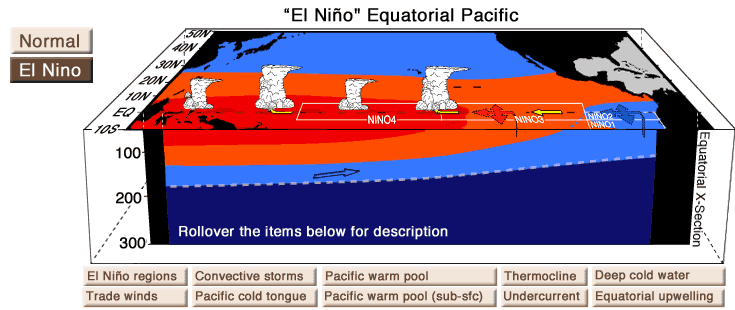
The United Nations has warned of a ‘supersized’ El Niño event, with the World Meteorological Organization (WMO) releasing data showing it could be the strongest in over 70 years. The phenomenon is expected to last until at least February 2027, bringing extreme weather patterns worldwide, including drought, stronger typhoons, and flooding.
UN head António Guterres has stated that ‘El Niño is being supersized before our eyes. The science leaves no room for doubt: the planet is in uncharted waters, and those waters are heating up’. The WMO has undertaken a major mobilization to circulate forecasts of potential extreme weather events linked to El Niño to as many communities as possible.
- The WMO has warned that El Niño has the potential to deliver a massive blow to communities and economies across the world.
- Sea temperatures in the central and eastern tropical Pacific have risen sharply, with surface temperatures well over 2C above average in recent weeks.
- Monthly sea surface temperatures could get close to 4C above average, making it the strongest El Niño since at least 1950.
El Niño Impact on Global Weather Patterns
El Niño changes weather patterns around the world, pushing some regions into drought while others experience stronger typhoons and flooding. Forecasters also say El Niño will boost temperatures in some places, coming on top of rising heat globally from human-induced climate change.
UN and Government Response
The UN and governments are taking measures to reduce the risk of deaths, displacement, and environmental damage. Early warning systems have been strengthened, and pre-emptive medical assistance is being deployed. The WMO Secretary-General, Celeste Saulo, warned that ‘El Niño has the potential to deliver a massive blow to communities and economies across the world’.
Regional Impacts
Australia, with its rich marine life, is of particular concern due to changes in ocean heat. The country has been plagued by marine heatwaves in recent years, driven by climate change. Dr Alistair Hobday, chief researcher at Australia’s science agency, stated that ‘El Niño is a natural phenomenon, but it tends to bring the kind of extreme heat which also drives those disasters’. However, marine heatwave forecasts indicate the Great Barrier Reef will be spared the worst of the conditions, giving coral there more time to recover.
Australia’s Preparation
Southern Australia is expected to be severely impacted, with Dr Hobday stating that ‘Southern Australia is getting slammed’. The Australian government is taking measures to prepare for the extreme weather, including strengthening early warning systems and deploying pre-emptive medical assistance.
Global Cooperation
The UN is working with governments and scientists worldwide to reduce the risk of deaths, displacement, and environmental damage. The WMO is undertaking a major mobilization to circulate forecasts of potential extreme weather events linked to El Niño to as many communities as possible. For more information on the latest climate news, visit Watan News.
Conclusion
In conclusion, the UN has warned of a ‘supersized’ El Niño event, with extreme weather expected to impact countries globally. The WMO has released data showing it could be the strongest in over 70 years, and governments are taking measures to prepare for the extreme weather.
FAQs
Q1: What is El Niño and how does it affect global weather patterns?
A1: El Niño is a natural weather phenomenon that develops in the Pacific Ocean and is linked to a change in wind patterns. It allows warm water to spread eastwards and releases heat into the atmosphere, changing weather patterns around the world and pushing some regions into drought while others experience stronger typhoons and flooding.
Q2: How is the UN preparing for the impact of El Niño?
A2: The UN is working with governments and scientists worldwide to reduce the risk of deaths, displacement, and environmental damage. The WMO is undertaking a major mobilization to circulate forecasts of potential extreme weather events linked to El Niño to as many communities as possible.
Q3: Which regions are expected to be most impacted by El Niño?
A3: Australia, with its rich marine life, is of particular concern due to changes in ocean heat. Southern Australia is expected to be severely impacted, while the Great Barrier Reef is expected to be spared the worst of the conditions.
Q4: What measures are being taken to reduce the risk of deaths, displacement, and environmental damage?
A4: Governments are taking measures to reduce the risk of deaths, displacement, and environmental damage, including strengthening early warning systems and deploying pre-emptive medical assistance.
Q5: How long is the El Niño event expected to last?
A5: The El Niño event is expected to last until at least February 2027, bringing extreme weather patterns worldwide, including drought, stronger typhoons, and flooding.
Q6: What is the impact of El Niño on global temperatures?
A6: El Niño will boost temperatures in some places, coming on top of rising heat globally from human-induced climate change, leading to more extreme heatwaves and weather events.