
US, Iran Engaged in Escalating Tanker War
The United States and Iran have escalated their conflict in the Strait of Hormuz, with both sides engaging in tit-for-tat attacks on tankers and ships. The latest exchanges have further dimmed hopes for a de-escalation through diplomacy, as the US-Israel war on Iran continues to disrupt energy supplies and slow economic growth around the world.
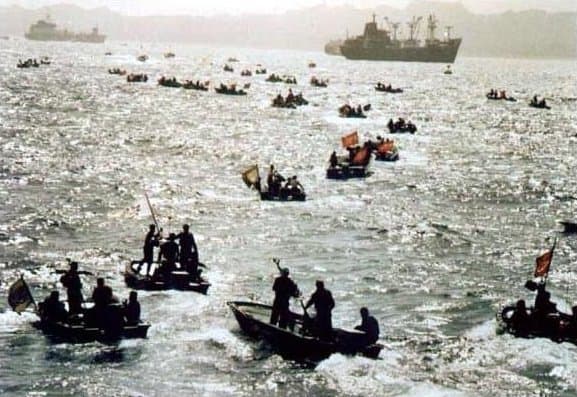
The United States and Iran have escalated their conflict in the Strait of Hormuz, with both sides engaging in tit-for-tat attacks on tankers and ships. The latest exchanges have further dimmed hopes for a de-escalation through diplomacy, as the US-Israel war on Iran continues to disrupt energy supplies and slow economic growth around the world.
The US Central Command (CENTCOM) said its forces struck three Iranian vessels, including a tanker off Kharg Island, in response to Iranian ballistic missile launches against a US aircraft carrier and navy destroyer. The attacks have been dubbed a “calculated escalation” by experts, as the months-long fighting increasingly plays out at sea.
- The US targeted three Iranian oil tankers in the past 24 hours.
- Iran hit tankers and fired a ballistic missile towards US warships patrolling near the Strait of Hormuz.
- Experts have dubbed Iran’s targeting of the two US aircraft carriers a “calculated escalation”.
- The conflict has disrupted energy supplies and slowed economic growth around the world.
Strait of Hormuz: A Global Chokepoint
The Strait of Hormuz is a strategic waterway used by Tehran as leverage in the war. The US claims that an increasing volume of oil has started to flow through the strait, though the exact figures are still debatable. The naval blockade of Iranian ports continues, with the US and its allies attempting to exert control over the strait.
CENTCOM Commander Admiral Brad Cooper’s Statement
“If you shoot at two of our ships, we will impose an even higher economic cost — taking out three of yours,” said CENTCOM commander Admiral Brad Cooper. The statement reflects the escalating tensions between the US and Iran, with both sides engaging in retaliatory attacks.
Iran’s Islamic Revolutionary Guard Corps (IRGC) Response
Iran’s IRGC said it launched “several ballistic missiles” at the aircraft carrier and destroyer, accusing them of “harassing Iranian ships” and taking part in a naval blockade. The IRGC navy warned all vessels in the Gulf or near the Strait of Hormuz not to be “deceived” by the US military.
Defence Analyst Wolfgang Pusztai’s Assessment
“This is a very, very significant development, and it doesn’t come as a surprise that the Americans retaliated,” said defence analyst Wolfgang Pusztai. The analyst’s statement reflects the gravity of the situation, with the conflict escalating and both sides engaging in retaliatory attacks.
Future Impact and Diplomatic Efforts
The escalating conflict has further dimmed hopes for a de-escalation through diplomacy. The US and its allies continue to impose economic pressure on Iran, while Tehran attempts to exert control over the Strait of Hormuz. The conflict has significant implications for global energy supplies and economic growth.
For more information and updates on the conflict, visit Watan News.
Conclusion
The US and Iran are engaged in an escalating tanker war, with both sides targeting each other’s vessels and ships in the Strait of Hormuz. The conflict has significant implications for global energy supplies and economic growth, and diplomatic efforts to de-escalate the situation appear to be faltering.
FAQs
Q1: What led to the escalation of the conflict in the Strait of Hormuz?
A1: The conflict escalated due to tit-for-tat attacks between the US and Iran, with both sides targeting each other’s vessels and ships in the Strait of Hormuz.
Q2: What is the significance of the Strait of Hormuz in the conflict?
A2: The Strait of Hormuz is a strategic waterway used by Tehran as leverage in the war, and the US and its allies are attempting to exert control over the strait to disrupt Iran’s oil exports.
Q3: What are the implications of the conflict for global energy supplies and economic growth?
A3: The conflict has significant implications for global energy supplies and economic growth, as it disrupts oil exports and slows economic growth around the world.
Q4: What are the chances of a de-escalation of the conflict through diplomacy?
A4: The chances of a de-escalation of the conflict through diplomacy appear to be faltering, as the US and Iran continue to engage in retaliatory attacks and impose economic pressure on each other.
Q5: What is the role of the US Central Command (CENTCOM) in the conflict?
A5: The US Central Command (CENTCOM) is playing a significant role in the conflict, as it is responsible for the US military operations in the region and has been involved in the retaliatory attacks against Iranian vessels and ships.