Planting trees is one of the most popular climate solutions in the world — but a new global study warns that where new forests are planted matters as much as how many trees go into the ground. In some temperate landscapes, converting open land into planted forest was linked to more frequent and larger wildfires, a finding that could reshape how governments and companies plan large tree-planting programmes.
The research, published on 3 November 2026 in the Proceedings of the National Academy of Sciences, analysed satellite records from 2001 to 2023 covering 67,248 patches of land converted into planted forests across temperate regions. After accounting for climate, accessibility and patch size, the researchers found that afforestation was associated on average with a 26 percent increase in fire occurrence per hectare per year and a 23 percent increase in the expected burned area when fires occurred.
The study was led by Irene Repeto-Deudero of the University of Cádiz and the University of Eastern Finland, with researchers from Spain, Chile and Finland. Its message is not that tree planting should stop, the authors stress, but that fire risk must be planned for from the very beginning.
Why plantations change fire behaviour
“Forest plantations change the fuel conditions in which fires start and spread,” lead author Irene Repeto-Deudero said. “We wanted to understand how these changes differ across landscapes, rather than assuming that tree planting has the same consequences everywhere.”
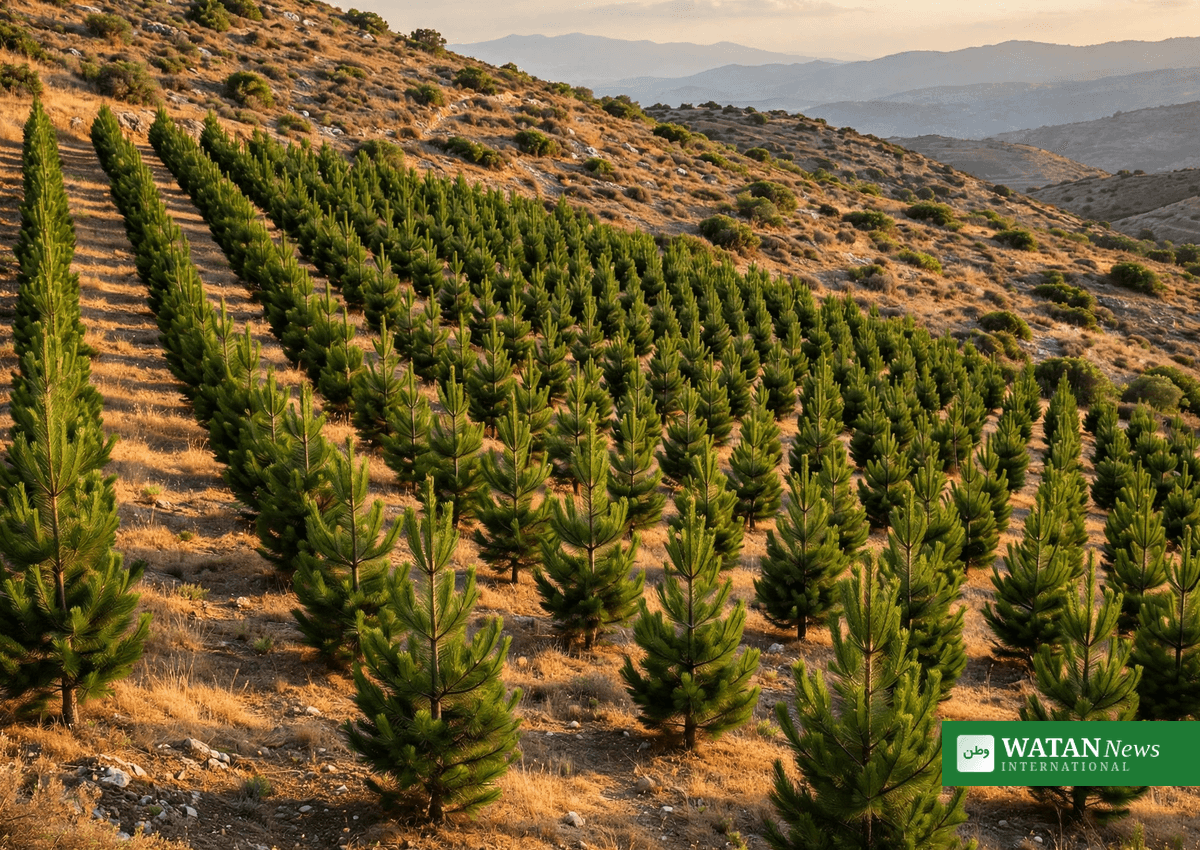
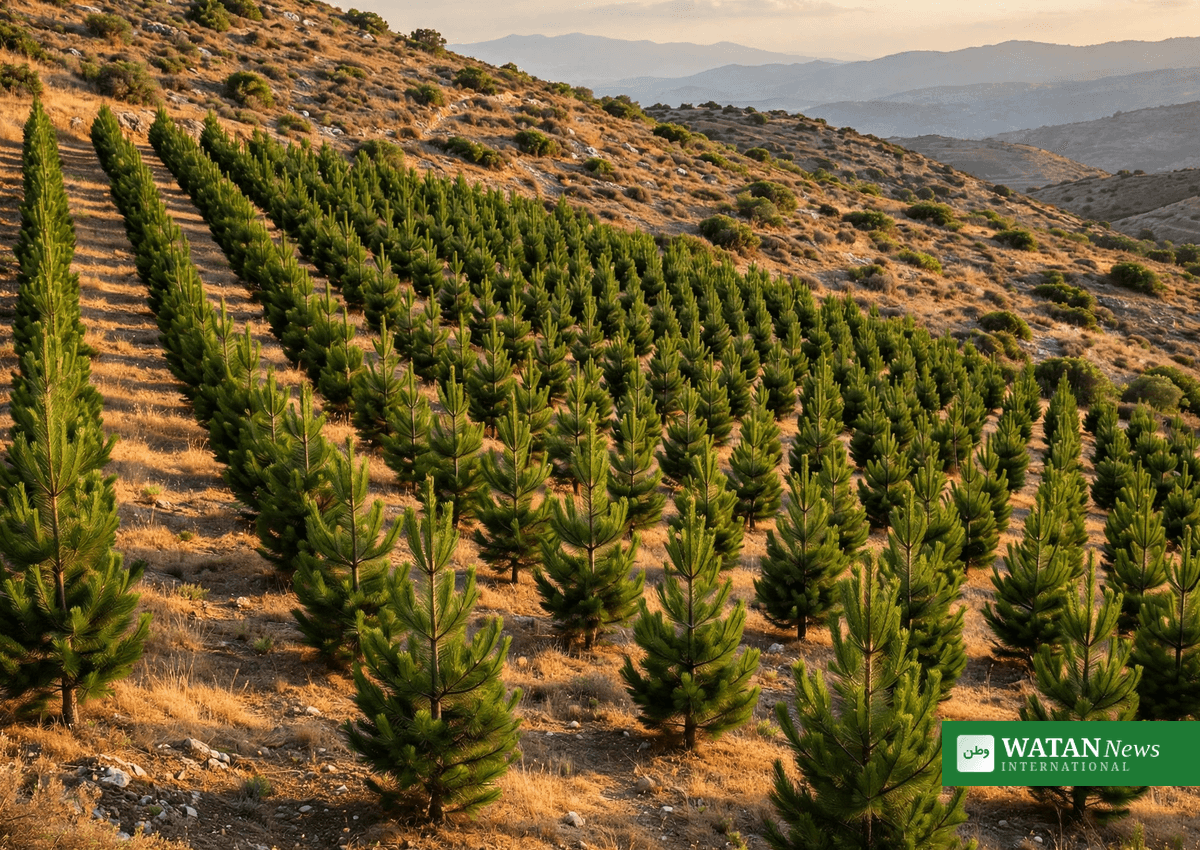
Planted forests often create a more continuous layer of fuel — dense, even-aged trees with shrubs beneath them — than the open land they replace. In dry, hot conditions that fuel can carry fire faster and further. The researchers warn that wildfires can also undo the carbon storage that tree planting is meant to deliver, because carbon held in young trees is released again when they burn.
“These results therefore require that tree-planting initiatives consider their exposure to fire. As the climate warms, increased wildfire risk may impact the capacity of forest plantations to store carbon in the long term,” said study coordinator Susana Gómez-González of the University of Cádiz.
The picture differs sharply by region
The global average hides strong regional contrasts, and those contrasts are the study’s most practical finding:
- Temperate conifer forest regions saw the strongest increases — fire occurrence rose almost threefold and expected burned area approximately doubled.
- Mediterranean regions also saw increases in both fire occurrence and burned area.
- Temperate broadleaf and mixed forest regions saw fires become less frequent, but the fires that did occur burned larger areas.
- Temperate grasslands, savannas and shrublands showed reduced fire occurrence, with no significant increase in burned area.
“These contrasting responses show why local ecological conditions must guide afforestation decisions. The same intervention can have very different consequences depending on the vegetation, climate and existing fire regime,” said co-author Alejandro Miranda of the University of La Frontera in Chile.
What this means for planting programmes
The authors say plantations remain necessary in many cases — for wood, soil protection and other ecosystem services — but their location must be chosen carefully, especially where plantation expansion coincides with increasingly severe fire weather.
“Plantations are necessary in many cases to produce wood and other ecosystem services, including soil protection. However, their location must be carefully planned to avoid unintended consequences for local fire regimes,” said Blas Mola-Yudego of the University of Eastern Finland. “Fire risk needs to be considered from the outset, alongside production goals and environmental benefits.”
For planners, the study points to practical steps: favouring sites and species mixes with lower fire exposure, avoiding dense, continuous blocks of highly flammable conifers in fire-prone landscapes, building firebreaks and access for fire crews into the design, and monitoring young plantations rather than counting only the number of trees planted. Earlier research by members of the same team on pine plantations in Spain reached a similar conclusion, finding higher fire severity and slower early recovery in dense pine stands.
The findings land as tree planting is expanding worldwide, from national programmes aiming to plant billions of trees to corporate and community schemes. The study does not question the value of restoring degraded land — it argues that restoration works best when it is matched to the local landscape, so that today’s new forest does not become tomorrow’s fire risk.
For more climate stories, visit Watan News climate coverage.
Key facts
- Study: “Afforestation reshapes wildfire activity across global temperate biomes”, Proceedings of the National Academy of Sciences, published 3 November 2026.
- Data: satellite records, 2001–2023, covering 67,248 patches converted into planted forests.
- Headline result: 26 percent higher fire occurrence per hectare per year and 23 percent higher expected burned area on average.
- Strongest effect: temperate conifer regions — fire occurrence almost threefold, burned area approximately doubled.
- Authors’ advice: assess fire exposure before planting, plan plantation location carefully, and protect long-term carbon storage.