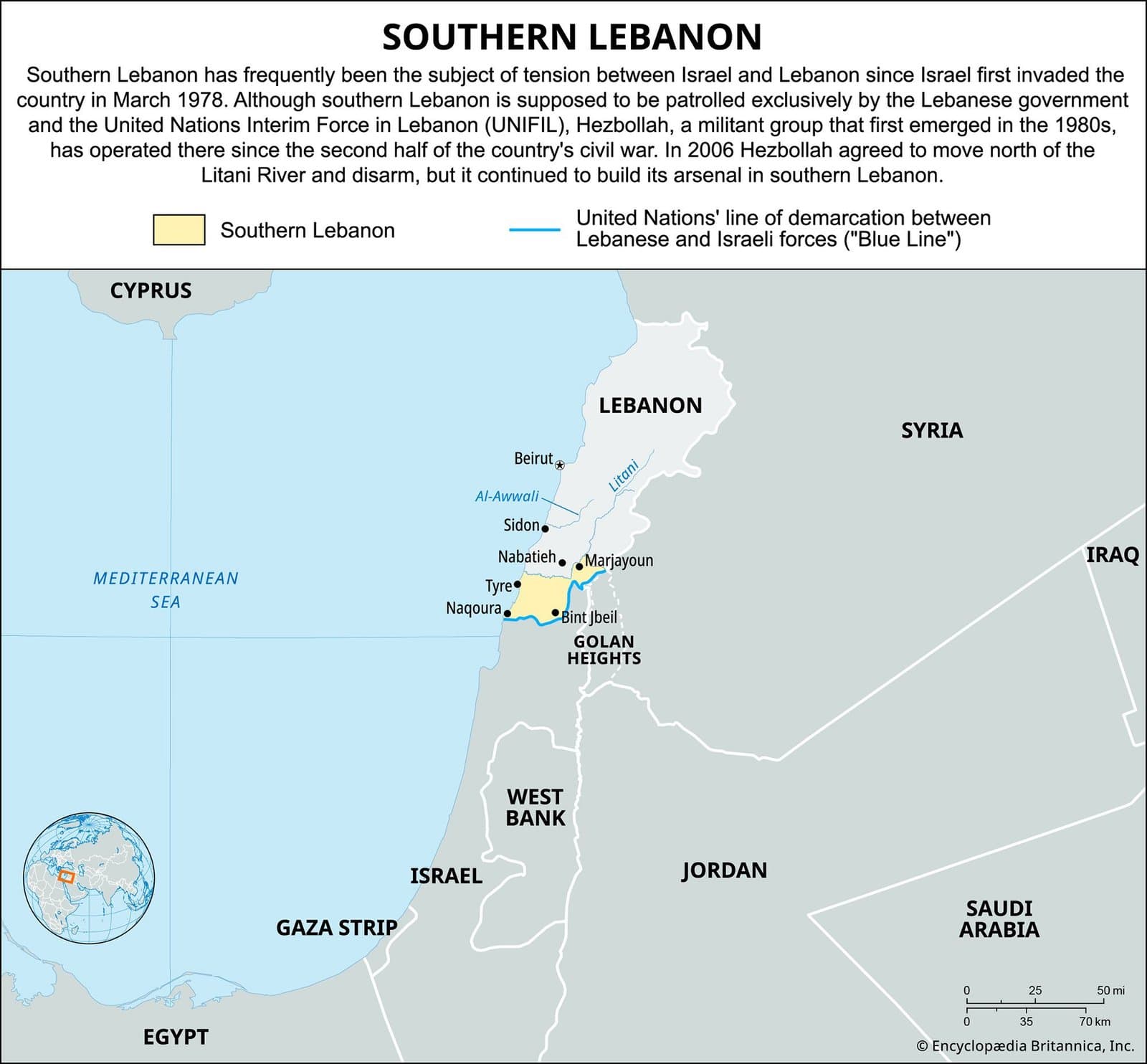
The Israeli army has launched a series of airstrikes on several towns in southern Lebanon, violating a ceasefire agreement reached in June. The attacks, which have resulted in the destruction of homes and villages, are a response to a Hezbollah explosive drone that allegedly crossed the ‘Yellow Line’, an area Israel claims as a ‘security zone’ inside Lebanese territory.
The Israeli military has stated that its actions are necessary to protect its citizens and maintain security in the region. However, the Lebanese government has condemned the attacks, stating that they are a clear violation of the ceasefire agreement and an infringement on Lebanese sovereignty. The situation remains tense, with fears of further escalation in the conflict.
- Israel launches airstrikes on southern Lebanon towns
- Violates ceasefire agreement reached in June
- Response to Hezbollah explosive drone crossing ‘Yellow Line’
Israeli Military Statement
The Israeli military has released a statement justifying its actions, citing the need to protect its citizens and maintain security in the region. “We will not tolerate any breaches of our security and will take all necessary measures to protect our citizens,” said an Israeli military spokesperson. The statement has been met with criticism from the Lebanese government, which has accused Israel of violating the ceasefire agreement and infringing on Lebanese sovereignty.
Lebanese Government Response
The Lebanese government has condemned the Israeli airstrikes, stating that they are a clear violation of the ceasefire agreement and an infringement on Lebanese sovereignty. “We call on the international community to condemn these attacks and to take immediate action to prevent further escalation,” said a Lebanese government spokesperson. The situation remains tense, with fears of further escalation in the conflict.
Regional Implications
The Israeli airstrikes on southern Lebanon towns have significant regional implications, with the potential to destabilize the entire Middle East. The conflict between Israel and Lebanon has been ongoing for decades, with periodic outbreaks of violence. The latest escalation has raised concerns among regional and international powers, with calls for calm and restraint.
International Community Response
The international community has responded to the Israeli airstrikes with concern, calling for calm and restraint. The United Nations has issued a statement urging both parties to respect the ceasefire agreement and to avoid further escalation. “We urge all parties to exercise restraint and to respect the ceasefire agreement,” said a UN spokesperson. The situation remains tense, with fears of further escalation in the conflict.
Future Outlook
The future outlook for the conflict between Israel and Lebanon remains uncertain, with the potential for further escalation. The Israeli airstrikes on southern Lebanon towns have raised tensions in the region, with concerns among regional and international powers. The international community will be closely monitoring the situation, with calls for calm and restraint. For the latest news and updates, visit Watan News.
Conclusion
In conclusion, the Israeli airstrikes on southern Lebanon towns have significant regional implications, with the potential to destabilize the entire Middle East. The conflict between Israel and Lebanon has been ongoing for decades, with periodic outbreaks of violence. The international community must continue to monitor the situation closely, calling for calm and restraint to prevent further escalation.
Q1: What led to the Israeli airstrikes on southern Lebanon towns?
A1: The Israeli airstrikes were a response to a Hezbollah explosive drone that allegedly crossed the ‘Yellow Line’, an area Israel claims as a ‘security zone’ inside Lebanese territory.
Q2: What is the ‘Yellow Line’ and why is it significant?
A2: The ‘Yellow Line’ is an area inside Lebanese territory that Israel claims as a ‘security zone’. It is significant because it marks the boundary beyond which Israel considers any Lebanese or Hezbollah activity to be a threat to its security.
Q3: How has the Lebanese government responded to the Israeli airstrikes?
A3: The Lebanese government has condemned the Israeli airstrikes, stating that they are a clear violation of the ceasefire agreement and an infringement on Lebanese sovereignty.
Q4: What are the regional implications of the Israeli airstrikes on southern Lebanon towns?
A4: The Israeli airstrikes have significant regional implications, with the potential to destabilize the entire Middle East. The conflict between Israel and Lebanon has been ongoing for decades, with periodic outbreaks of violence.
Q5: How can the international community help to prevent further escalation in the conflict?
A5: The international community can help to prevent further escalation in the conflict by calling for calm and restraint, and by urging both parties to respect the ceasefire agreement and to avoid further violence.
Q6: Where can I find the latest news and updates on the conflict between Israel and Lebanon?
A6: You can find the latest news and updates on the conflict between Israel and Lebanon by visiting Watan News.