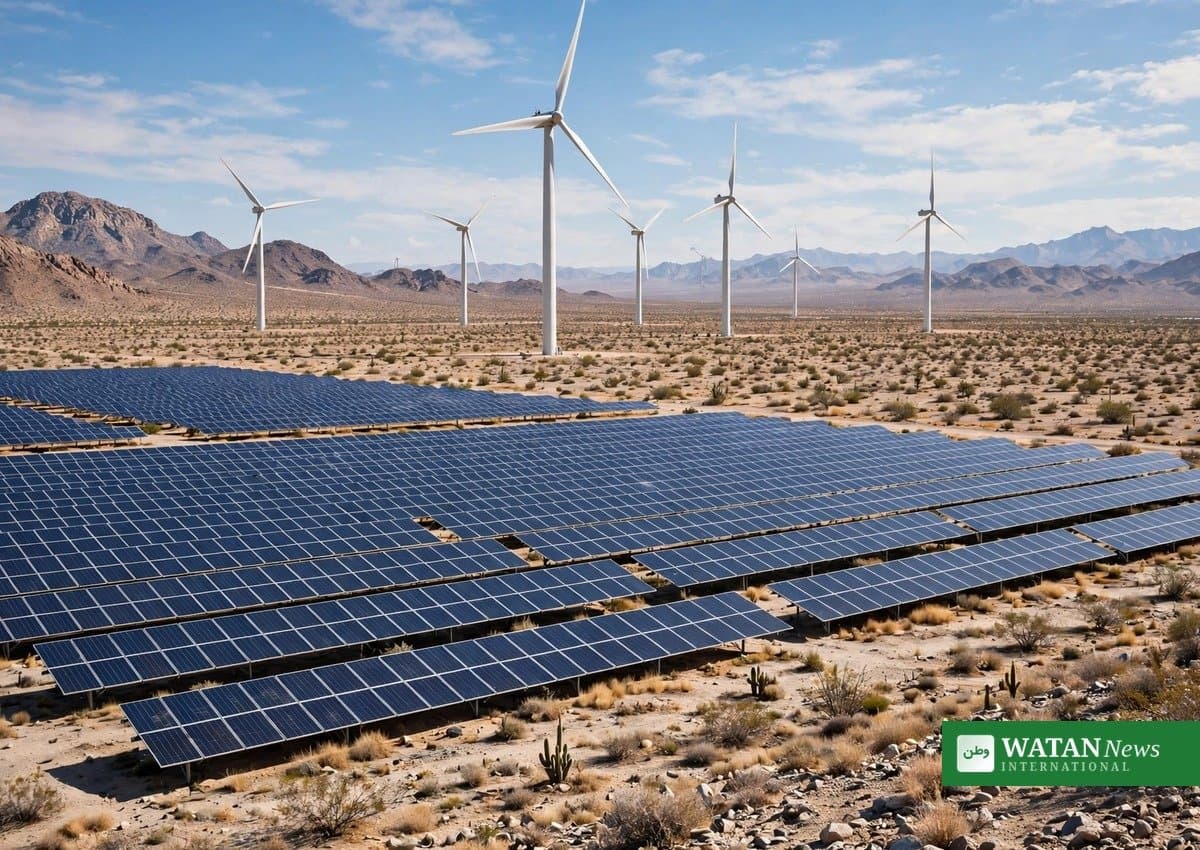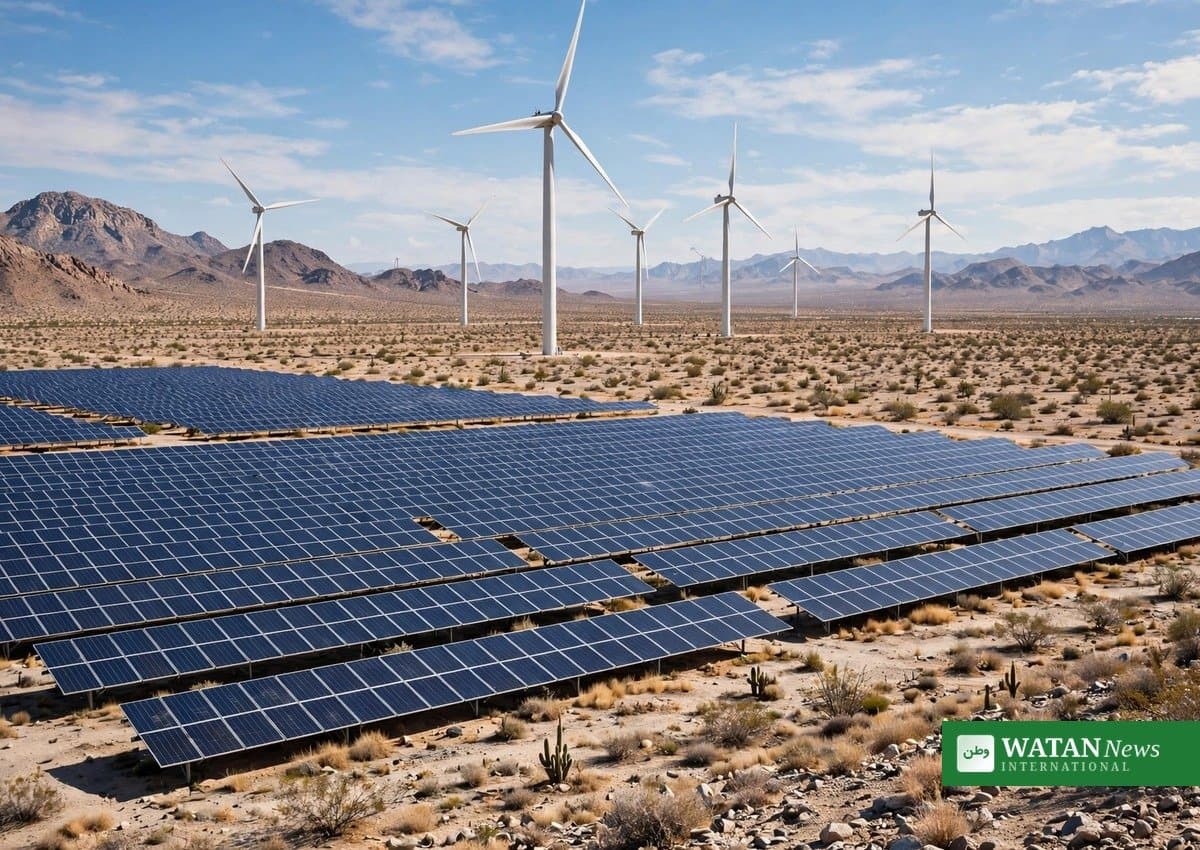
Mexico renewable energy projects took a major step forward this week, as 66 solar and wind schemes totalling 8,241 megawatts advanced to the next stage of the country’s mixed-development tender, while the state utility was reported to be set to approve a separate portfolio of around 60 projects worth an estimated 12.5 billion dollars.
The two reported strands, both covered in October 2026 reporting, point to the same direction: Mexico is moving to add large volumes of wind and solar capacity to a grid that has struggled with seasonal blackouts, under a plan to add about 32 gigawatts of new generation capacity by 2030.
Mexico renewable energy projects advance in the Mixtos II tender
According to Energía Estratégica, reporting updated on 21 October 2026, Mexico’s Energy Ministry (SENER) has selected 66 initiatives totalling 8,241 MW under the second mixed-development call, known as Mixtos II, from 126 projects reviewed. The selected portfolio comprises 57 solar photovoltaic projects totalling 6,310 MW and nine wind projects totalling 1,931 MW.
The report stresses that the list is not yet final and may change in the coming days, both in the number of projects and the capacity attached to each developer. The 34 selected business groups include GEMEX with 814 MW, Freeman with 600 MW, Fisterra with 495 MW, AES México with 474 MW and Invenergy with 468 MW.
Mexican groups account for 18 of the 34 selected groups and 3,814 MW, or 46.3 percent of the selected capacity, followed by Spain with 2,403 MW and the United States with 1,437 MW, according to the same reporting. Denmark is also represented, through Copenhagen Infrastructure Partners with a 150 MW project.
What happens next for the selected projects
Selection is only one stage. According to SENER’s process as described in the reporting, the projects must still pass interconnection assessment, accept the technical costs and meet administrative requirements before the Federal Electricity Commission (CFE) formalises any of them under a partnership scheme.
The next steps include interconnection study payments, with developers given up to five days to pay once amounts are set, and interconnection studies to be prepared within up to 30 days. The Technical Analysis Group must also issue technical opinions, and projects without a favourable opinion cannot continue.
Geographically, the northeast, west and east of the country concentrate 80.1 percent of the selected capacity, with 6,605 MW across 48 projects. The northeast leads with 2,626 MW, including most of the selected wind capacity, while solar dominates in the other regions.
CFE vote reported for a further 8.2 GW portfolio
Separately, Bloomberg reported, via Oilprice on 20 October 2026, that the CFE board was set to approve as many as 60 alternative energy projects, mostly solar, adding about 8.2 GW of capacity at an estimated investment of 12.5 billion dollars, citing unnamed sources. The same reporting cautioned that the final number of approved projects could be lower than 60, and later reporting noted that it did not establish how many projects ultimately received approval.
That portfolio is presented as part of President Claudia Sheinbaum’s plan to add around 32 GW of generation capacity by 2030. Earlier reporting put the renewable share of that new capacity at around 30 percent, down from an earlier expectation of about 70 percent, according to the Bloomberg-based account.
President Sheinbaum said earlier in 2026, in February: “Mexico not only has oil: it has sun and wind, clean energies that allow for fewer environmental impacts.” She has described expanding renewable participation in electricity consumption as the most important energy objective between now and 2030.
Why Mexico is pushing renewables now
Mexico’s grid has been vulnerable to blackouts for years, and reports point in particular to seasonal strain on the hot and humid Yucatán Peninsula, where insufficient generation and years of underinvestment in transmission have been highlighted. Adding renewable capacity can only help if the power can be delivered reliably to where demand is greatest, which is why transmission and interconnection studies are a central part of the process.
The government’s model keeps a majority state role: the state utility is to generate at least 54 percent of the country’s electricity, with the remaining 46 percent open to private generators. Energy Minister Luz Elena González has said private companies were ready to invest 4.75 billion dollars in 3.32 GW of alternative generation capacity across 20 projects, according to Oilprice.
SENER earlier reported a wider pipeline of 42 solar projects totalling 6.86 GW and 13 wind projects totalling just over 4 GW, with CFE participating in around 70 percent of that pipeline, as reported by PV Magazine and cited by Oilprice. A further 4.44 GW of solar and 2.16 GW of wind capacity were awaiting allocation.
The Mexican push comes as the International Renewable Energy Agency (IRENA) says global renewable power capacity must grow from about 5.2 terawatts today to around 38.2 terawatts by 2050, with grids, storage and flexibility keeping pace. Read more in our earlier coverage: IRENA: Renewable Power Must Grow to 38.2 TW by 2050.
FAKTA
- 66 projects totalling 8,241 MW advanced in Mexico’s Mixtos II mixed-development tender, according to Energía Estratégica reporting updated 21 October 2026.
- The Mixtos II selection comprises 57 solar projects (6,310 MW) and nine wind projects (1,931 MW), across 34 business groups.
- The selection is not final: projects must still pass interconnection studies, technical opinions and administrative steps before formalisation.
- Separately, Bloomberg reported via Oilprice that the CFE board was set to approve up to 60 projects adding about 8.2 GW at an estimated 12.5 billion dollars; the final approved number is not confirmed in available reporting.
- Mexico aims to add around 32 GW of generation capacity by 2030, with the state utility generating at least 54 percent of electricity and 46 percent open to private generators.
Conclusion
Mexico’s renewable programme is advancing on paper at scale, but the decisive test is delivery: interconnection studies, transmission investment and final approvals will determine how much of the reported 8,241 MW — and of the separately reported 8.2 GW portfolio — actually reaches the grid.