Morocco has denied involvement in the mass migrant crossing into Spain’s North African enclave of Ceuta in July, after Spain declassified intelligence reports that had warned of potential ‘mass entries’ by migrants into Ceuta just before the incident occurred. Morocco’s Foreign Ministry rejected accusations that Rabat was involved in the migrant influx, saying there is no evidence of its involvement in the mass crossing.
- At least 100 people died in the unprecedented surge, according to local officials and civil organisations.
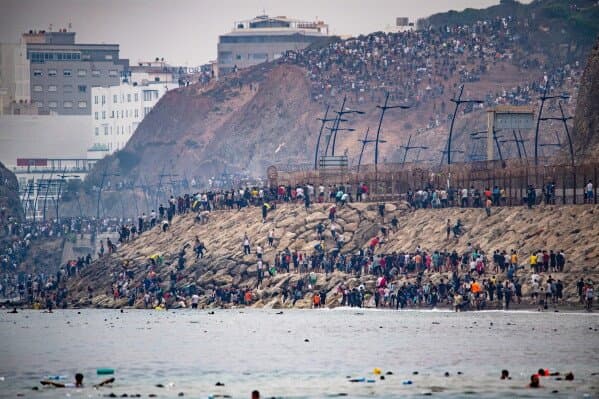
- More than 70,000 migrants entered Ceuta from nearby Morocco on July 30 and 31.
- Thousands of migrants, including unaccompanied minors, remain in the enclave where they are living in makeshift camps or on the streets and beaches.
Local Protests
Residents have been holding near-daily protests, expressing anger at the Spanish government’s handling of the crisis.
Spain’s opposition parties have accused Rabat of facilitating or orchestrating the crossing, which it denies.
Accusations and Denials
“Why continue to level accusations against Morocco when no evidence, facts, or reports establish any involvement on the part of Moroccan authorities?” the Moroccan Foreign Ministry said in a statement.
“Why are illegal migrants not being returned, even though the Moroccan government has officially committed to readmitting them? Why are unaccompanied minors being kept away from their families, when Morocco has urgently requested their return?” it added.
Moroccan-Spanish Relations
The ministry highlighted the close security, migration and economic ties between Rabat and Madrid since Prime Minister Pedro Sanchez backed Morocco’s autonomy plan for Western Sahara in 2022.
Migrant Crossing and Western Sahara
Morocco does not recognise Spanish sovereignty over Ceuta or Melilla, the other autonomous Spanish enclave bordering Morocco.
Migration and Economic Cooperation
Madrid has accused Rabat of fuelling the migrant crisis, saying the recent cross-border exodus is a result of “negligence and lack of cooperation” by Morocco.
Morocco has strongly denied the allegations, stressing that the authorities are doing their best to manage the flow of migrants and are committed to readmitting them.
EU Support
Spain’s government has sought EU support to process the 5,000 migrants remaining in Ceuta and has deployed military resources to manage the crisis.
Regional Tensions
The tensions between Madrid and Rabat over the migrant crisis come as regional neighbours have long-standing differences over the Western Sahara conflict.
Migration Crisis in Ceuta
The Moroccan Foreign Ministry further asserts that Morocco refuses to be used as a “pre-election political pawn”, nor does it accept being made the “scapegoat in political score-settling”.
Long-term Tensions
Spain will hold national elections by mid-2027.
Spanish Protests
Thousands protest in Spain as Ceuta’s migration crisis festers a month on.
International Reactions
Spain’s Sanchez says Russia, Israel spread disinformation on Ceuta crisis.
European Union Involvement
Spain asks EU for help to process 5,000 Ceuta migrants amid local unrest.
Conclusion
Morocco has denied involvement in the mass migrant crossing into Spain’s Ceuta in July, amid growing tensions between Madrid and Rabat over the crisis.
Q1: What led to the mass migrant crossing into Ceuta in July?
A1: A declassified military intelligence document stated that it is “highly likely that the Moroccan authorities are not actively encouraging the migratory wave, but have so far acted in a negligent and passive manner”.
Q2: How many migrants entered Ceuta from Morocco?
A2: More than 70,000 migrants entered Ceuta from nearby Morocco on July 30 and 31.
Q3: How many migrants died in the unprecedented surge?
A3: At least 100 people died in the mass migrant crossing into Spain’s Ceuta.
Q4: How many migrants remain in Ceuta?
A4: Thousands of migrants, including unaccompanied minors, remain in the enclave where they are living in makeshift camps or on the streets and beaches.
Q5: Who is responsible for the migrant crisis in Ceuta?
A5: Morocco has denied involvement in the mass migrant crossing into Spain’s Ceuta, amid growing tensions between Madrid and Rabat over the crisis.
Q6: What is the relationship between Morocco and Spain?
A6: The ministry highlighted the close security, migration and economic ties between Rabat and Madrid since Prime Minister Pedro Sanchez backed Morocco’s autonomy plan for Western Sahara in 2022.
Q7: What is the current migration crisis in Ceuta?
A7: Spain has sought EU support to process the 5,000 migrants remaining in Ceuta and has deployed military resources to manage the crisis.
Q8: What are the long-term implications of the Ceuta migrant crisis?
A8: The tensions between Madrid and Rabat over the migrant crisis come as regional neighbours have long-standing differences over the Western Sahara conflict.
Q9: What is the reaction of the Spanish government to the migrant crisis?
A9: Spain’s opposition parties have accused Rabat of facilitating or orchestrating the crossing, which it denies.
Q10: What is the role of the European Union in the migrant crisis in Ceuta?
A10: Spain asks EU for help to process 5,000 Ceuta migrants amid local unrest.
Q11: What is the future of the Ceuta migrant crisis?
A11: The Moroccan Foreign Ministry further asserts that Morocco refuses to be used as a “pre-election political pawn”, nor does it accept being made the “scapegoat in political score-settling”.