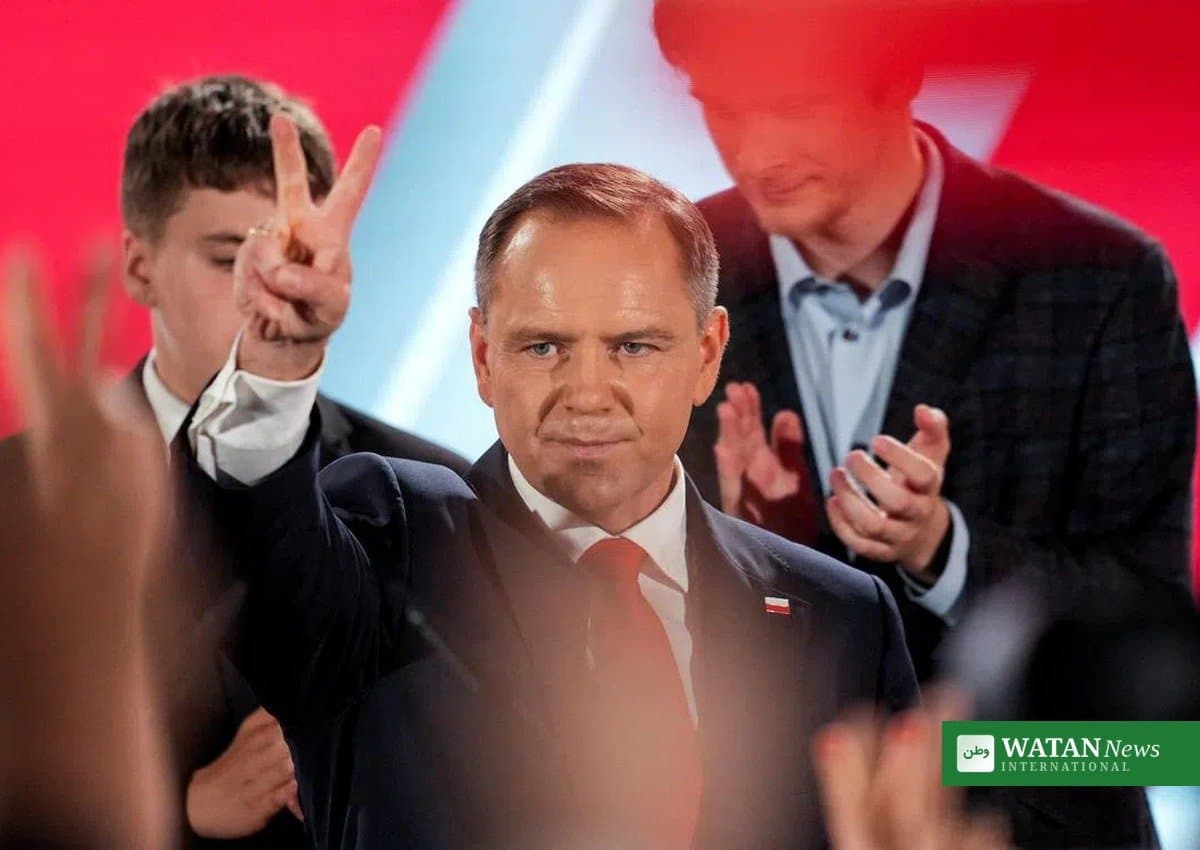
Poland has been plunged into a fresh constitutional confrontation after the president of its Constitutional Tribunal was suspended, police secured the court’s building in Warsaw, and President Karol Nawrocki turned his plane back mid-flight from a trip to Senegal to return home. The Poland court crisis has reopened a long-running dispute over who controls the country’s top court, with the government and the president offering sharply different accounts of what happened.
FAKTA
- What happened: The Constitutional Tribunal said on its website on Friday, 30 October, that its president, Bogdan Święczkowski, had been suspended.
- Police action: Police entered and secured the tribunal’s premises after incidents outside the building; three people were detained after some protesters breached the court’s fence and threw objects at officers.
- President’s response: President Karol Nawrocki, who was flying to Senegal, turned his plane around and returned to Warsaw.
- Government position: Prime Minister Donald Tusk said restoring the rule of law was his government’s obligation.
- President’s camp: Critics of the suspension, including former Justice Minister Zbigniew Ziobro, described it as an attack on the constitutional order.
Poland court crisis: president cuts short Senegal trip
Mr Nawrocki was en route to Senegal for a state visit when news of the suspension reached him. In a post on X, he wrote: “At a moment like this, the President must be in Poland. I am cutting short my flight to Senegal. I am returning.”
Police said officers entered the premises of the Constitutional Tribunal after incidents outside the court, including the throwing of dangerous objects at police. Dozens of protesters gathered outside the building on Friday to demonstrate against what they described as the wrongful suspension of the court’s president, and police remained on guard outside the premises on Saturday.
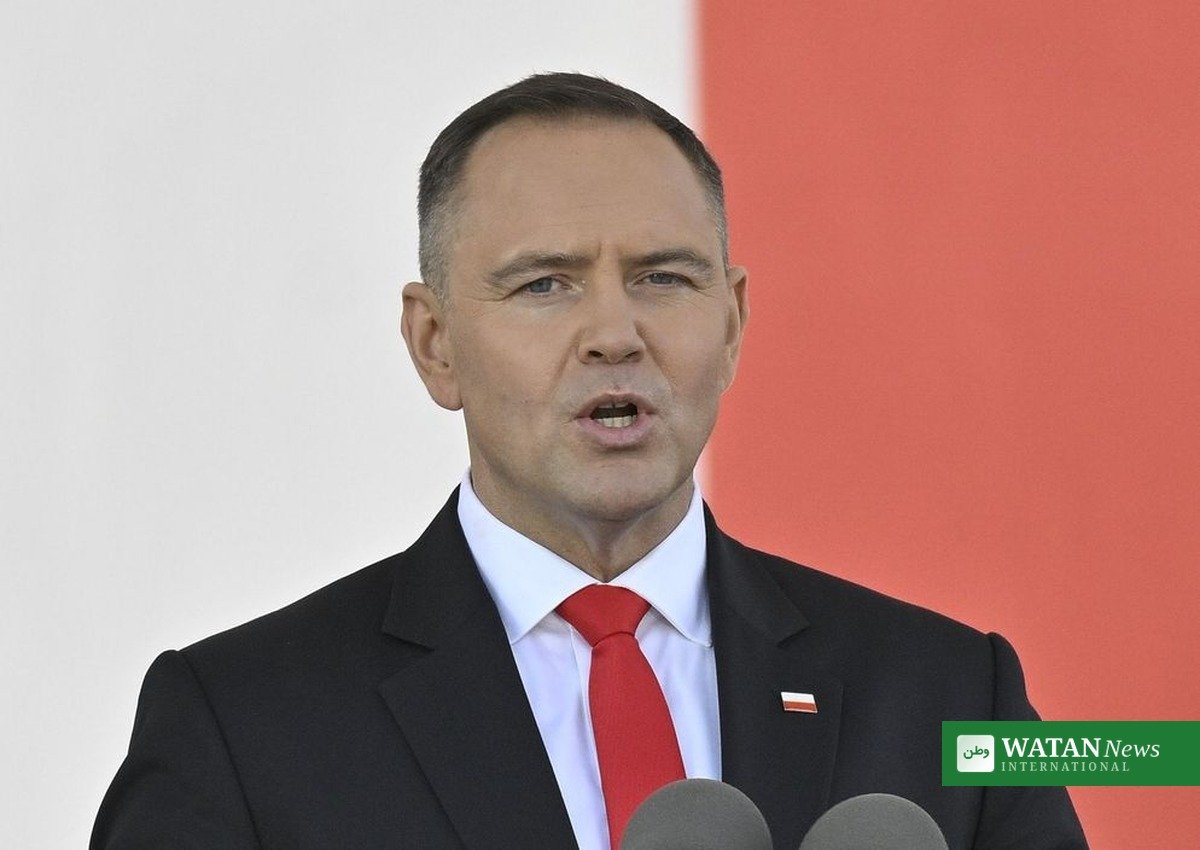
Polish President Karol Nawrocki speaking at a podium. File photo.
Two competing accounts of the suspension
The information about Mr Święczkowski’s suspension was published on the tribunal’s website at around 6 p.m. local time on Friday. The website went down soon afterwards, and the Associated Press reported that it could not independently verify the official reasons given for the suspension.
Prime Minister Tusk, writing on X on Friday evening, said: “Restoring the rule of law is our obligation.” He added: “After years of lawlessness under PiS this is a difficult process, sometimes painful and it requires decisive action. There is no other way.”
Politicians from Law and Justice (PiS), currently the largest opposition force, criticised the suspension. Former Justice Minister Zbigniew Ziobro wrote on X that it was “a blatant, criminal attack on the constitutional order” and called for resistance that would be “loud, firm, solidary and fearless”.
Why the tribunal has been at the centre of dispute for years
Poland’s top judicial bodies, including the Constitutional Tribunal, have been a major bone of contention between the current pro-European government and PiS, which led the country between 2015 and 2023. Critics in Poland and the European Union accused PiS of imposing political control over key judicial institutions, including the tribunal, and the PiS reforms led the EU to impose fines on Poland.
Mr Tusk’s government came to power in 2023 with a promise to restore the independence of the judiciary. Since then, its efforts have been blocked by veto by two successive presidents aligned with PiS, including Mr Nawrocki.
Earlier this year, Mr Nawrocki refused to swear in three of six judges nominated by parliament, while Mr Święczkowski declined to allow judges elected by the current parliamentary majority to assume their duties. Reuters has reported that the long-running political dispute over the tribunal has effectively paralysed the institution.
Mr Święczkowski, a former deputy justice minister under the PiS government, had been accused by Mr Tusk of blocking judges elected by the parliamentary majority from taking up their posts.
What happens next
As of Saturday morning, neither side had backed down, and the tribunal’s leadership remained disputed. The standoff is the latest chapter in a dispute that has already drawn in the European Union and shaped Polish politics for a decade, and further protests and legal challenges are expected in the coming days. For more European news, see Watan News Europe coverage.