
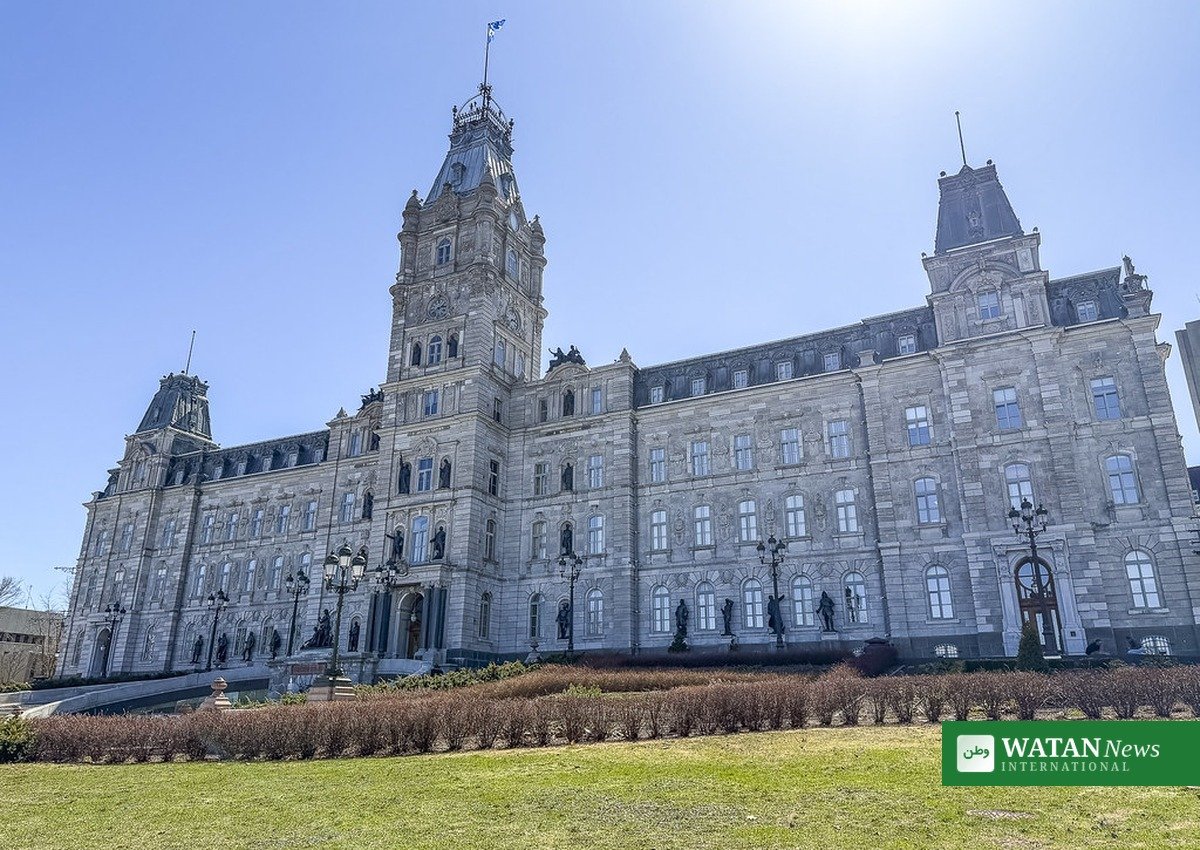
The separatist Parti Québécois has won Quebec’s provincial election, The Canadian Press projected on Monday, returning to power a party that has promised another referendum on Quebec’s independence. The Parti Québécois Quebec election victory makes leader Paul St-Pierre Plamondon set to become the province’s next premier in one of the most consequential political results in Canada in years.
The victory marks a dramatic political comeback for the PQ, which won just three seats in the 2022 provincial election and last governed Quebec from 2012 to 2014. It also ends eight years of rule by the Coalition Avenir Québec, putting the question of Quebec’s future in Canada back at the center of the country’s politics.
FAKTA
- Winner: Parti Québécois — leader Paul St-Pierre Plamondon set to become premier
- Election: Quebec provincial election, Monday, October 5, 2026
- Government: Projections point to a minority — short of the 64 seats needed for a majority in the 127-seat National Assembly
- Key promise: Another referendum on Quebec independence during his first term — but not while Donald Trump is U.S. president
- The comeback: From just 3 seats in 2022; last governed Quebec 2012–2014
- Ends: Eight years of rule by the Coalition Avenir Québec
- Context: Quebec rejected independence in referendums in 1980 and 1995; support for sovereignty stands at about 30 percent, historically low
The Parti Québécois Quebec election victory
The Canadian Press projected the PQ victory on Monday evening as results came in across the province. While it was not yet clear whether the party had reached the 64 seats needed for a majority in the 127-seat National Assembly, projections suggested Plamondon could fall a few seats short — raising the prospect of a minority government that would need opposition support to pass major legislation and survive confidence votes.
The independence referendum promise
During the campaign, Plamondon promised a third referendum on Quebec leaving Canada during his first term as premier — but with a condition. He said he would wait until U.S. President Donald Trump leaves office in January 2029, arguing that the political and economic uncertainty created by the current U.S. administration makes this the wrong time for such a consequential vote.
The Parti Québécois Quebec election result marks a remarkable turnaround for a party that has been out of power since 2014, when its last government ended. Quebec’s two previous independence referendums, in 1980 and 1995, both failed — the 1995 vote by the narrowest of margins — and there has been no further referendum in the three decades since.
Political analysts caution that a separatist victory does not mean most Quebecers want to leave Canada. Daniel Béland, a political science professor at McGill University in Montreal, told the Associated Press that the result reflects Quebec’s multiparty system, where support is divided among several parties, rather than a surge in secessionist sentiment. Support for independence remains at about 30 percent — low by historical standards, he said.
Quebec held two previous referendums on independence, in 1980 and 1995, and voters rejected secession both times. The 1995 vote was decided by a narrow margin, but there has been no further referendum in the three decades since.
Why it matters for Canada
The Parti Québécois Quebec election outcome poses a new national-unity challenge for Prime Minister Mark Carney’s government. It comes barely two weeks before Albertans vote on whether to hold a referendum on separation from Canada — a convergence that keeps the country’s unity question firmly in the spotlight. For Carney’s federal government, the result means dealing with a separatist government in Quebec City while also watching the Alberta vote — the two biggest tests of Canadian unity in decades.
For more coverage of the Americas, see Watan News America coverage.