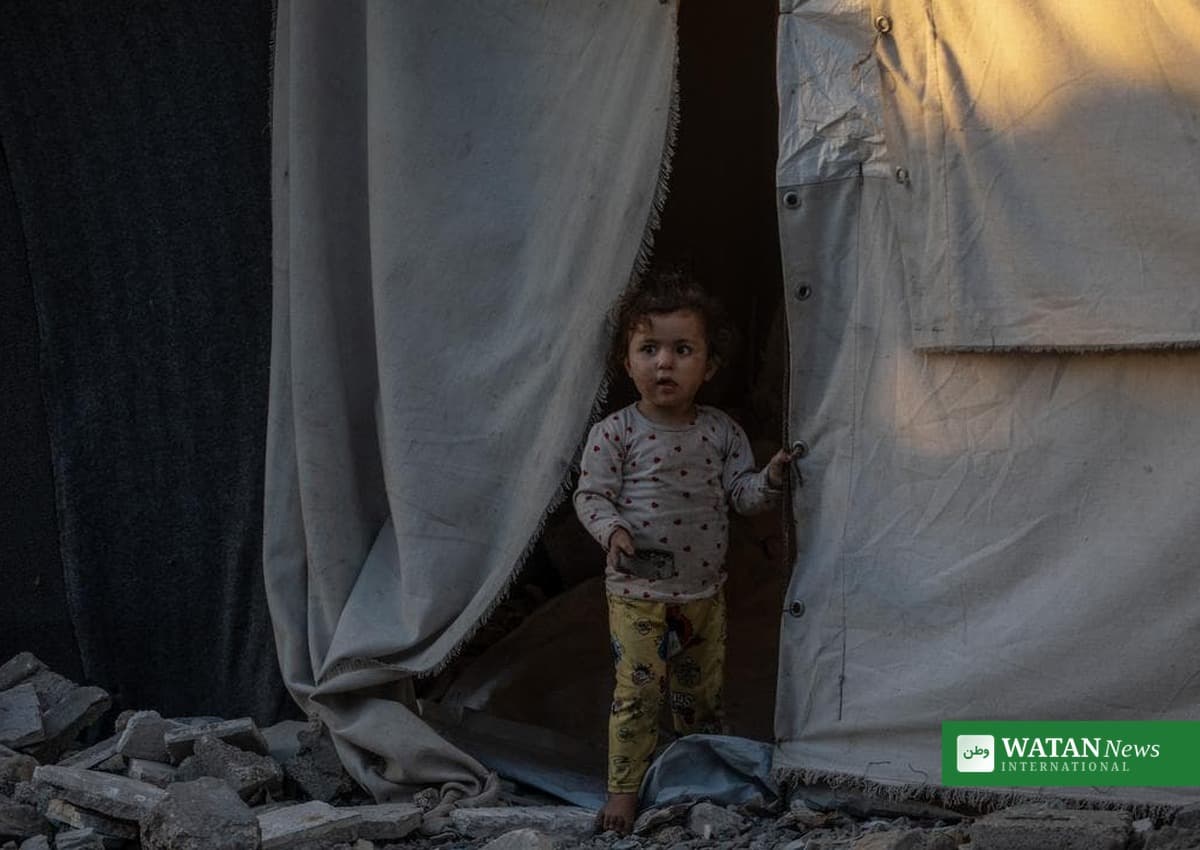
The Board of Peace has warned the United Nations Security Council that the Gaza ceasefire collapse could come soon unless both sides urgently honour the agreement reached in 2025, leaving more than two million Palestinians facing another winter in tents and rubble.
In a 12-page report submitted to the council on Tuesday, the body overseeing the United States-brokered ceasefire accused both Israel and Hamas of failing to meet their commitments, saying the gap between what was agreed and what is happening on the ground is now the main threat to the process.
FAKTA
- What happened: The Board of Peace delivered its second report to the UN Security Council, warning that the Gaza ceasefire could collapse without urgent action.
- When: The report was submitted on Tuesday, 17 November 2026. The board is expected to present its findings to the council in New York at the end of November.
- Who: The Board of Peace, established by US President Donald Trump to oversee his plan to end the war in Gaza and its reconstruction.
- Killed since the ceasefire: More than 1,600 Palestinians, including many civilians, and five Israeli soldiers, according to Reuters. Gaza health authorities put the Palestinian toll at as many as 1,650.
- At risk: More than two million Palestinians, most of them living in makeshift tents and damaged buildings.
Why the Board of Peace fears a Gaza ceasefire collapse
The ceasefire halted major fighting, but the wider plan — under which Hamas would disarm, Israeli troops would withdraw and reconstruction would begin — has effectively stalled since soon after it came into effect in October 2025.
Hamas agreed in July to a Board of Peace roadmap to surrender its weapons and transfer governance of Gaza to a civilian transitional authority, but Israel rejected the roadmap, saying it will not withdraw until Hamas is dismantled. On Wednesday, Defence Minister Israel Katz said Israel would not withdraw from Gaza until Hamas was dismantled and Gaza was demilitarised.
Israel has carried out near-daily strikes on Gaza, while the report said Hamas fighters have also continued attacks on Israeli troops. “Every day that Israel continues strikes against Hamas targets, it delays putting Hamas’ agreement to the roadmap to the test,” the report said.
“The distance between what has been agreed and what is happening on the ground nonetheless remains the principal risk to the process,” the report said, warning that “a ceasefire that delivers nothing visible cannot be sustained indefinitely.”
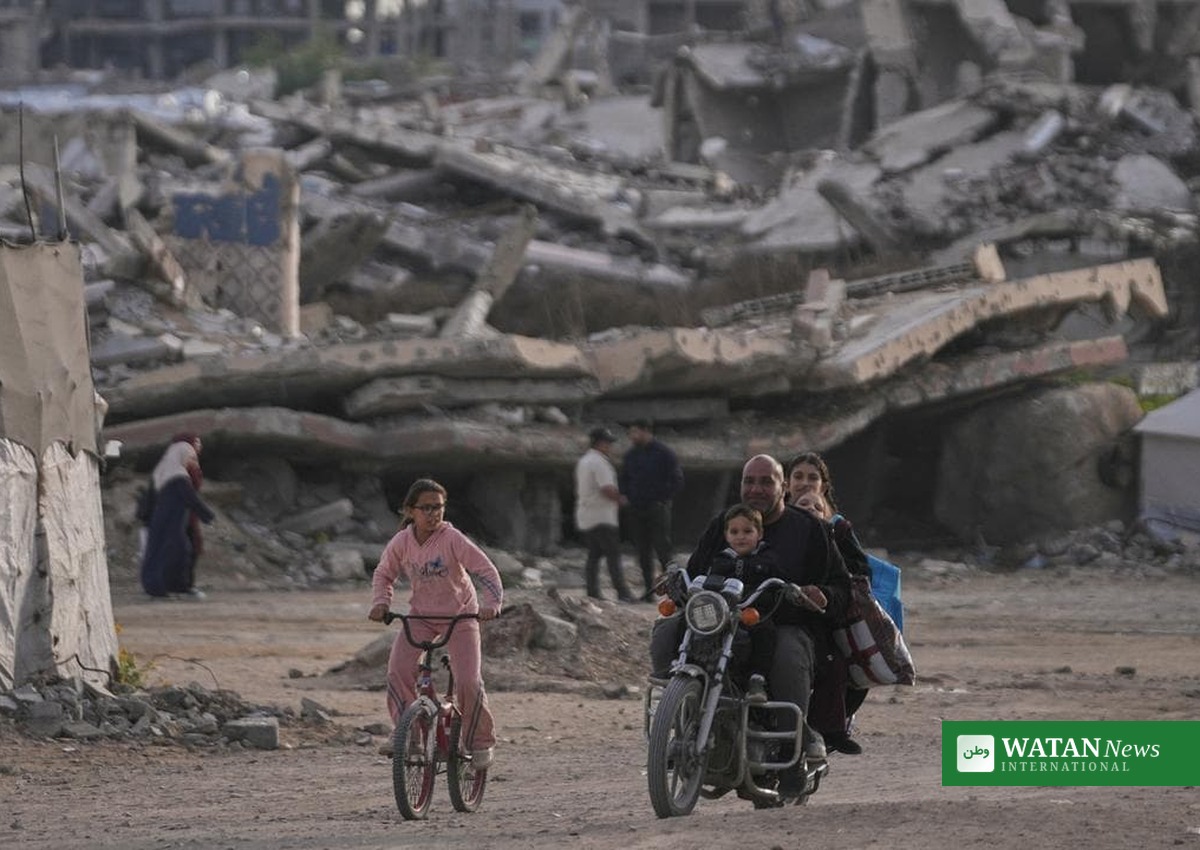
Displaced families move through destroyed buildings and tents in Gaza, where more than two million people are confined to around a third of the territory. (Photo: Watan News)
Winter in tents and rubble
Gaza’s population of more than two million Palestinians lives confined to around a third of the coastal territory, mostly in makeshift tents and damaged buildings, under the control of Hamas fighters. Israel occupies two-thirds of Gaza, which has been largely razed and depopulated.
“Meanwhile, Hamas militant activity continues, the commitment to cease all military activities has not been met in full by the parties, and the population faces another winter in tents and rubble,” the report said.
The report said restrictions imposed by Israel on supplies and equipment, alongside funding shortfalls, had hindered the ability of Gazans to prepare for and respond to seasonal flooding. Heavy rain inundated displacement camps last week across Gaza, and more rain is expected later this month.
The board called for the immediate “scaled-up entry of shelter and winterisation materials” and approvals for pumps, generators and heavy machinery. It also noted that Hamas was collecting taxes on goods entering Gaza, which was affecting the availability of basic commodities.
What the board is asking for
The report criticised Israel’s government for an “absence of decisions” on arrangements to train and deploy a civilian Palestinian police force to replace Hamas as Gaza’s law enforcement authority, saying this was impeding the full implementation of the plan.
The technocratic civil administration the board created to run Gaza on an interim basis has still not been allowed by Israel to take up its job in the territory, the report said. “The Board of Peace calls on the government of Israel to take these decisions without delay.”
The lack of approvals has in turn delayed the deployment of an international stabilisation force, which is key to Israel’s withdrawal of troops from Gaza, the disarmament of Hamas and the start of reconstruction.
The board appealed to the Security Council to put its full weight behind the agreement it endorsed in 2025 and urge the parties to stop delays. “Neither party may treat the other’s delay as licence for its own inaction, and together these obligations are the only route to Israeli withdrawal and reconstruction at scale,” the report said.
It said the end result “must lead to the credible pathway to Palestinian self-determination and statehood … and no unilateral step should be allowed to foreclose it”.
The office of Israeli Prime Minister Benjamin Netanyahu and a spokesperson for the political office of Hamas did not immediately respond to requests for comment on the report.
The toll so far
Around 1,200 people were killed in Israel in the 2023 Hamas attacks, while the Israeli assault on Gaza has since killed 74,000 Palestinians, according to Reuters.
The board’s first report was delivered in May by its director-general Nickolay Mladenov, who formerly served as a UN Mideast envoy. At the time, he acknowledged to the Security Council that the truce had stalled since taking effect in October 2025, saying the deadlock over disarming Hamas had paralysed progress.
Six months on, the new report echoes those same issues. “Should it collapse, there would be no road map to return to, no administration to deploy and no enabling environment to rebuild,” it warned.
For earlier coverage of the situation in Gaza, see our report on the strike on Nasser Hospital.