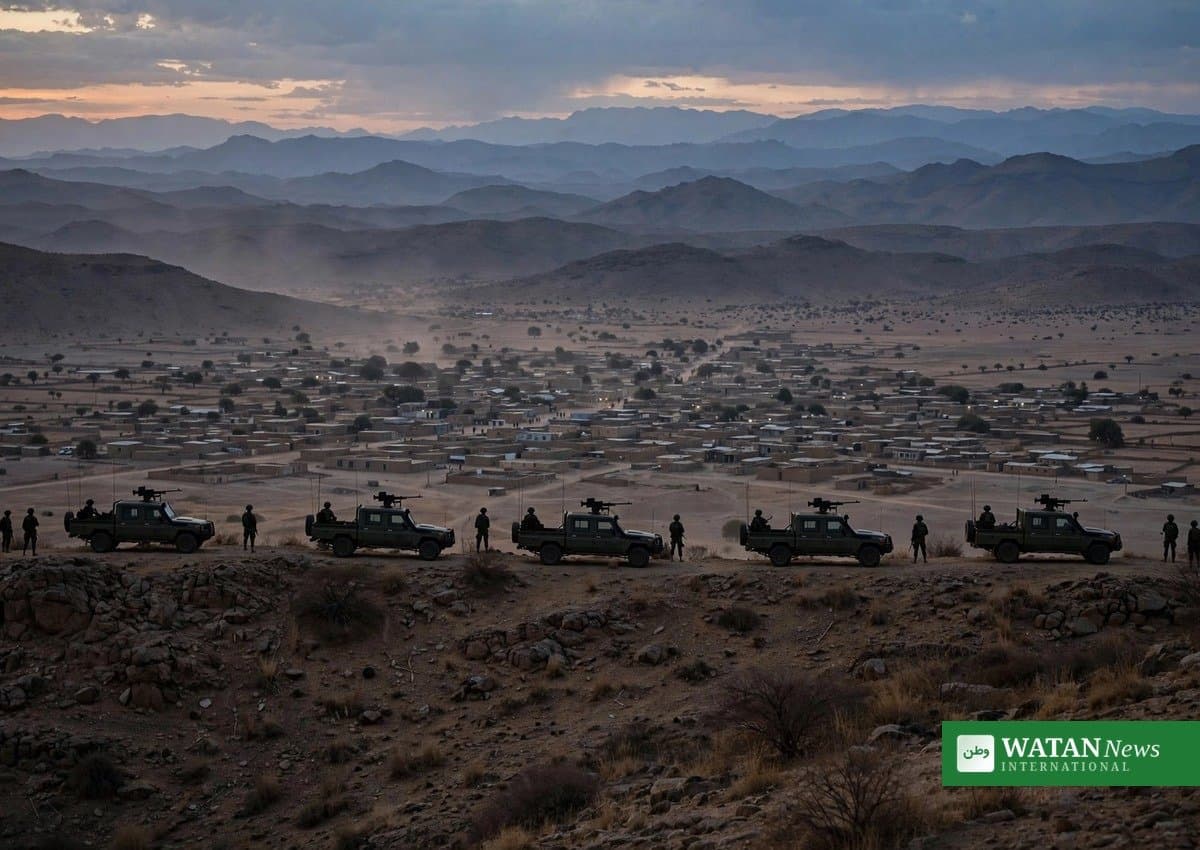
Ethiopian government forces have advanced to the town of Zalambessa on the country’s northern border with Eritrea, a development that has deepened fears of a new war between the two Horn of Africa neighbours. The advance was reported on October 13, as diplomats worked to keep the two countries from sliding back into open conflict.
Six sources, including four people in contact with residents, a diplomat and a conflict expert, said the Ethiopian army reached the town, which is home to around 15,000 people. Zalambessa, Ethiopia’s northernmost settlement, had previously been under the control of Tigrayan rebels. Witnesses said Eritrean troops had crossed into the town last week to support the rebels, although it was not clear whether those forces were still present when the Ethiopian army arrived.
Key Facts
- What happened: Ethiopian troops reached Zalambessa, a border town of about 15,000 people, on October 13, according to six sources cited by Reuters.
- Eritrean claim: Witnesses said Eritrean troops crossed into the town last week to support Tigrayan rebels; their current presence there is unconfirmed.
- Eritrea’s response: Asmara denies any incursion and says Ethiopia’s accusations amount to a “declaration of war”.
- Diplomacy: The UN Security Council held closed talks on the tensions on October 13.
- Background: Fighting reignited on September 23 when a TPLF-led rebel alliance went on the offensive; the 2020–2022 Tigray war killed hundreds of thousands.
Advance to the Border Town
The Ethiopian government’s counter-offensive has driven rebel fighters from a string of towns in recent weeks, forcing them to retreat northward. By early October, government forces had regained control of Mekelle, the capital of the Tigray region. The arrival at Zalambessa brings federal troops to the very edge of Ethiopia, within sight of Eritrean territory.
A spokesperson for a pro-government militia did not confirm that the army had taken control of the town, and spokespeople for Ethiopia’s military and the prime minister’s office did not respond to requests for comment.
Ethiopia–Eritrea Border Tensions at the UN
The two sides have also traded accusations at the United Nations. Ethiopia has accused Eritrea of backing the rebels and pushing up to 60 kilometres into Ethiopian territory. Eritrea has denied the claims and asked the Security Council to take deterrent measures against Ethiopia, arguing that Addis Ababa’s allegations threaten Eritrean sovereignty.
Eritrea became independent in 1993, leaving Ethiopia landlocked. For more international coverage, visit Watan News.
Fears of a Wider Conflict
Analysts warn that the standoff is especially dangerous because the two countries fought together against the TPLF in the 2020–2022 war and are now on opposing sides again. With other conflicts raging in the region and tensions high across the Red Sea, any miscalculation could spread the fighting further.
Independent verification of troop movements remains limited, and the situation is fluid. The Ethiopia–Eritrea border, quiet for much of the past three years, has become one of the Horn of Africa’s most closely watched flashpoints.