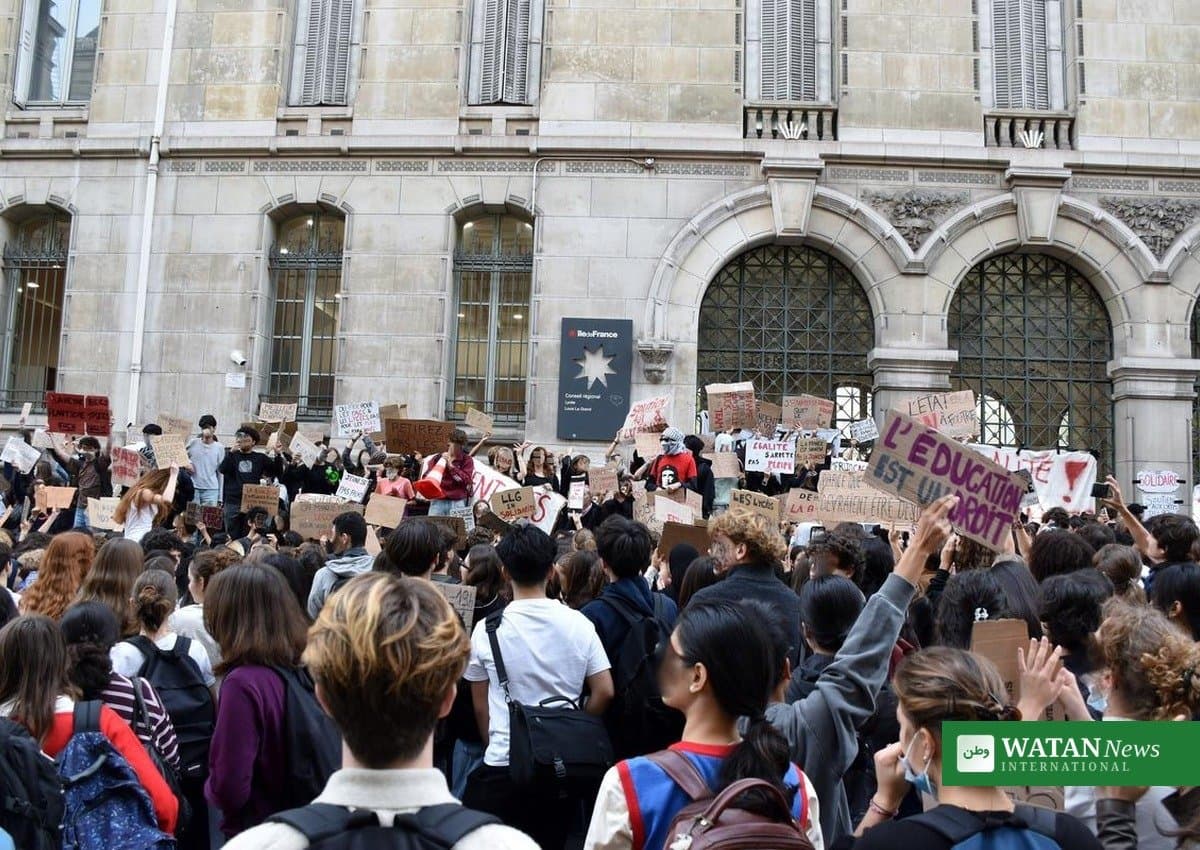
French high school students returned to their classrooms on Monday after a two-week break to find their protest movement still alive, but far quieter than before. Youngsters tried to blockade a small number of schools in Paris, Marseille and Rennes, French media reported, in the first test of whether a campaign that swept France in September and October can regain its earlier force.
The return was calm compared with the weeks before the break, when hundreds of France’s more than 3,000 high schools were blockaded. Police officers were stationed near schools, but not in full riot gear. Education Minister Edouard Geffray called the disruption limited, saying only a handful of schools were affected.
FAKTA
- French school protests resumed on Monday, 2 November 2026, after a two-week break, with attempted blockades in Paris, Marseille and Rennes.
- Hundreds of France’s more than 3,000 high schools were blockaded before the break; the movement began in the Paris suburbs in September.
- Geffray said peaceful protest is allowed, but blocking access to schools is illegal.
- Students want renovated buildings, more teachers, more university places and a fairer admissions system.
- The government offered classes capped at 28, 4 billion euros for renovations, 15,000 extra higher-education places and a new admissions system by 2028. Students say this is not enough.
- Further student action is planned this week, ahead of a cross-sector strike on Thursday, 5 November.
A Quieter Return After Weeks of Disruption
What began as a dispute over school conditions has grown into something much wider. The early blockades centred on run-down buildings, teacher shortages and an admissions system many pupils consider unfair to disadvantaged students. As the weeks passed, the movement broadened beyond education to take in the rising cost of living, drawing in trade union members and activists.
Some earlier demonstrations turned violent, with clashes between protesters and police and shops looted in several cities. The unrest became a difficult test for President Emmanuel Macron’s minority government. Similar youth-led protests have also emerged in Germany, Italy, Belgium and Albania, driven by shared grievances over living costs, schools and perceived corruption.
Geffray drew a line between protest and obstruction: students may demonstrate peacefully, but preventing pupils from entering their schools breaks the law.
What Students Want, and What the Government Offered
At the heart of the dispute are crowded classrooms, unfilled teaching posts and a route into university that many feel is stacked against them. During the break the government offered the class-size cap, the 4 billion euro renovation fund, the extra university places and the new admissions system by 2028.
Student representatives rejected the package as insufficient and said their campaign would continue. Further blockades and a student demonstration are planned for Tuesday, and a cross-sector strike follows on Thursday. The coming days will show whether a quieter Monday was a pause, or the start of a fade.
Read more international coverage on Watan News English.