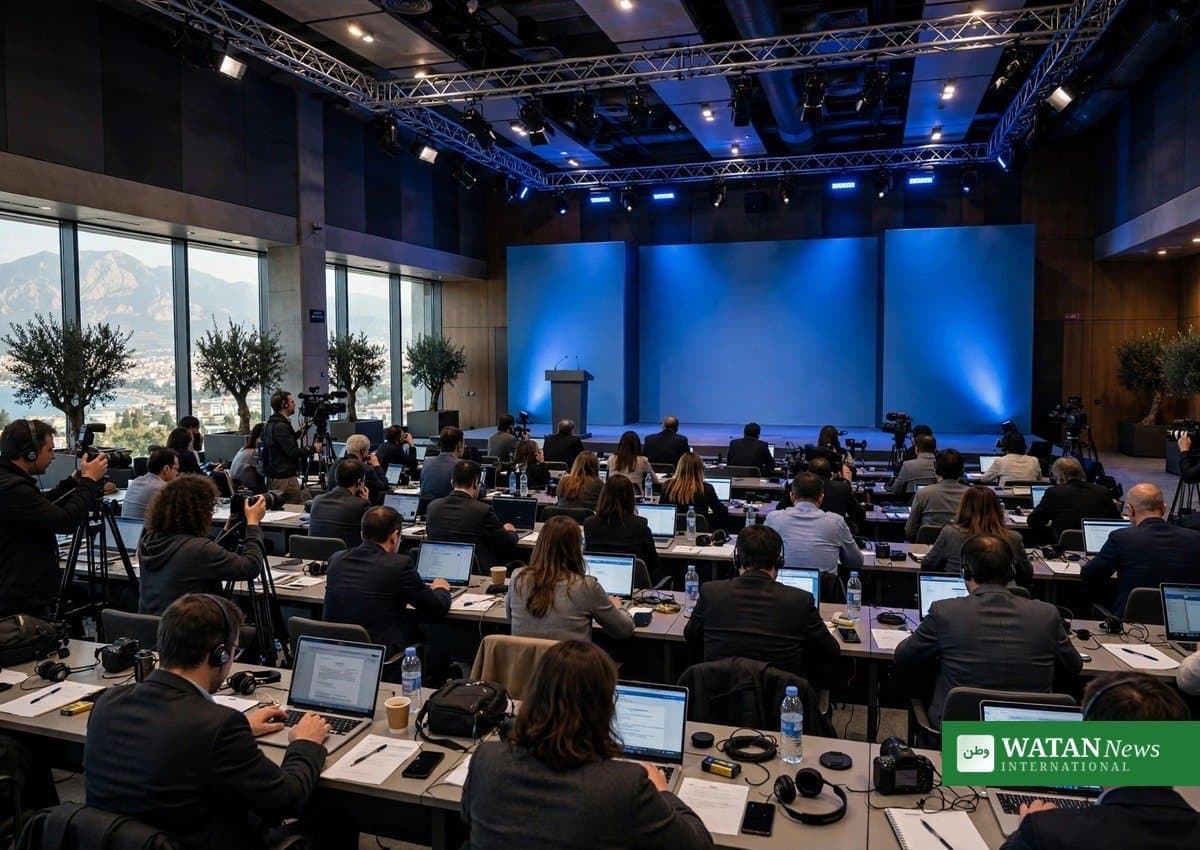

Deputy Prime Minister and Foreign Minister Senator Mohammad Ishaq Dar has warned that India’s attempts to restrict Pakistan’s water share carry “serious security implications” for regional peace and stability. Speaking at an international water symposium in Vienna on 6 October 2026, Dar said there should be “no misunderstanding” about Islamabad’s resolve to protect its rights under the Indus Waters Treaty and international law, calling New Delhi’s move to place the 1960 treaty in abeyance “illegal” and without any basis in the agreement.
FAKTA
- Event: international water symposium in Vienna on 6 October 2026, co-hosted by the Embassy of Pakistan in Vienna and the Diplomatic Academy Vienna, with diplomats, policymakers and scholars.
- Dar’s warning: any attempt to deprive Pakistan of its treaty-allocated waters would have “serious security implications” for regional peace and stability.
- The treaty: the Indus Waters Treaty was signed in 1960 and brokered by the World Bank; it gives India principal use of the eastern rivers (Ravi, Beas, Sutlej) and Pakistan principal use of the western rivers (Indus, Jhelum, Chenab).
- The dispute: India placed the treaty in abeyance in April 2025 after the Pahalgam attack in occupied Kashmir; Pakistan denies any role and says the treaty contains no provision for unilateral suspension.
- The legal position: the Permanent Court of Arbitration ruled on 31 August 2026 that the treaty remains fully in force and India must uphold its obligations; New Delhi rejected the ruling.
- The stakes: the Indus Basin is the lifeline of more than 250 million Pakistanis, with the treaty system serving about 80 per cent of the country’s farms.
Indus Waters Treaty under strain
The 1960 treaty replaced upstream discretion with binding legal obligations and for more than six decades insulated shared waters from political fluctuations, surviving the wars of 1965 and 1971 and the 1999 Kargil conflict. That record cracked in April 2025, when New Delhi unilaterally placed the accord in abeyance following an attack at Pahalgam in India-occupied Kashmir that killed 26 people — an incident India attributed to Pakistan, which Islamabad denied. A brief military confrontation followed in May 2025.
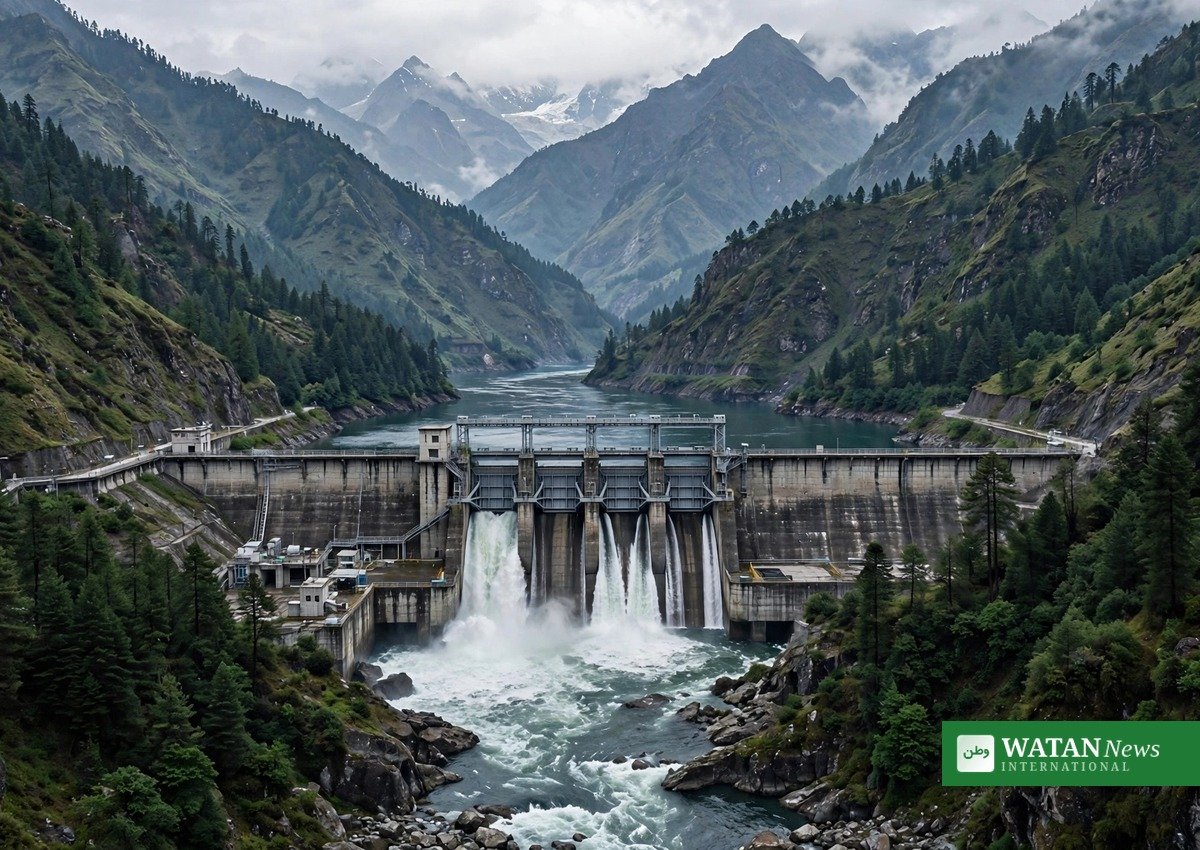
Islamabad’s position, repeated by Dar in Vienna, is that the treaty contains no clause allowing either party to suspend or terminate it unilaterally, and that obligations solemnly undertaken under international law cannot be extinguished by a political declaration. That view was reinforced by the Permanent Court of Arbitration’s order of 31 August 2026, which held that the treaty remains fully in force and that India must observe its obligations, including those on the design and operation of hydroelectric projects on the western rivers. India, while a member of the court, rejected the verdict and said it did not recognise the court’s jurisdiction. A Neutral Expert appointed by the World Bank is to judge by July 2027 whether construction of hydroelectric plants in the Himalayan region complies with the treaty. The Ratle Hydroelectric Plant on the Chenab has become a focal point, with interim measures restricting specified construction activity while treaty-compliance questions are examined.
Water must not become an instrument of pressure
At the Vienna symposium, Dar accused India of “intransigent behaviour” and “illegal actions”, and cautioned against turning shared water into an “instrument of pressure” between nations. He argued that shared river systems create a “permanent interdependence” between geographically linked states, leaving only two choices: governing them through cooperation and legal frameworks, or weaponising them for political leverage.
The message extends beyond Vienna. Days earlier, Pakistan wrote to the UN Security Council urging it to call on India to comply with the treaty and arbitration decisions, resume treaty-mandated cooperation and data sharing, and refrain from measures Islamabad considers inconsistent with treaty obligations — asking that the letter be circulated as an official Security Council document under “The India-Pakistan Question”. In parallel, a side event at the 63rd session of the UN Human Rights Council in Geneva on 2 October warned that the treaty’s suspension puts millions at risk. Pakistan has said it exercised restraint since the abeyance announcement, but its National Security Committee’s position stands: any attempt to stop or divert water allocated to Pakistan under the treaty would be treated as an act of war. Dar has framed the choice as law over unilateralism, dialogue over confrontation, and cooperation over coercion.
Pakistan’s water share: what is at stake
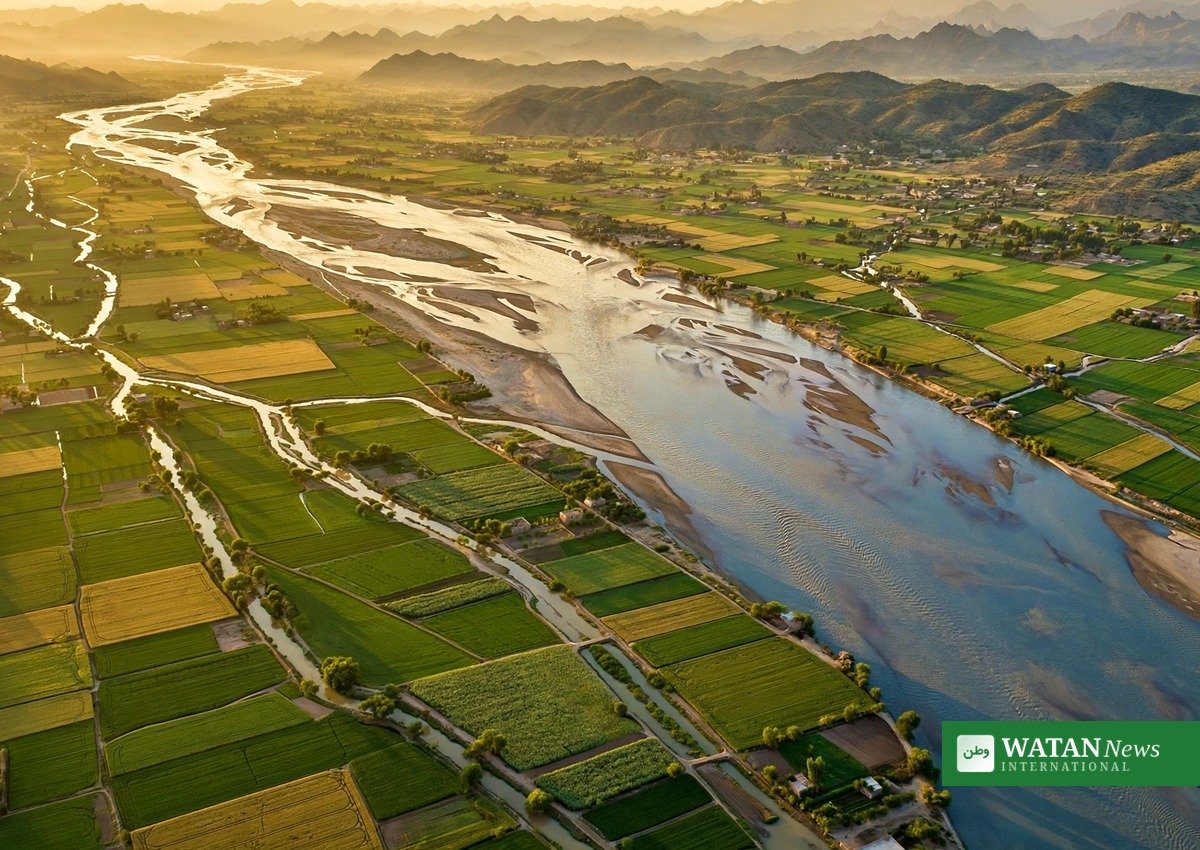
For Pakistan, water security is inseparable from economic security, food security and national security. The Indus River System underpins agriculture — the backbone of the economy — as well as food production, hydroelectric energy, and the ecological systems that sustain life across the country.
The numbers explain Islamabad’s alarm. Pakistan receives an average of 138.4 million acre-feet of water annually from its rivers; its irrigation network runs nearly 64,000 kilometres and waters around 47 million acres. Per-capita annual water availability has already fallen below 1,000 cubic metres, and surface-water availability in 2025–26 stood at 92.0 MAF against average system usage of 103.5 MAF. Shrinking glaciers, erratic rainfall and rising temperatures — the same pressures discussed in Vienna — are tightening the margin further. Any reduction in treaty-allocated flows would land on farms, food prices and energy output, which is why Islamabad views the dispute as reaching beyond a bilateral quarrel into regional stability.
Conclusion
Dar’s address in Vienna underscores how far the Indus Waters Treaty — once the most durable agreement between the two neighbours — has slid toward the front line of their rivalry. Pakistan’s case rests on a simple legal claim: a treaty with no exit clause cannot be suspended by one party’s declaration, and the August 2026 arbitration order backs that reading. India’s answer has been to reject the court’s jurisdiction entirely.
Between those positions lies a narrowing space for the treaty’s own mechanisms — the Permanent Indus Commission, the Neutral Expert process, and the Court of Arbitration — to do the work they were designed for. With a Neutral Expert ruling due by July 2027 and the UN Security Council now seized of Pakistan’s letter, the water dispute is no longer a quiet technical disagreement: it has become a test of whether shared rivers will be governed by law or by leverage.