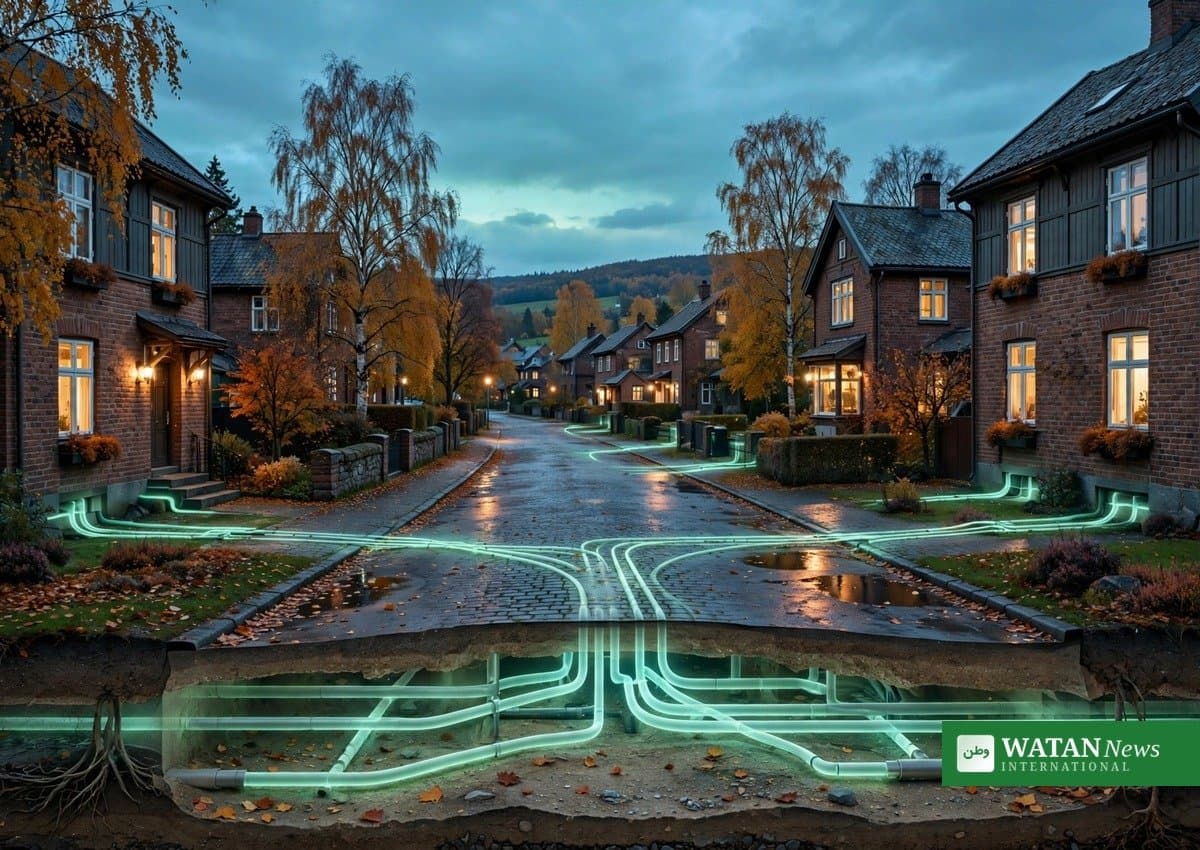
Denmark’s government wants to push the country’s district heating expansion back up to speed. In its 2027 finance bill proposal, the government proposes adding another 200 million Danish kroner to the district heating fund known as Fjernvarmepuljen — a move aimed at helping more Danish households switch from oil and gas boilers to district heating.
Alongside the extra money, the government is changing the rules on how district heating companies can finance new pipes: municipalities will be allowed to take out loans or guarantee loans for heating investments with a maximum term of 45 years instead of 30. The government expects this to lower consumer prices during the first 30 years and make more projects financially viable.
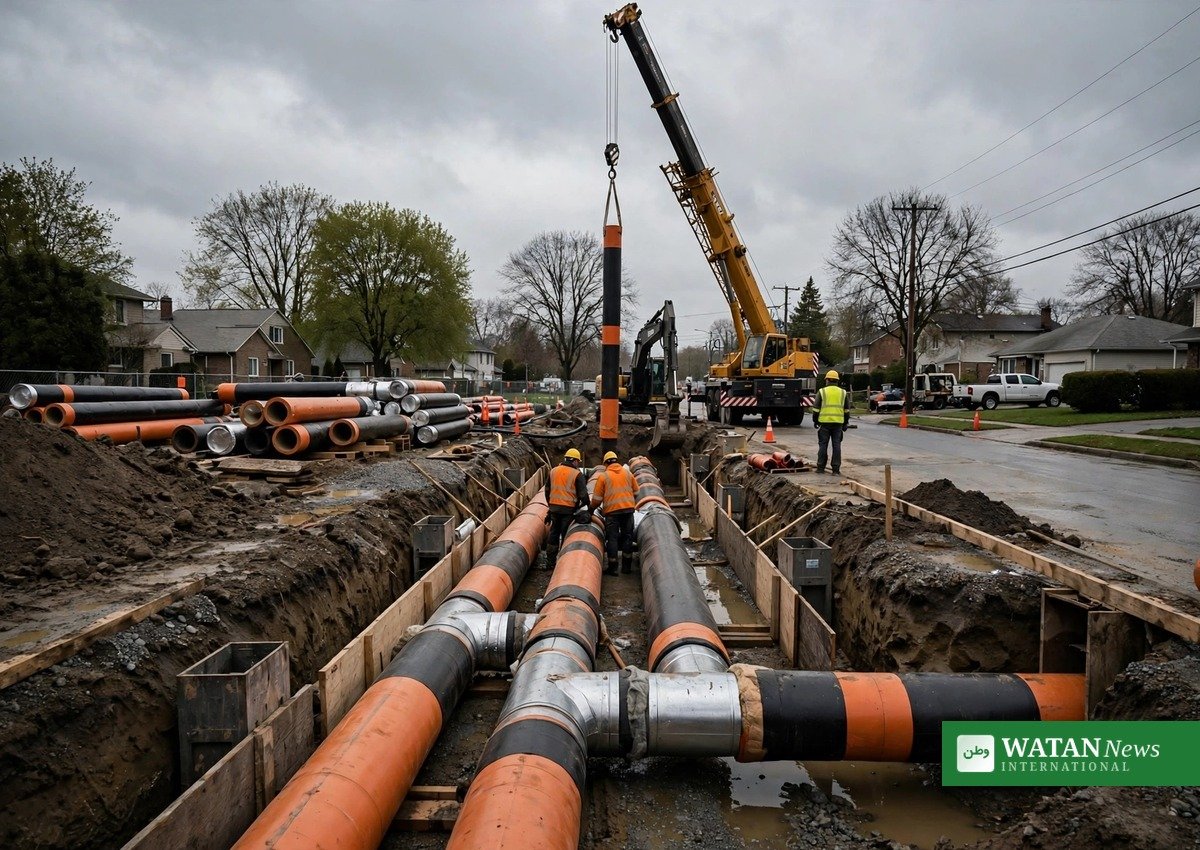
Workers laying insulated district heating pipes in a suburban street. Denmark’s government wants to accelerate the rollout of heating networks to Danish homes.
What the government is proposing
The finance bill proposal is still just that — a proposal — and has yet to be adopted. But it comes on top of measures already in place. Shortly before the summer break, the government reopened Fjernvarmepuljen with 350 million kroner: 300 million in new money for 2026 plus around 50 million carried over from cancelled commitments in earlier years. At the same time, the support rate was doubled, so a household converting to district heating can now receive up to 40,000 kroner, up from 20,000 kroner.
The immediate-grant scheme has already had an effect. According to the ministry, five district heating projects have already applied for support, which could lead to around 2,000 conversions from oil or gas boilers to district heating. If all 550 million kroner are used, the government expects between 14,000 and 19,000 conversions to district heating.
The change to municipal loan rules — expected to enter into force on 1 December 2026 — is something municipalities, companies and industry groups have asked for over a long period. Longer repayment terms let heating companies spread the cost of new pipes over more years, keeping prices down for consumers in the early decades of a project.
Why the rollout has slowed down
District heating covers a large share of Danish homes, but the expansion has lost momentum. Since 2022, around 113,000 gas boilers have been disconnected in Denmark, with most homes switching to district heating, according to the industry association Dansk Fjernvarme. Yet many projects have stalled because the finances no longer add up.
About 246,000 homes still had a gas boiler at the end of August 2026. If the current pace continues, around 100,000 of them will get district heating before 2035 — while the rest will either keep burning gas or switch to a heat pump, Dansk Fjernvarme estimates. The association has also called for a political ban on new gas boilers in homes, arguing that shifting signals from major political parties are making homeowners hesitate.

A warm living room on a snowy day. District heating is a central part of Denmark’s plan for greener, more sustainable home heating.
What the minister says
Climate, Energy and Utilities Minister Samira Nawa frames the push as a question of freedom from fossil fuels. “Green heat is freedom — freedom from fossil fuels, and we must give more Danes the chance to choose a greener heating solution. District heating is an important part of the future green heat supply,” she said when the measures were presented.
She added that in some parts of the country it has become harder to make the numbers work, so plans risk never becoming reality. The new measures, she said, are designed to tackle that on several fronts so more district heating projects actually get built.
For more climate and energy stories, see Watan News’ English climate coverage.
Conclusion
The proposals show how climate policy reaches directly into everyday life: heating a home is one of the biggest sources of household emissions, and district heating is one of the most effective ways to cut them. Whether the extra 200 million kroner survives the finance bill negotiations remains to be seen — but the direction is clear: Denmark wants more homes off oil and gas, and onto shared, greener heat.
FAKTA
- New proposal: +200 million DKK to Fjernvarmepuljen in 2027 (part of the finance bill — not yet adopted).
- Loan terms: municipal loans and guarantees for heating investments extended from 30 to 45 years, expected in force 1 December 2026.
- Earlier grant: Fjernvarmepuljen reopened before summer 2026 with 350 million DKK; support per household doubled to 40,000 DKK.
- Effect so far: five projects applied → about 2,000 oil/gas-to-district-heating conversions; full 550 million DKK expected to deliver 14,000–19,000 conversions.
- Background: 113,000 gas boilers disconnected since 2022; around 246,000 homes still had gas boilers at the end of August 2026.