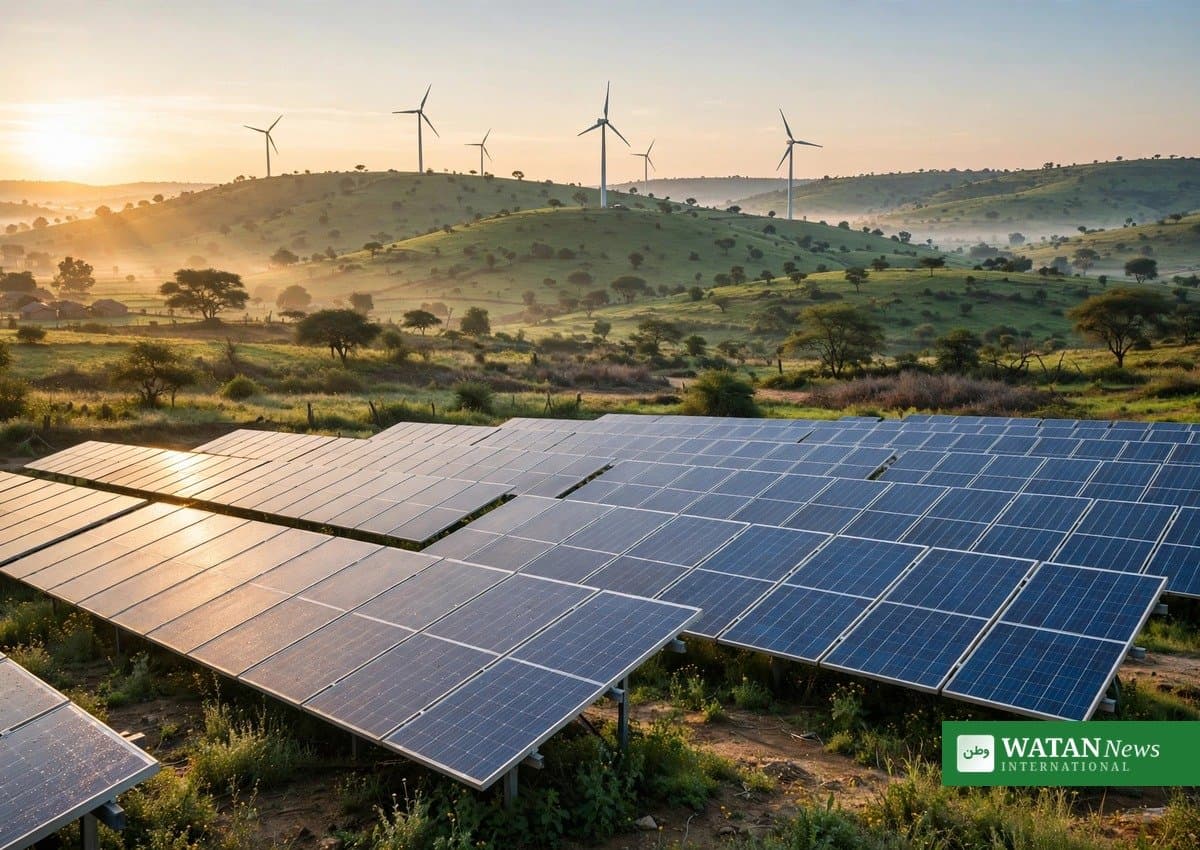
Japan’s Sumitomo Corporation will take a 49% stake in a new 500-megawatt solar-and-wind project with battery storage in the Indian state of Karnataka, designed to supply electricity around the clock from renewable sources alone. The project, developed by Hero Future Energies (HFE), the renewable energy arm of India’s Hero Group, is one of a growing wave of hybrid plants built to make clean power as dependable as fossil-fuel generation.
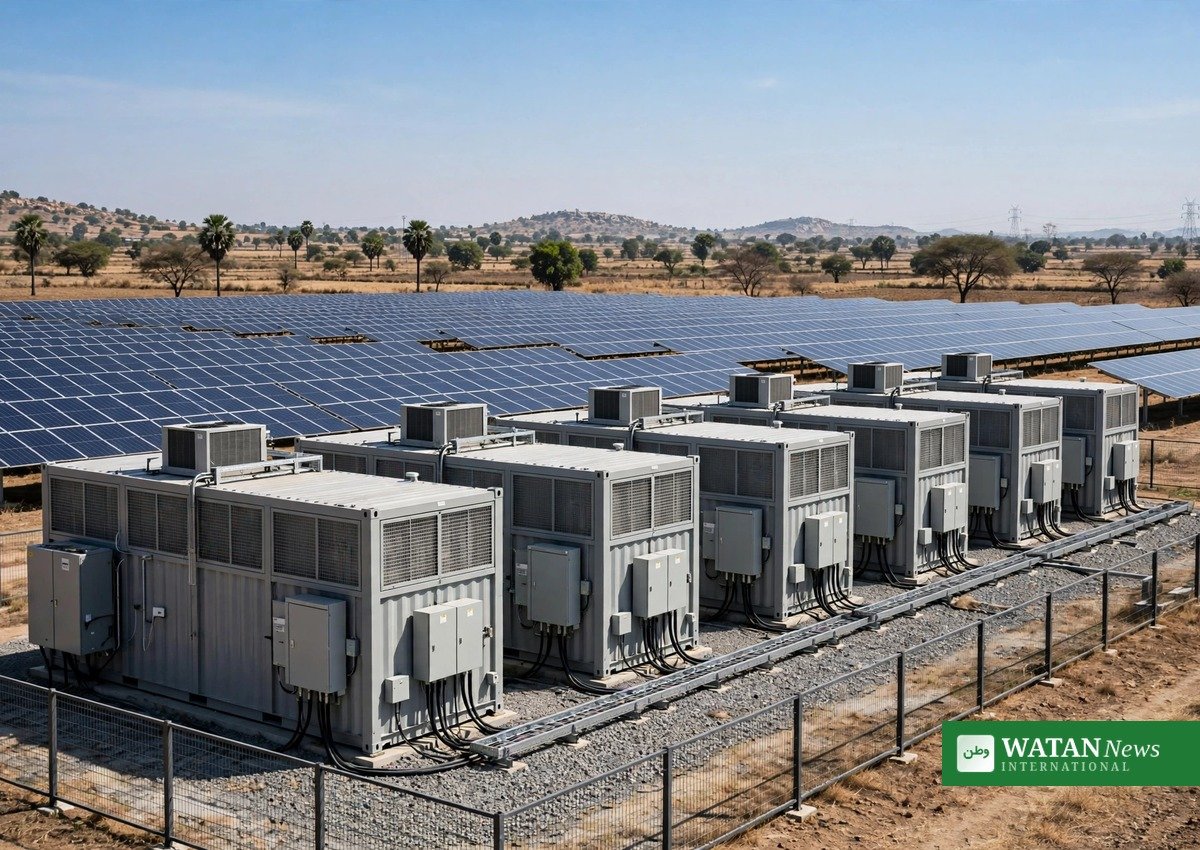
The project pairs about 500 MWp of solar and wind generation with a co-located 200 MWh battery energy storage system in Bidar district, Karnataka. Commercial operation is planned for March 2027, according to Sumitomo’s official announcement.
FAKTA
- Project: About 500 MWp of solar and wind generation with 200 MWh of co-located battery storage, in Bidar district, Karnataka, India.
- Partners: Sumitomo Corporation takes 49% of Clean Solar Power (Baniyana) Pvt. Ltd.; Hero Future Energies’ unit holds 51%.
- Goal: 24/7 electricity supply using only renewable energy, bridging solar and wind intermittency with storage.
- Buyer: SJVN Limited, an Indian government-owned power company, under a 25-year power purchase agreement.
- Timeline: Commercial operation planned for March 2027.
- Context: India targets 500 GW of non-fossil-fuel power capacity by 2030; grid stability is the next bottleneck for renewables.
A hybrid design for 24/7 renewable power in India
Solar and wind power have different generation profiles: the sun shines in daytime, while wind can pick up at other hours. Combining both with battery storage helps offset fluctuations caused by weather and the time of day, enabling a continuous supply of electricity. That is the core idea of the Karnataka project — using advanced energy management and storage so that intermittent renewables can behave like firm, dispatchable power.
The storage component is sized at 200 megawatt-hours. That is the buffer that bridges the gaps: storing surplus midday solar and nighttime wind, then releasing it when demand peaks.
A 25-year agreement for stable electricity
Electricity from the project will be sold primarily to SJVN Limited, an Indian government-owned power company, under a 25-year power purchase agreement, with surplus electricity sold on the power exchange. Because the agreement requires a stable supply of electricity — particularly during periods of peak demand in the morning and evening — the battery storage and energy management system will play a central role, Sumitomo said.
“We are very pleased to collaborate with Hero Future Energies. We see significant potential in HFE’s clearly defined growth ambitions, particularly as the share of renewable energy continues to grow rapidly within India’s energy mix,” said Jun Minase, General Manager of Sumitomo’s Overseas Energy Solution Strategic Business Unit.
Sumitomo will acquire its 49% stake in Clean Solar Power (Baniyana) Pvt. Ltd., the project company; Hero Solar Energy Pvt. Ltd., a wholly owned subsidiary of HFE, will retain 51%. The agreement was sealed at a signing ceremony in Delhi attended by Tomonori Dairaku of Sumitomo and Rahul Munjal, Founder and Chairman of HFE.
“We are delighted to welcome Sumitomo Corporation as a strategic partner in this project. This partnership is an endorsement of HFE’s capabilities to execute complex renewable energy projects at scale,” Munjal said. “As India enters the next phase of its energy transition, partnerships such as the one with Sumitomo will play a critical role in bringing together capital and execution excellence to accelerate all round adoption of clean energy.”
“Hero Future Energies has built strong capabilities across project development, design and engineering and execution of complex renewable energy projects that can provide firm power to the grid,” added Srivatsan Iyer, the company’s global chief executive, in comments reported by pv magazine India.
Part of India’s push for firm, dispatchable clean power
India’s electricity demand is expected to keep growing, driven by population growth and economic expansion, and the government has set a target of 500 GW of non-fossil-fuel power capacity by 2030, Sumitomo’s release noted. But the rapid expansion of renewables has created new challenges — fluctuations in generation and the need to maintain grid stability.
Against that backdrop, expectations are growing for projects that combine multiple renewable sources with storage to provide continuous, 24/7 supply. Such firm-power projects are becoming a distinct segment of India’s renewable market: they do not just add megawatts, they add reliability.
Read more about where renewable growth stands against the world’s 2030 targets: Renewables hit record 693 GW in 2025, but world still off pace for 2030 tripling target — IRENA.
For Sumitomo, the deal is also about expertise. The company said its participation will enhance its integrated energy-management capabilities — combining multiple renewable sources with battery storage and energy aggregation — with the aim of expanding such projects across Asia and beyond, where demand is increasing for solutions to the grid challenges created by the growing deployment of renewables.