WASHINGTON — US President Donald Trump on Friday signed into law a sweeping bipartisan sanctions package aimed at cutting the funds behind Russia’s war in Ukraine, giving the White House new tools to pressure Moscow’s energy trade and, potentially, its largest crude customers, including China and India.
The White House confirmed that Trump signed H.R. 5334, the Lindsey O. Graham Sanctioning Russia and Iran Act of 2026, which authorises and expands statutory sanctions, tariffs and prohibitions on Russia and extends existing sanctions on Iran. Reuters, Al Jazeera, AFP and CBS News reported the signing after Congress cleared the bill with rare cross-party support — the first major Ukraine-related package to pass Capitol Hill in more than two years.
Named for the late South Carolina Republican senator who died in July after years of pushing harder economic pressure on Moscow, the law was co-written with Democratic Senator Richard Blumenthal. It passed the Senate last month and the House on Wednesday, when 58 Democrats joined most Republicans, Al Jazeera and CBS News reported. Ukrainian President Volodymyr Zelenskyy, who had lobbied lawmakers ahead of the House vote, called the legislation “an extremely powerful tool.”
The statute targets Russian President Vladimir Putin, senior officials and oligarchs, Russian banks and financial institutions, and Moscow’s energy and defence sectors. It also goes after the so-called shadow fleet of tankers used to move Russian oil around Western restrictions, Reuters and Al Jazeera said.
A central provision authorises tariffs of up to 100 percent on the five largest buyers of Russian oil and gas — a measure widely expected to fall hardest on China and India, the top two importers of Russian crude. Data cited by the BBC from the Centre for Research on Energy and Clean Air showed China accounting for about 50 percent of Russian crude exports between December 2022 and August 2026, with India at about 37 percent. The bill includes exceptions for countries that import less than 15 percent of their natural gas from Russia and are working to lessen that dependency, according to the BBC. Separately, it extends sanctions authority covering Iran’s energy and weapons sectors.
Supporters cast the package as “maximum pressure” on what House Speaker Mike Johnson called “the Russian war machine,” with Blumenthal saying he hoped it would help bring Moscow to the table. Critics, including House Minority Leader Hakeem Jeffries, warned that broad tariff powers could raise costs for US households and leave loopholes in how sanctions are applied, Al Jazeera reported.
India, among the countries most exposed to the secondary-tariff threat, said this week it “remains firmly committed to ensuring energy security for its 1.4 billion people,” according to Al Jazeera. Trump’s decision comes about a week before he is due to host Chinese President Xi Jinping at the White House — timing that adds diplomatic weight to whether, and how quickly, Washington uses the new tariff authority. Reuters noted critics also argue the legislation could create lasting trouble for third countries if future administrations inherit expansive tariff tools.
Russia’s full-scale invasion of Ukraine, launched in February 2022, is in its fifth year with no settlement in sight. Putin on Friday accused Kyiv of interfering in Russia’s parliamentary election and said Ukraine was hindering talks — claims Kyiv rejects, Reuters reported. The signing lands days before high-level debates at the United Nations General Assembly, where Ukraine, energy security and great-power rivalry will dominate the agenda.
What follows will turn on enforcement: whether Trump moves quickly against Russia’s energy networks and shadow fleet, whether secondary tariffs are threatened or imposed on major buyers, and whether Beijing and New Delhi adjust purchases in response. For Kyiv, the law is a long-sought economic lever. For Washington’s partners and rivals, it is a test of how far the United States will go to squeeze Russia’s war economy without detonating a wider trade confrontation.
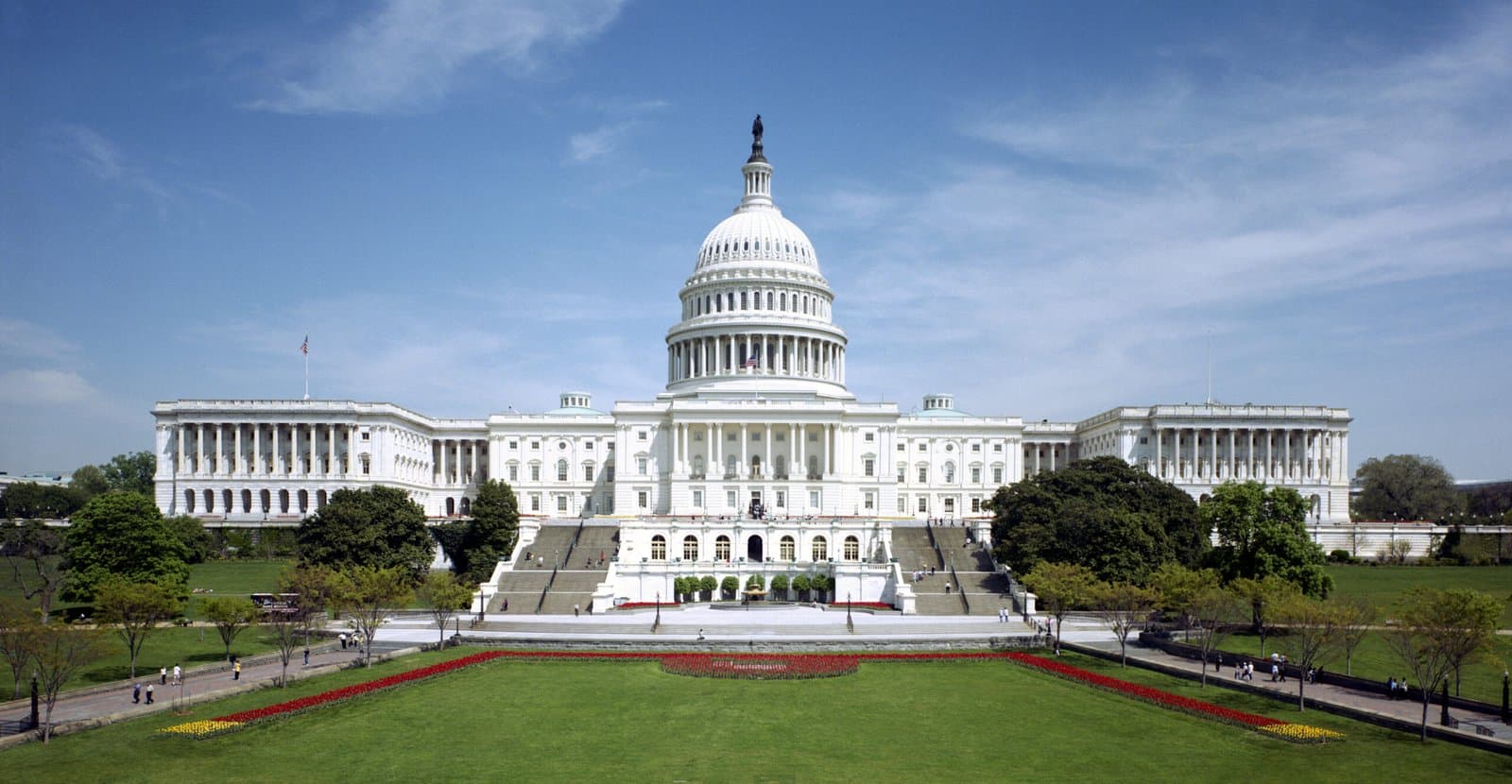
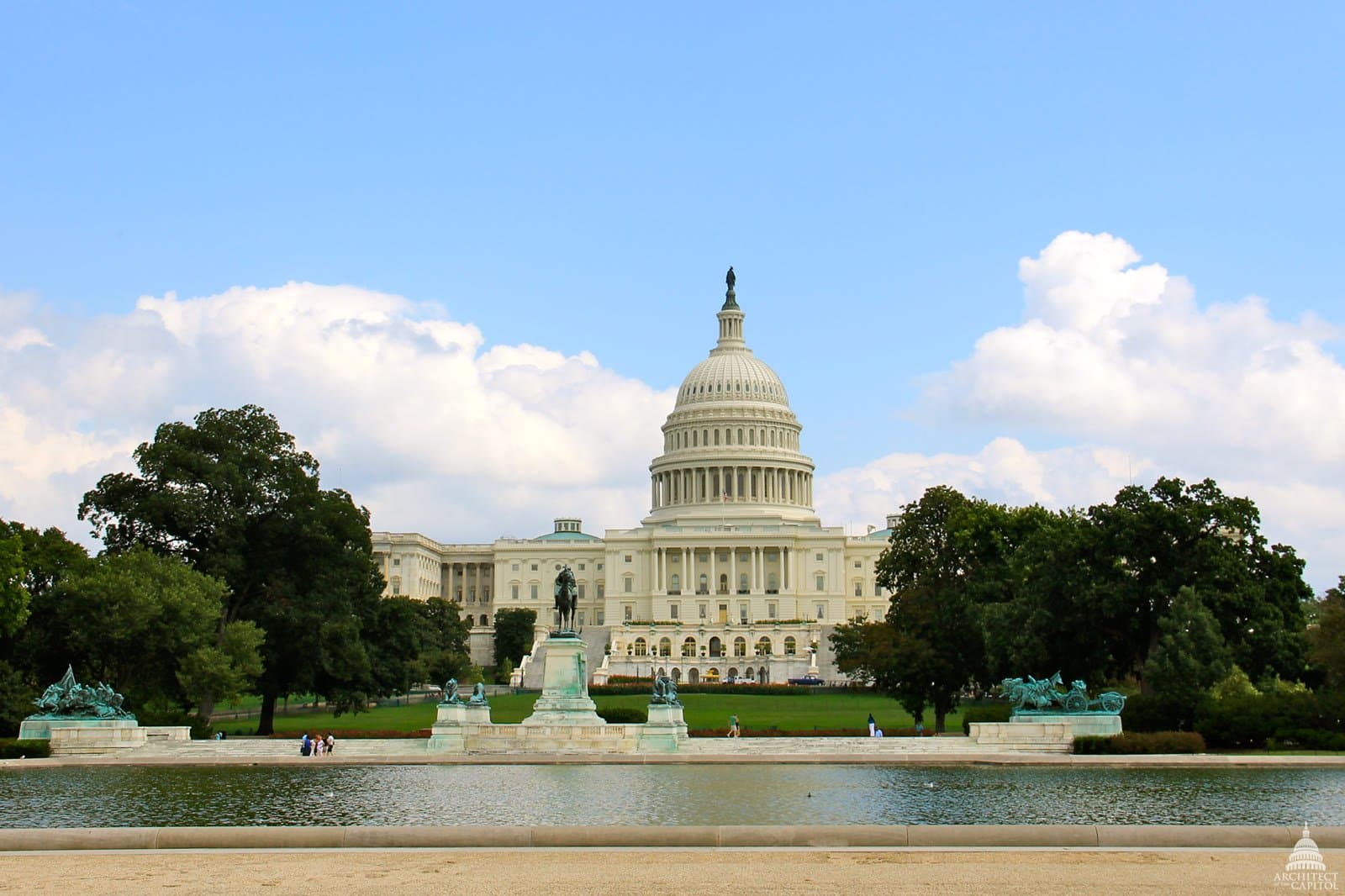
Featured image: Summer view of the U.S. Capitol Reflecting Pool, Grant Memorial and Capitol Building, Washington, D.C. Architect of the Capitol / USCapitol (Flickr), 6 September 2012. Wikimedia Commons, public domain (U.S. federal government work). Illustrative; not a depiction of Friday’s White House signing.