The US House of Representatives on Wednesday approved a sweeping package of sanctions aimed at squeezing Russia’s war economy, sending the legislation to President Donald Trump after months of delay, on the final day before lawmakers left Washington for the midterm campaign.
The Republican-led House passed the Lindsey O. Graham Sanctioning Russia and Iran Act of 2026 by 262 votes to 159, according to AFP, Associated Press and CBS News. The Senate had already cleared the measure 86–11 last month. Trump has said he will sign it — the most substantial congressional sanctions effort against Moscow since he returned to office.
The bill targets Russia’s energy and defence sectors, President Vladimir Putin and other senior officials, Russian banks and financial institutions, and Moscow’s so-called shadow fleet of tankers used to move oil around Western restrictions. It also authorises the president to impose tariffs of up to 100 percent on the top five purchasers of Russian oil or natural gas — a provision widely seen as aimed at China and India, the largest buyers of Russian crude, reporting cited the Centre for Research on Energy and Clean Air as saying.
Supporters cast the secondary tariffs as a tool to cut cash flows financing Russia’s invasion of Ukraine, now in its fifth year with no peace settlement in sight. The package includes a carve-out for countries that import less than 15 percent of Russia’s natural gas exports and are taking significant steps to reduce those imports, CBS News reported. At Trump’s request, the legislation also extends sanctions authority aimed at Iran’s energy and weapons sectors.
The tariff powers produced an unusual split among Democrats, who broadly support Ukraine but have resisted expanding presidential control over trade. Gregory Meeks, the top Democrat on the House Foreign Affairs Committee, called the bill “deeply flawed,” saying White House lawyers had drafted the text “to maximize President Trump’s authority to impose new import taxes on the American people, and to minimize any obligation to actually impose new sanctions on Russia or its enablers.” Meeks said he would have backed the measure if the secondary tariff provisions were removed; Republicans rejected amendments aimed at narrowing them, AFP reported.
Dozens of Democrats nevertheless voted yes. CBS News put Democratic support at about 58 votes, while seven Republicans opposed the bill on free-market or non-interventionist grounds. Critics warned that broad tariff authority could be turned against European or other allies and that Americans could face higher prices if secondary tariffs are used aggressively. The Center for Strategic and International Studies noted the 100 percent ceiling replaces a steeper 500 percent concept from a 2025 draft.
Ukrainian President Volodymyr Zelensky had urged Congress to pass the package, arguing greater economic pressure was needed to force Moscow toward negotiations. Pro-Ukraine activists celebrated the vote while pointing to ongoing Russian attacks, including drone strikes on civilian transport in southern Ukraine that Kyiv officials said killed five people, AFP reported. Separately, Reuters said Russian strikes early Thursday damaged buildings in Kyiv and injured three people, including a child, in Odesa.
The bill’s late sponsor, Republican Senator Lindsey Graham of South Carolina, who died suddenly in July, had pushed the legislation since April 2025. AP reporting said it took roughly a year to bring Trump on board; the Iran extension helped secure his support after he had preferred keeping sanctions and tariffs under executive control.
Svitlana Romanko, executive director of Ukrainian energy lobby group Razom We Stand, said once the bill is signed, “we hope for strong US enforcement to finally end the cash flows to the Kremlin’s war chest,” adding that every day of delay means more Ukrainian deaths.
What happens next turns on Trump’s signature, how forcefully his administration uses the new tariff and sanctions tools — including against major energy buyers — and whether secondary pressure shifts the calculus in a war that has already redrawn global energy and security alignments.
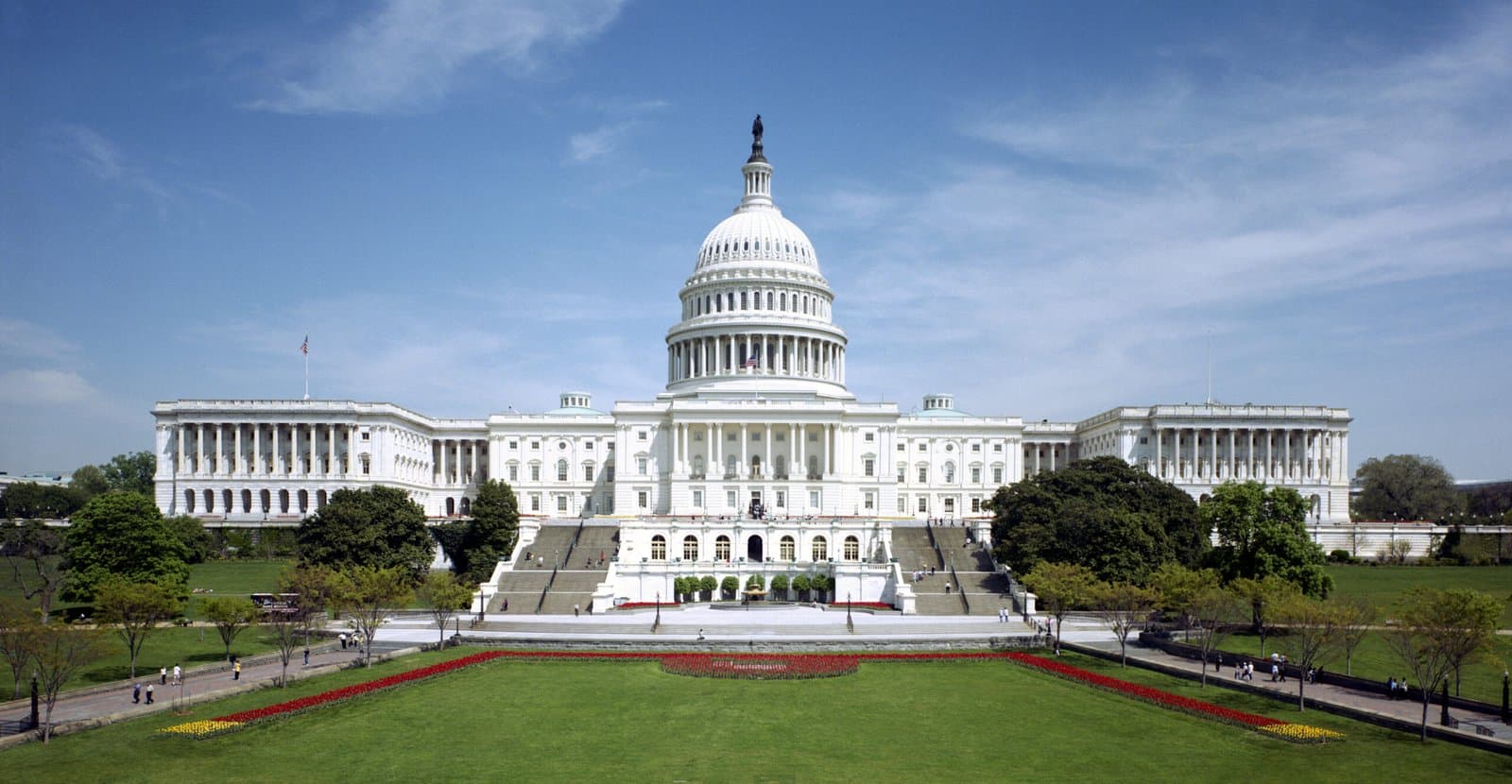
Featured image credit: West front of the United States Capitol, Washington, D.C. Photo by the Architect of the Capitol, 1997. Wikimedia Commons, public domain (U.S. federal government work). Illustrative; not a depiction of Wednesday’s House vote.