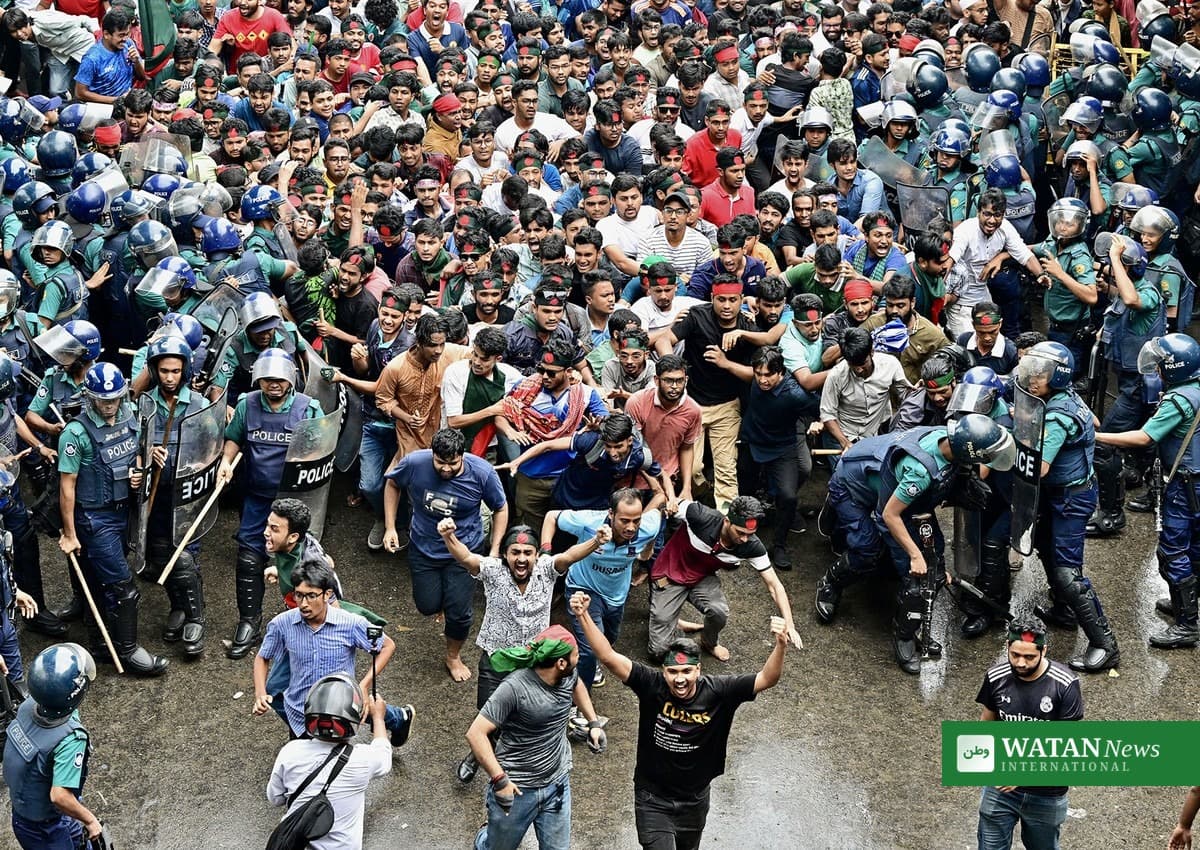
Parts of Bangladesh shut down on Thursday as a nationwide Bangladesh lockdown called by the banned Awami League turned violent, with police saying two members of the governing party were killed and the ancestral home of former interim leader Muhammad Yunus set on fire in Chattogram.
FAKTA
- A nationwide Bangladesh lockdown called by the Awami League on Thursday, 19 November 2026
- Police said two members of the governing party were killed; local media reported at least four deaths in the violence over two days
- Muhammad Yunus’s ancestral home in Chattogram was set on fire late on Wednesday; family members living upstairs are safe
- At least 37 Grameen Bank branches and offices have been targeted in arson attacks since 10 November
- 97 platoons of the Bangladesh Border Guard deployed across seven districts, including Gopalganj and Faridpur
- Dozens of crude bomb blasts and vehicles set on fire in at least 28 districts over the past 10 days
- Former prime minister Sheikh Hasina, in exile in India since August 2024, plans to return to Bangladesh in December
Bangladesh lockdown brings shutdown and arson
Hasina’s Awami League party called Thursday’s nationwide lockdown as the culmination of a week-long campaign of protests and rallies against the government’s rejection of her request for a new passport and identity card that would allow her return, Reuters reported.
Police said former interim leader Yunus’s ancestral home in Chattogram, about 300 km southeast of the capital Dhaka, was set on fire late on Wednesday. It is likely that flammable substances were thrown into an unused ground-floor room, Mozammel Haque, chief of the area’s Panchlaish police station, told Reuters, but Yunus’s paternal family members, who live on the upper floors, are safe.
To deter violence, 97 platoons of the Bangladesh Border Guard have fanned out across seven districts, including Gopalganj and Faridpur, considered to have many Hasina supporters, its spokesperson, Shariful Islam, said.
During the last 10 days of protests, police have reported dozens of crude bomb blasts and incidents of vehicles being set afire in at least 28 districts, injuring several police officials and members of the public, media have said.
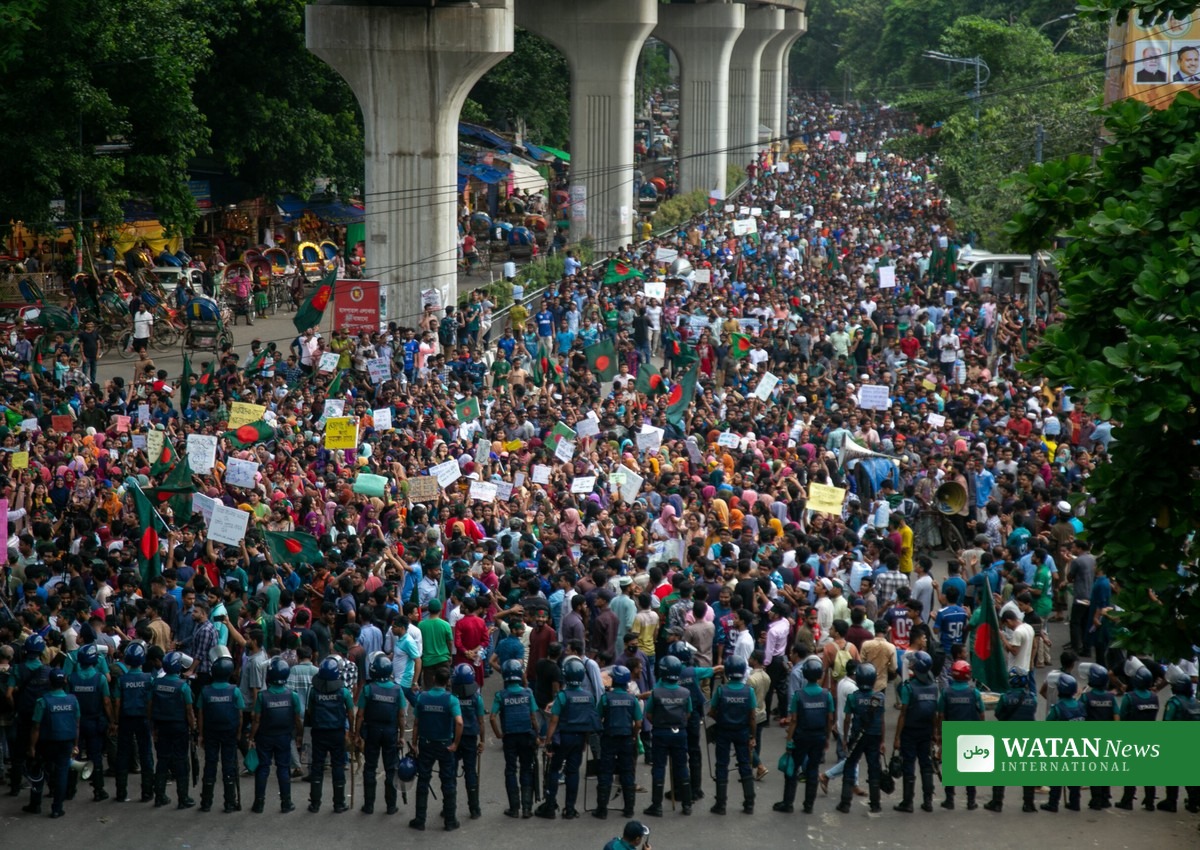
A large crowd gathers during a protest in Dhaka, Bangladesh, as police stand guard. File photo.
Grameen Bank branches and arrests
At least 37 branches and offices of Grameen Bank, set up by Yunus, have been targeted in arson attacks or attempted fires since 10 November, with 14 more attacked since midnight on Tuesday, the bank said.
On Thursday, authorities detained former education minister Nurul Islam Nahid, who faces charges over several killings during the 2024 protests, from his house in Dhaka, police officer Mohammad Khalid Mansur told Reuters.
On Tuesday, Home Minister Salahuddin Ahmed accused Awami League leaders abroad of inciting supporters to destabilise Bangladesh and torch property, adding that those involved in violence would be identified and prosecuted. Awami League leaders, most of them in hiding, could not be reached for comment.
Police arrested 565 people in a 24-hour drive in Dhaka alone ahead of the lockdown, according to local media reports.
Why the Bangladesh lockdown was called
Tuesday marked a year since Hasina was sentenced to death by a local court that found her guilty of ordering a deadly crackdown on a student-led uprising against her in 2024. She has lived in exile in neighbouring India after fleeing Dhaka following violent protests demanding her resignation in August 2024.
After Hasina’s government fell, an interim administration led by Yunus banned the Awami League. The party has announced that Hasina plans to return to Bangladesh voluntarily in December, despite the death sentence imposed on her by a special tribunal.
Read more on watannews.dk.