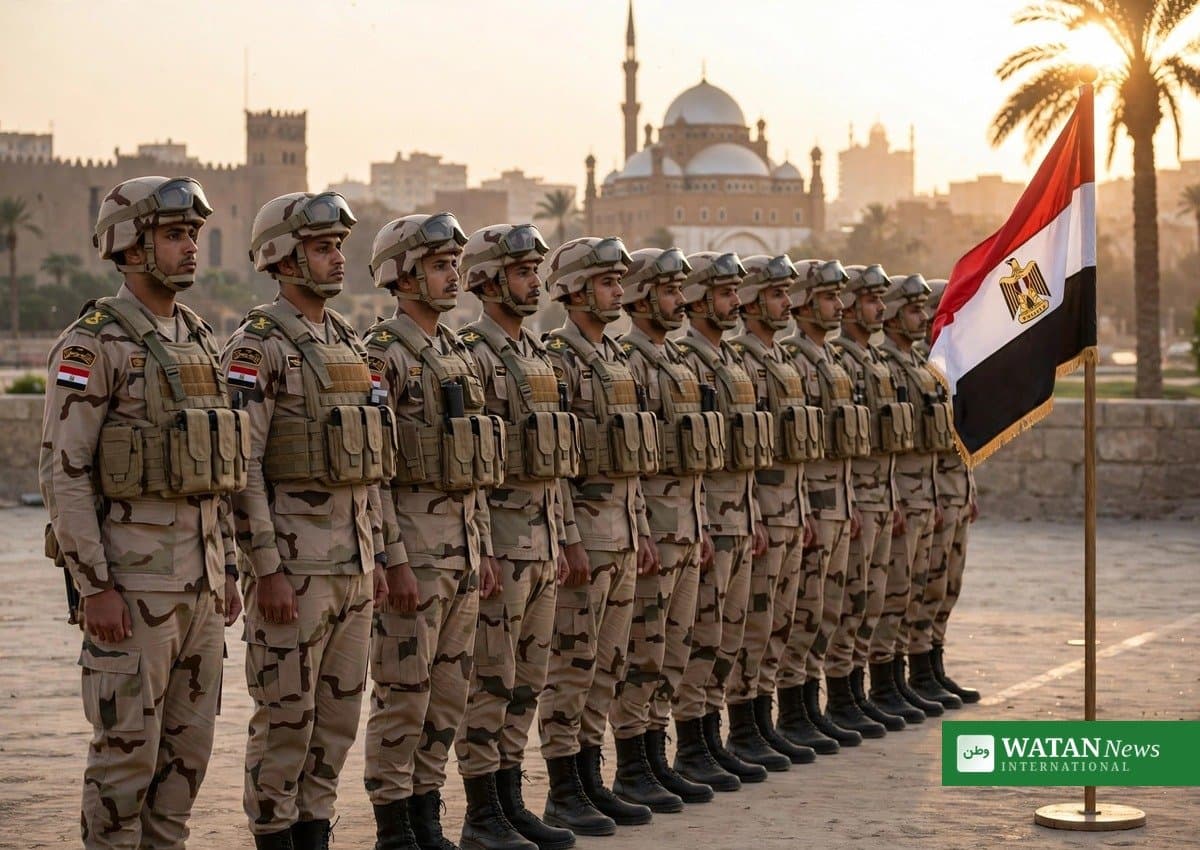
Egypt’s parliament has authorised the country’s military to provide support to help defend Saudi Arabia, a step that could draw Cairo directly into the region’s widening conflict as attacks by Yemen’s Houthi movement on the Gulf kingdom intensify. Parliamentarians and local media reported the decision on Monday, after President Abdel Fattah al-Sisi asked lawmakers last week to approve defending Egypt’s Gulf Arab ally if Riyadh requests help.
The authorisation covers defensive support if Houthi attacks hit Saudi Arabia, but no forces, equipment or timeline have been announced. Sisi has said Egypt is not preparing to attack in Yemen.
FAKTA: Egypt’s Saudi Arabia military authorisation
- Decision: Egypt’s parliament authorised the military on Monday, October 26, to provide support to defend Saudi Arabia if Riyadh requests help against Houthi attacks.
- Request: President Abdel Fattah al-Sisi asked parliament last week to approve defending the Gulf ally, the world’s largest oil exporter.
- Nature of support: Described as defensive; no troop numbers, equipment or start date have been announced.
- Key concern: Houthi advances threaten the Bab el-Mandeb Strait, the gateway to Egypt’s Suez Canal and a vital shipping route.
- Background: Egypt has not publicly engaged in direct combat in the current conflict and has not joined the Saudi-Pakistan-Turkey mutual defence pact signed in August.
Why Cairo acted now
The decision follows weeks of escalating fighting between the Saudi-led coalition backing Yemen’s internationally recognised government and the Houthi militia, which controls Sanaa. The Houthis have stepped up attacks on Saudi targets, and their advances threaten the Bab el-Mandeb Strait, the passage through which shipping reaches Egypt’s Suez Canal, a key source of revenue.
Protecting that waterway has long shaped Egypt’s calculations. In mid-September, Sisi hosted Saudi Crown Prince Mohammed bin Salman in Cairo, where both pledged firm responses to attacks and stressed keeping the Red Sea open to shipping. Saudi Arabia is also a major political and financial partner for Cairo, providing aid, deposits at the central bank and energy supplies.
What the authorisation does not do
The approval is not itself a deployment order, nor does it make Egypt a member of the Mecca mutual defence pact between Saudi Arabia, Pakistan and Turkey signed in August. Foreign Minister Badr Abdelatty said earlier this month that Egyptian membership remains under serious consideration.
Egypt’s past role in Yemen has been limited. It joined the Saudi-led coalition in March 2015 mainly as a naval partner, sending warships to secure Red Sea shipping lanes while pledging air support, and deployed around 800 ground troops in a limited combat role. Egypt fought a costly intervention in Yemen in the 1960s and has not undertaken a large-scale foreign ground deployment since the 1991 Gulf War.
Whether the decision leads to Egyptian forces operating alongside Saudi Arabia will depend on what Riyadh asks for next and how far the Houthi campaign escalates. For now, Cairo has moved from condemning attacks on Gulf states to holding a formal mandate to act. More Middle East coverage is available on Watan News.