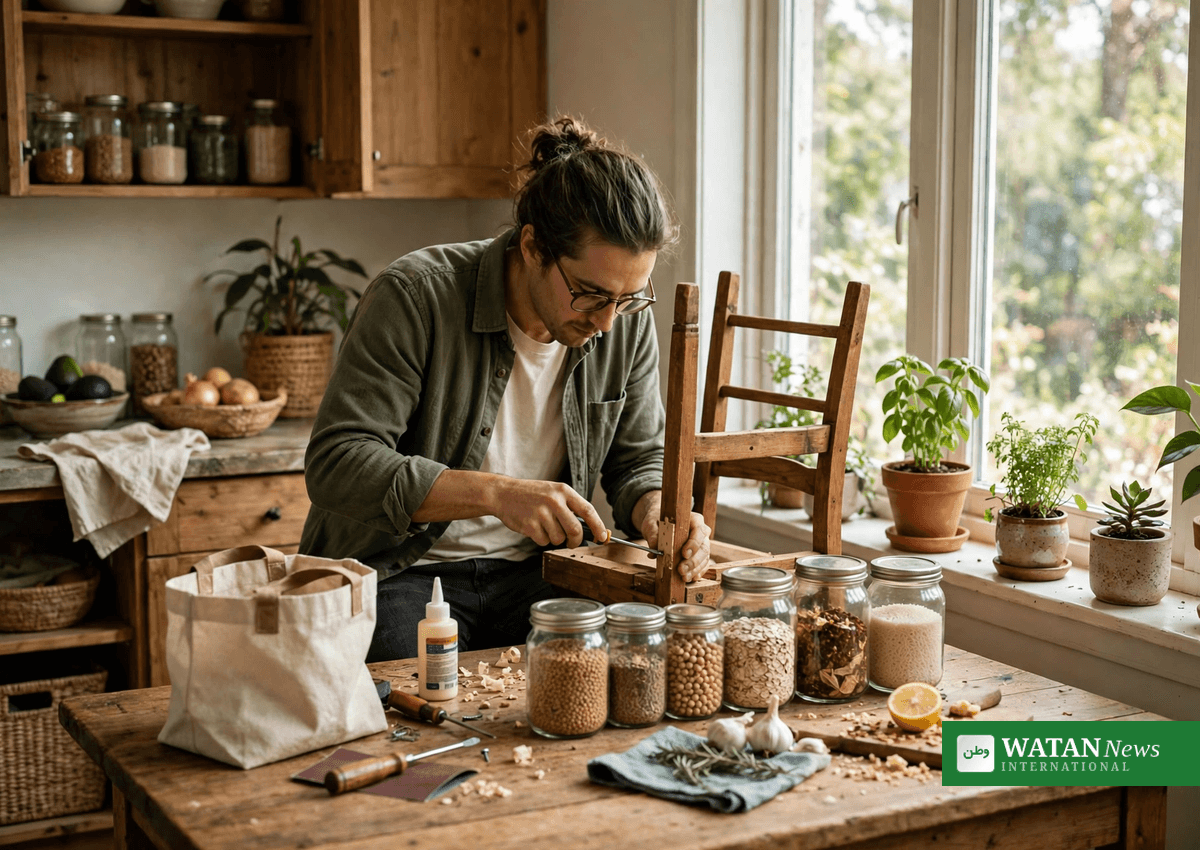
This is an explainer, not breaking news: a guide to the small, everyday choices that make a home more sustainable — repairing before replacing, buying secondhand, and wasting less food. None of these steps alone solves climate change, but together they cut the resources, energy and emissions embedded in the things we buy and throw away.
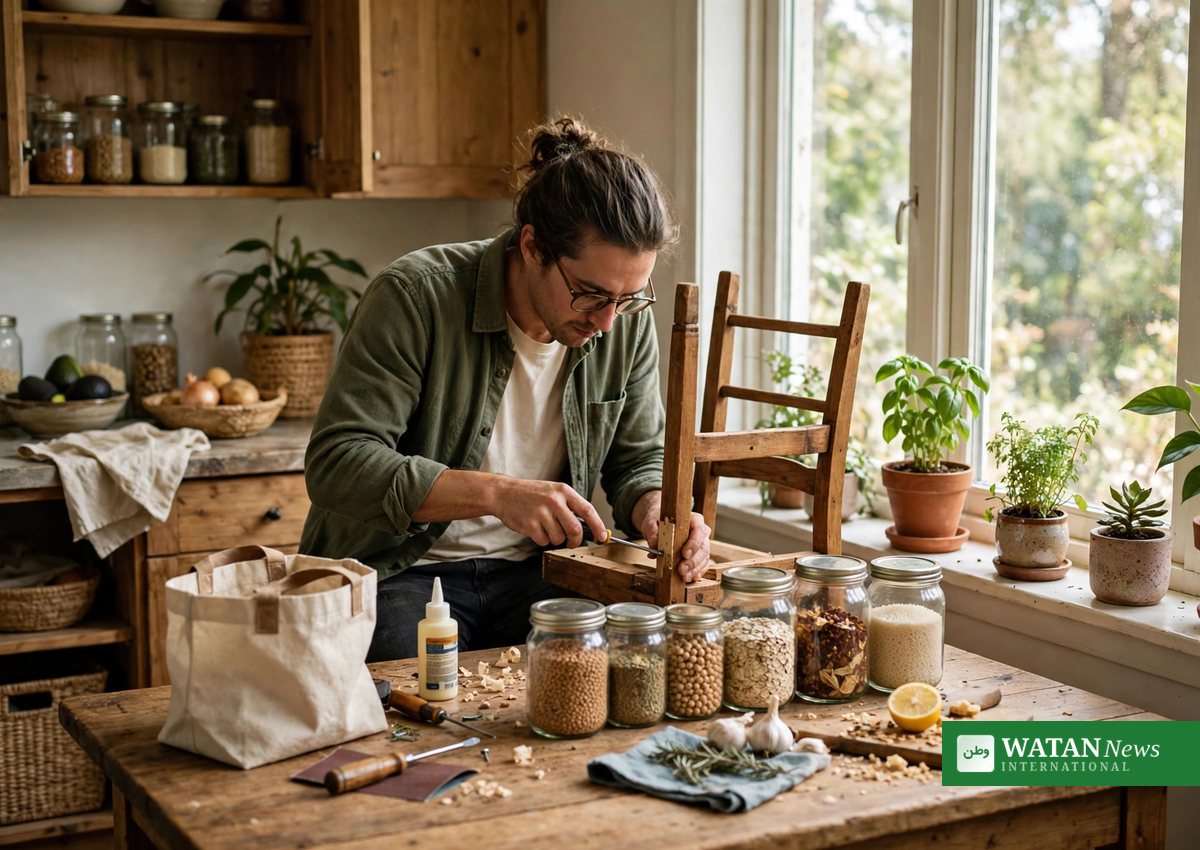
The idea is simple. Every product carries a footprint from mining, manufacturing, transport and disposal. Keeping it in use longer spreads that footprint over more years. And food that is grown, transported and then thrown away wastes all the energy, water and land that went into producing it.
Repair before replacing
Repair is having a visible comeback. A trend tracker for October 2026 puts the refurbished and repairable technology market at around 150 billion dollars, and reports that searches for a repairable phone nearly doubled to about 550,000 a month. Secondhand and sustainable fashion is put at around 230 billion dollars in the same overview. These are single-source market estimates, so they should be read as signs of direction rather than exact measurements — but the direction is clear: more people are looking for products that last and can be fixed.
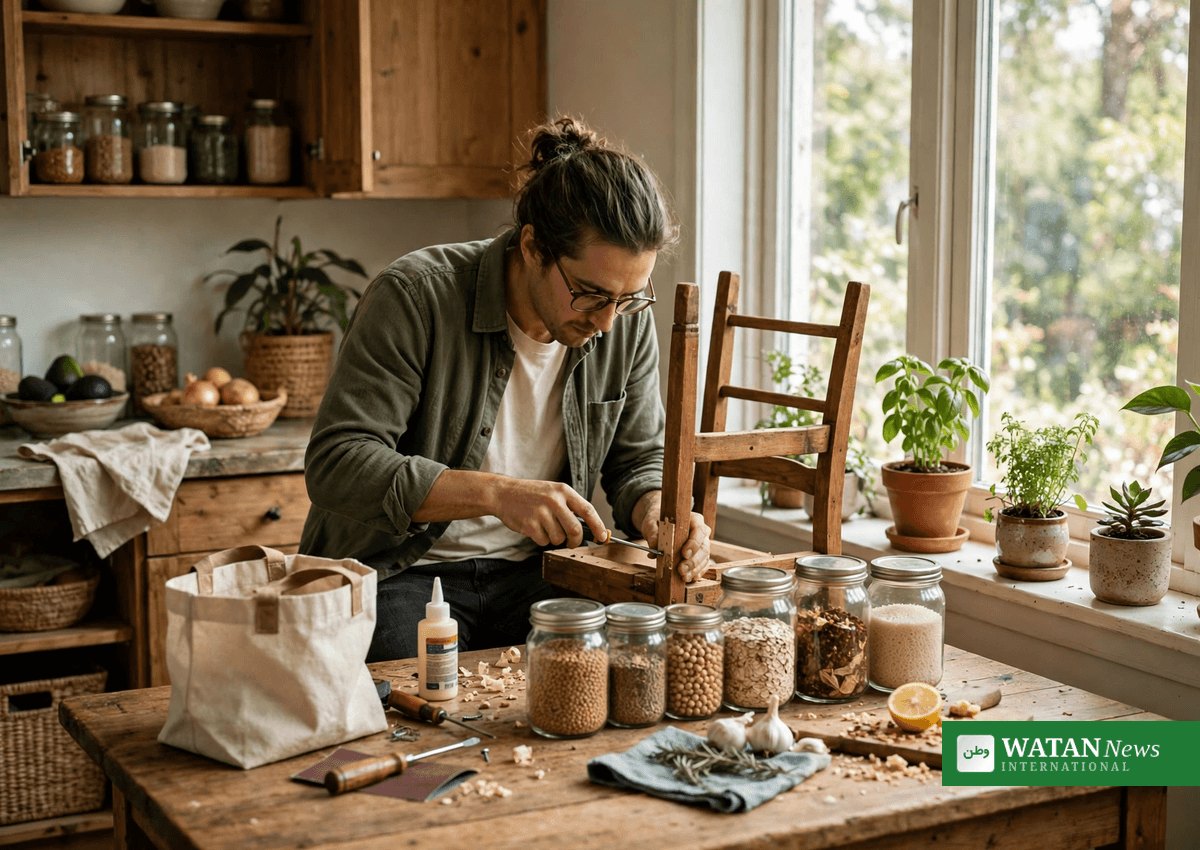
The practical version is unglamorous and effective: fix a wobbly chair instead of replacing it, replace a phone battery instead of the phone, buy a refurbished laptop, and choose products with spare parts and repair manuals. Repair cafes, local workshops and secondhand shops exist in many towns precisely because a large share of what breaks is fixable with basic tools and a little patience.
Waste less food at home
Food waste is one of the most fixable household footprints. The European Union generates nearly 58 million tonnes of food waste a year, and households account for 53% of it, according to the EU-funded COMBINE project. In 2025 the EU adopted binding targets to cut food waste by 2030: 10% less from food processing and manufacturing, and 30% less per person across retail, restaurants, food services and households.
COMBINE tested practical interventions in homes, schools and workplace canteens in France, Finland, Italy and Portugal from 2024 to 2026, and turned the lessons into a practical toolkit published in October 2026. Among participating households, the interventions cut food waste by an average of 28%, although results varied a lot between homes. What worked was not generic advice alone, but a combination: personalised household reports, smaller portions, newsletters and cooking workshops — changes fitted to why food was being wasted in that particular home.
The household habits behind those results are familiar: plan meals before shopping, store food so it stays fresh longer, use leftovers the next day, and learn the difference between a date label that signals safety and one that only signals quality. Small portions at first, with seconds available, waste far less than large servings scraped into the bin.
What towns are doing: the Maia example
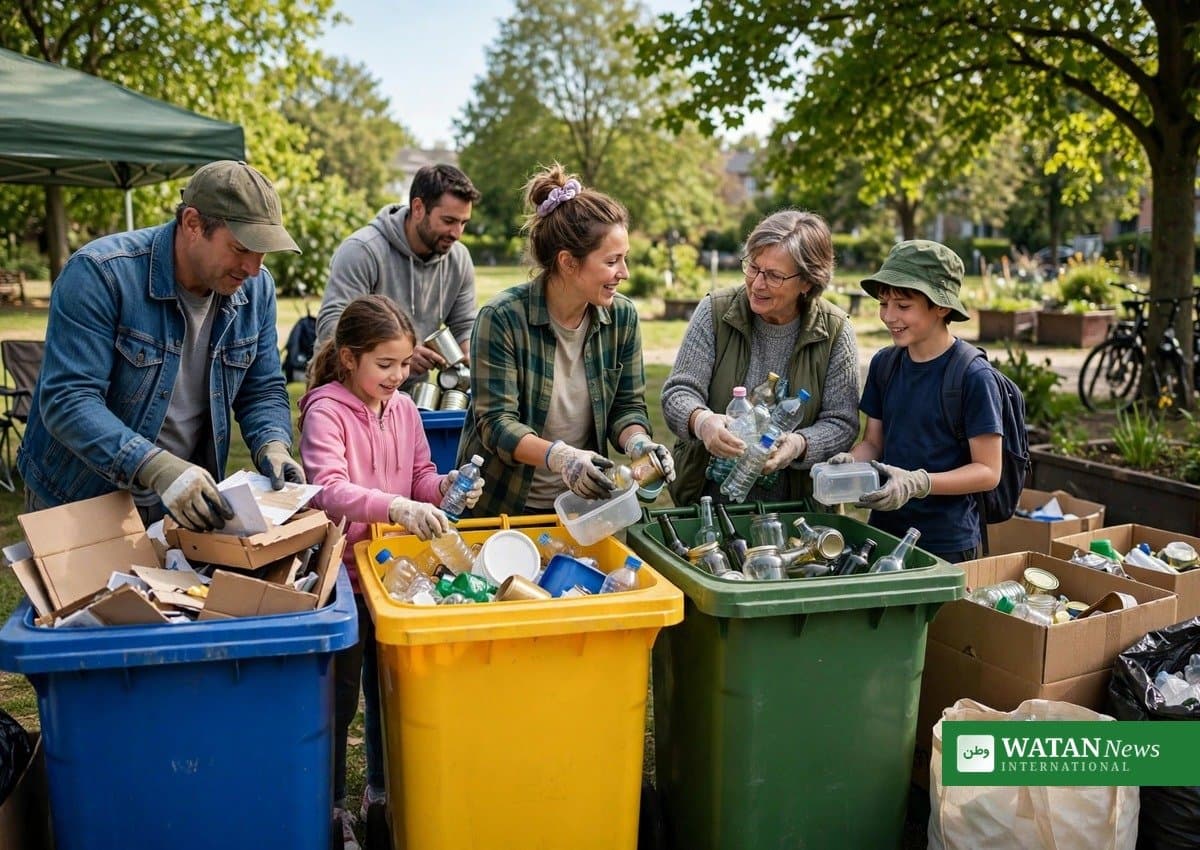
Household habits work best when the town helps. In Maia, Portugal, the municipal company Maiambiente is expanding selective food-waste collection to more than 25,000 households, adding door-to-door collection for over 19,000 homes and 83 new street container points for around 6,300 more. Collection currently reaches about 55% of the municipality, and the goal is to recover 70% of the biowaste potential by 2030, according to the Sustainable Living weekly pulse.
The Portuguese context shows why this matters: 1.82 million tonnes of food were wasted in Portugal in 2024, and the country generated 5.7 million tonnes of municipal waste in 2025, of which 55% went to landfill and only 14% was recycled. Separate food-waste collection turns a share of that stream into compost or biogas instead of landfill, where rotting food releases methane, a potent greenhouse gas.
Key facts
- EU food waste: nearly 58 million tonnes a year; households account for 53%.
- COMBINE trials (France, Finland, Italy, Portugal, 2024–2026): participating households cut food waste by an average of 28%.
- EU 2030 targets: 10% less food waste from processing and manufacturing; 30% less per person across retail, food services and households.
- Maia, Portugal: food-waste collection expanding to more than 25,000 homes; goal of 70% of biowaste potential recovered by 2030.
- Portugal: 1.82 million tonnes of food wasted in 2024; 5.7 million tonnes of municipal waste in 2025, 55% to landfill, 14% recycled.
- Repair and secondhand signals (October 2026 trend overview, single source): refurbished and repairable tech around 150 billion dollars; secondhand and sustainable fashion around 230 billion dollars.
Read more on Watan News: Watan News in English.