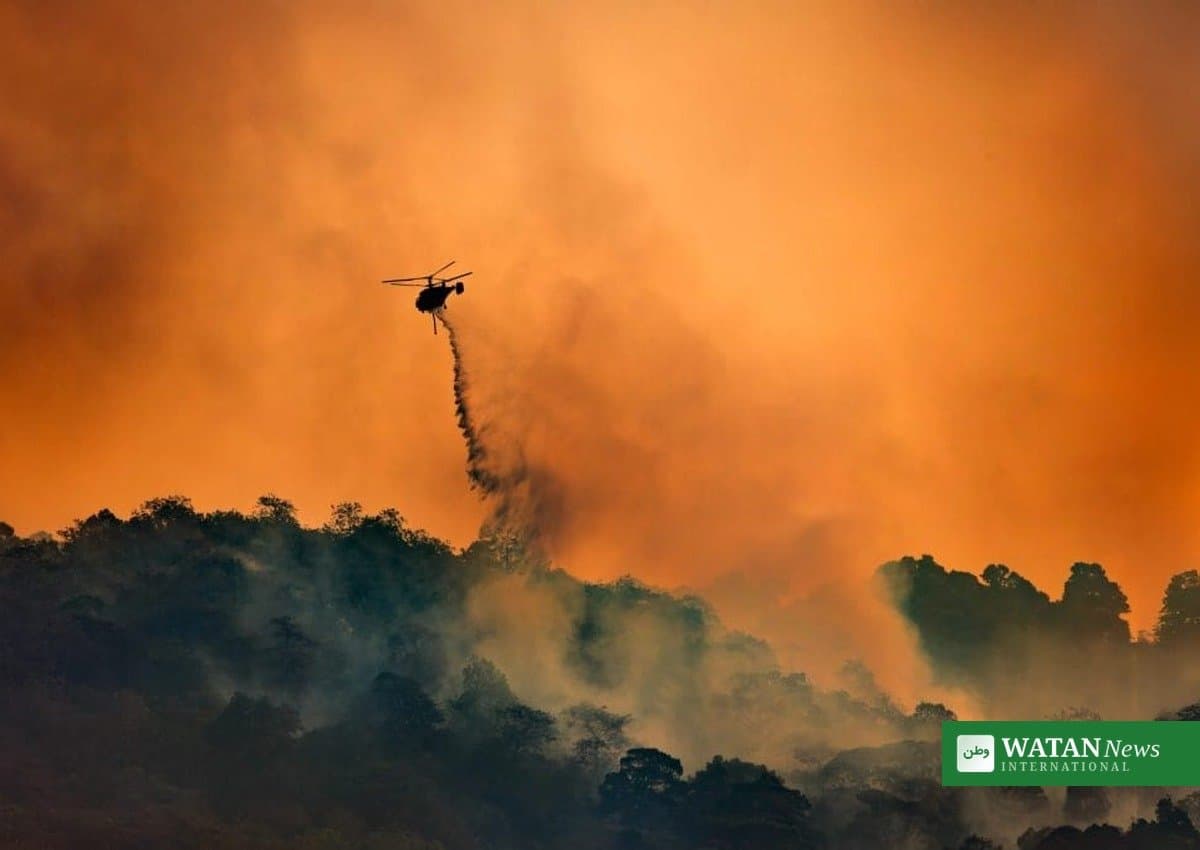
Smoke from Indonesia’s seasonal forest and land fires was linked to an estimated 3,560 deaths in September 2026, according to a new assessment by the Helsinki-based Centre for Research on Energy and Clean Air (CREA). Short-term exposure to fine smoke particles drove the toll to more than double the August fire-related estimate, as fires across Kalimantan and Sumatra pushed air quality to dangerous levels.
About 57.8 million people breathed air rated unhealthy to extremely hazardous during the month. Including everyday urban and industrial pollution, the total September toll reaches an estimated 5,310 — up 42 percent from 3,740 in August.
FAKTA
- Fire-related deaths in September: an estimated 3,560 across Indonesia
- Total air-pollution deaths in September: an estimated 5,310, including 1,750 from non-fire sources
- People exposed to unhealthy air: about 57.8 million
- National average PM2.5: 36 micrograms per cubic metre — more than seven times the World Health Organization’s annual guideline of 5
- Worst-hit regions: Kalimantan averaged 120 micrograms per cubic metre; Sumatra averaged 51
- Respiratory illness: an estimated 333,470 acute respiratory infection cases across seven fire-affected provinces
Kalimantan and Sumatra bear the heaviest burden
The fires, known locally as karhutla, burned across forest and peatland in Kalimantan on Borneo and in Sumatra. The report links around 1,470 deaths to fire-related pollution across four provinces in Kalimantan and about 1,420 across five provinces in Sumatra. In four Kalimantan provinces, fire smoke accounted for between 94 and 99 percent of air-pollution deaths, and in several Sumatran provinces for more than 80 percent.
Kalimantan’s average particle level of 120 micrograms per cubic metre stood at 24 times the WHO annual guideline, while Sumatra’s average of 51 was 10 times the guideline. The smoke also drifted beyond Indonesia’s borders, reaching neighbouring Malaysia, Singapore and East Timor.
A wider pollution crisis beyond the fires
The fires are only part of Indonesia’s air-quality emergency. Chronic pollution from power generation, industry, transport and waste burning caused an estimated 1,750 deaths in September. On Java, the most populous island and home to the capital Jakarta, between 73 and 80 percent of the month’s 1,530 air-pollution deaths came from such non-fire sources.
Children aged under five accounted for nearly a quarter of the estimated 333,470 acute respiratory infection cases recorded across seven fire-affected provinces. CREA also notes that fire activity in Kalimantan, Sulawesi and Papua has already surpassed 2015 records.
Calls for stronger action
CREA urges the government to treat the fires as a national emergency and strengthen fire prevention, enforcement against illegal land clearing and clean-air measures. The researchers point to a 75 percent cut in the 2026 budget of the National Disaster Management Agency as a constraint on emergency response.
The findings underline a recurring seasonal pattern: dry-season burning fills the skies over some of Southeast Asia’s most crowded regions, and the health costs are counted in the air people breathe. Cutting exposure to fine particles is now an urgent public-health priority, the report says. Read more international news on Watan News.