DOHA / RIYADH / NEW YORK — Iran’s top security official said Tehran has conveyed conditions to Washington through Qatari mediators for ending the nearly seven-month war with the United States and is awaiting President Donald Trump’s response, as a Saudi-led coalition said its air defences intercepted a Houthi ballistic missile fired toward Riyadh at dawn on Saturday.
Mohsen Rezaei, secretary of Iran’s Supreme National Security Council, told Al Jazeera’s Tehran bureau on Saturday that Qatar had passed Iran’s terms to the White House. “We remain in contact with the mediator Qatar, which has conveyed our conditions to Washington with the aim of ending the war. We are awaiting President Trump’s response,” Rezaei said.
He publicly identified three demands: an end to the war on all fronts, the release of frozen Iranian assets, and an end to the U.S. naval blockade on Iranian ports. In a separate statement, Rezaei said Iran had announced seven conditions for any talks to begin but did not disclose the remaining four. “If Washington wants to escape the quagmire it has created for itself … it has no choice but to accept Iran’s rights and conditions,” he wrote on X, according to Middle East Eye and Gulf News.
Rezaei argued it was in Washington’s interest to accept the terms and that Trump’s threats “will not achieve any results,” while warning that Iran was prepared for what he called a “decisive war.” The remarks combine an opening to mediated diplomacy with a hard military message.
Qatar and Pakistan have sought to revive contacts since a June memorandum of understanding, brokered after Pakistan-hosted talks, expired in August amid mutual accusations of violations. The war erupted after U.S. and Israeli strikes on Iran in late February. Trump told Axios on Thursday that he faces a “big decision” on whether to resume major attacks, while saying Iran wanted an agreement. Regional outlets reported he is expected to consult Gulf leaders in New York during U.N. General Assembly high-level week.
Rezaei also said a proposed Iran–Oman understanding related to the Strait of Hormuz remained “ready” but had been shelved and might need regional endorsement before any announcement — a claim that could not be independently verified.
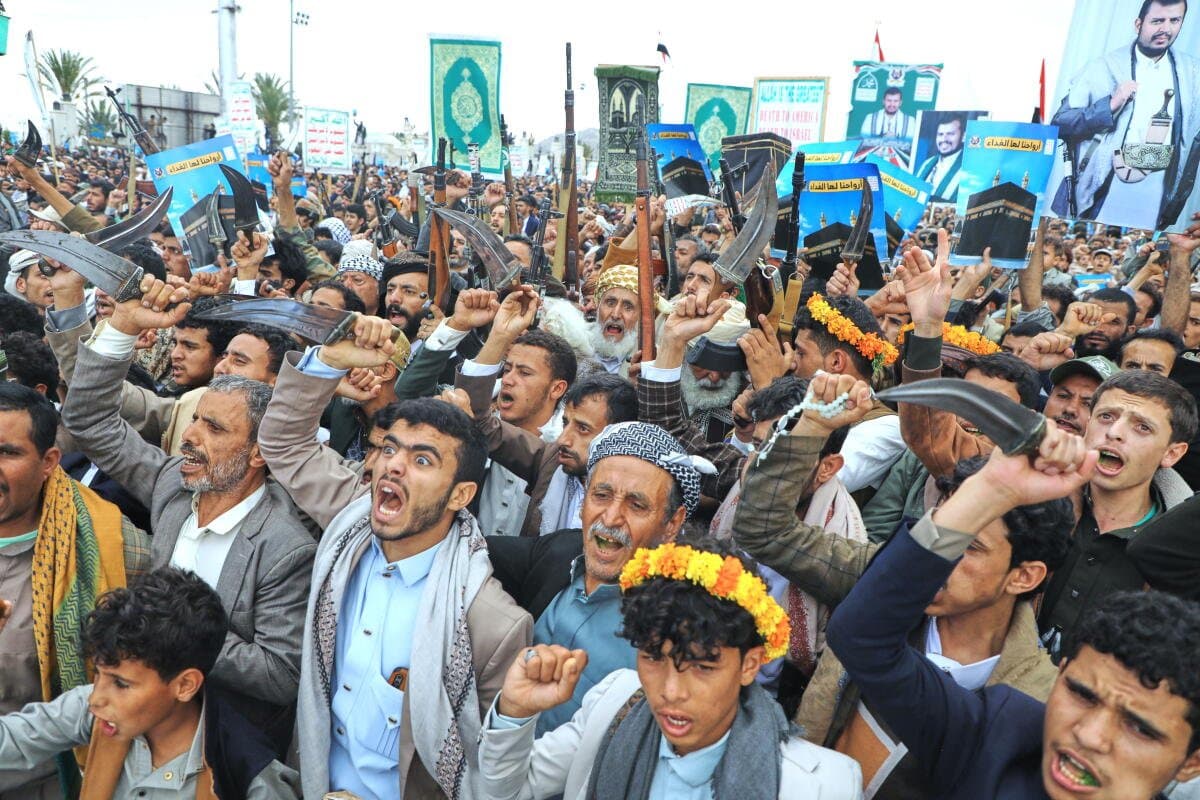
The diplomatic messaging landed as regional spillover intensified. Saudi-led coalition spokesman Major General Turki al-Maliki said on X that Saudi air defences “successfully intercepted and destroyed a ballistic missile launched by the Houthi terrorist militia towards the city of Riyadh at dawn on Saturday.” He said further attempted strikes toward Bisha, Taif, Farasan and Yanbu were also thwarted. Al Jazeera, AFP and the Associated Press reported it as the first targeting of the capital — and the first Riyadh air-raid alert — since fighting with the Iran-backed Houthis escalated in July.
Residents reported at least one explosion and a large plume of black smoke rising from a fuel storage area near King Khalid International Airport; photographs circulated by Reuters showed flames at a tank bearing an Aramco logo. Saudi authorities said there were no casualties or damage from the missile, according to those wires. Houthi military spokesman Yahya Saree claimed “two successful” operations with ballistic and cruise missiles and drones against “sensitive sites” in Riyadh and Aramco facilities in Yanbu — claims Riyadh did not confirm and independent reporters could not verify.
The U.S. State Department issued a security alert urging Americans in the Middle East to exercise heightened vigilance, citing risks of rapid escalation, flight cancellations and airspace closures, and noting Houthi hostilities involving civilian airports, India Today reported on Sunday. U.N. Secretary-General António Guterres and the Gulf Cooperation Council secretary-general condemned attacks on civilian objects while attending U.N. meetings in New York.
Washington had not publicly detailed a response to Rezaei’s conditions as of Sunday morning Asia time. With Gulf consultations planned on the margins of the General Assembly, mediators in Doha and Islamabad remain the main channel for any next step.
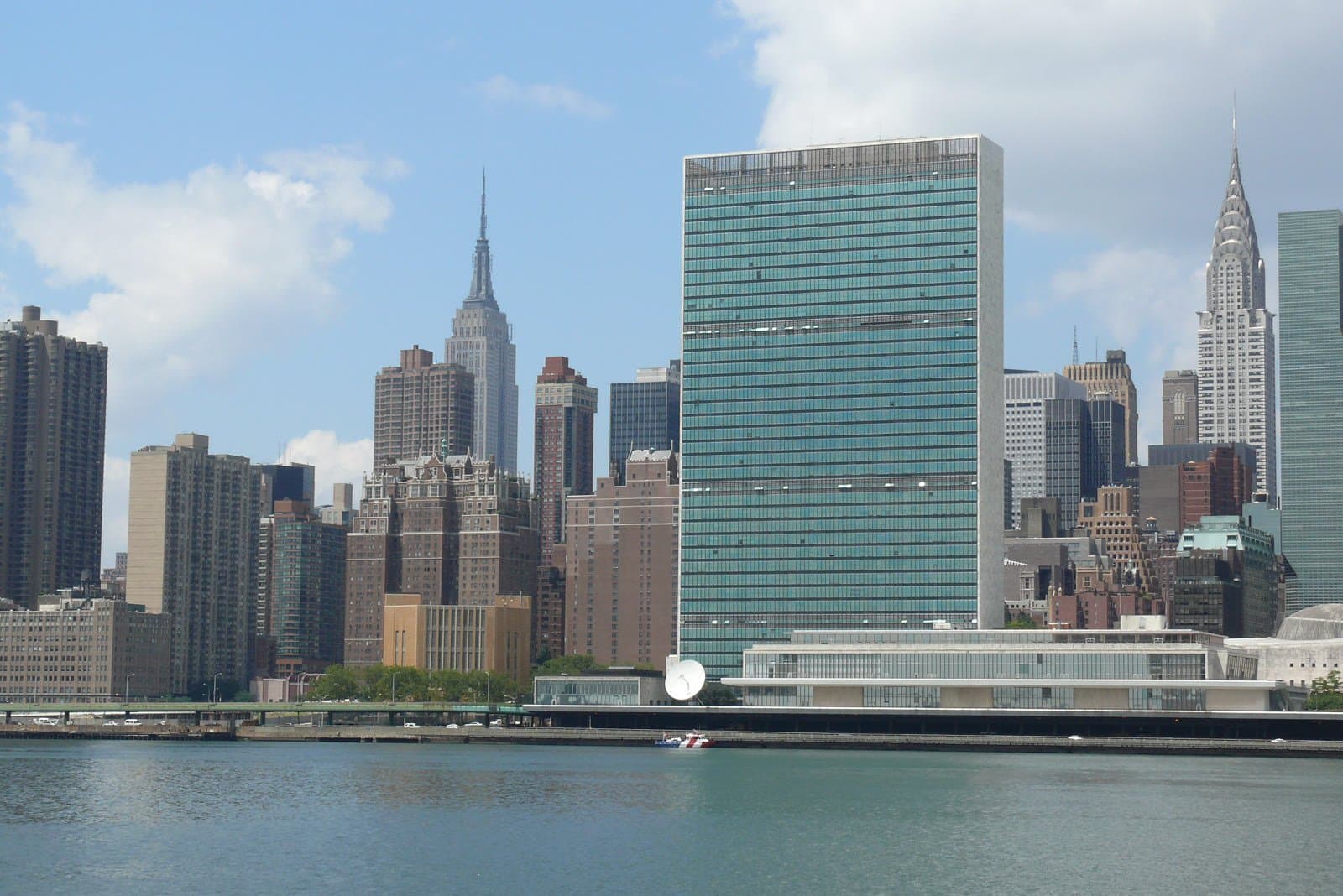
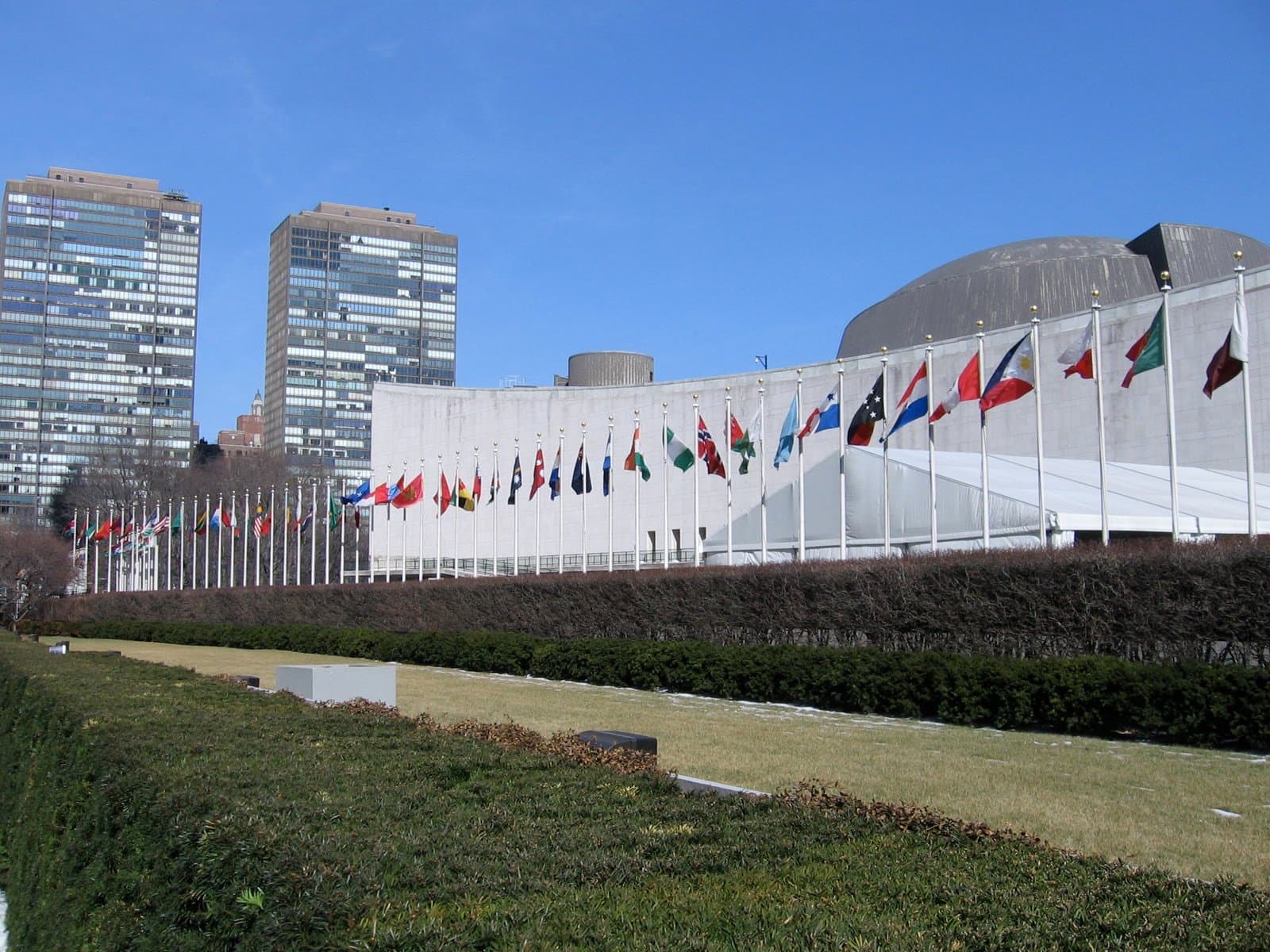
Featured image: Flags outside United Nations Headquarters, New York. Photo: Valarie / Wikimedia Commons (CC BY 3.0).