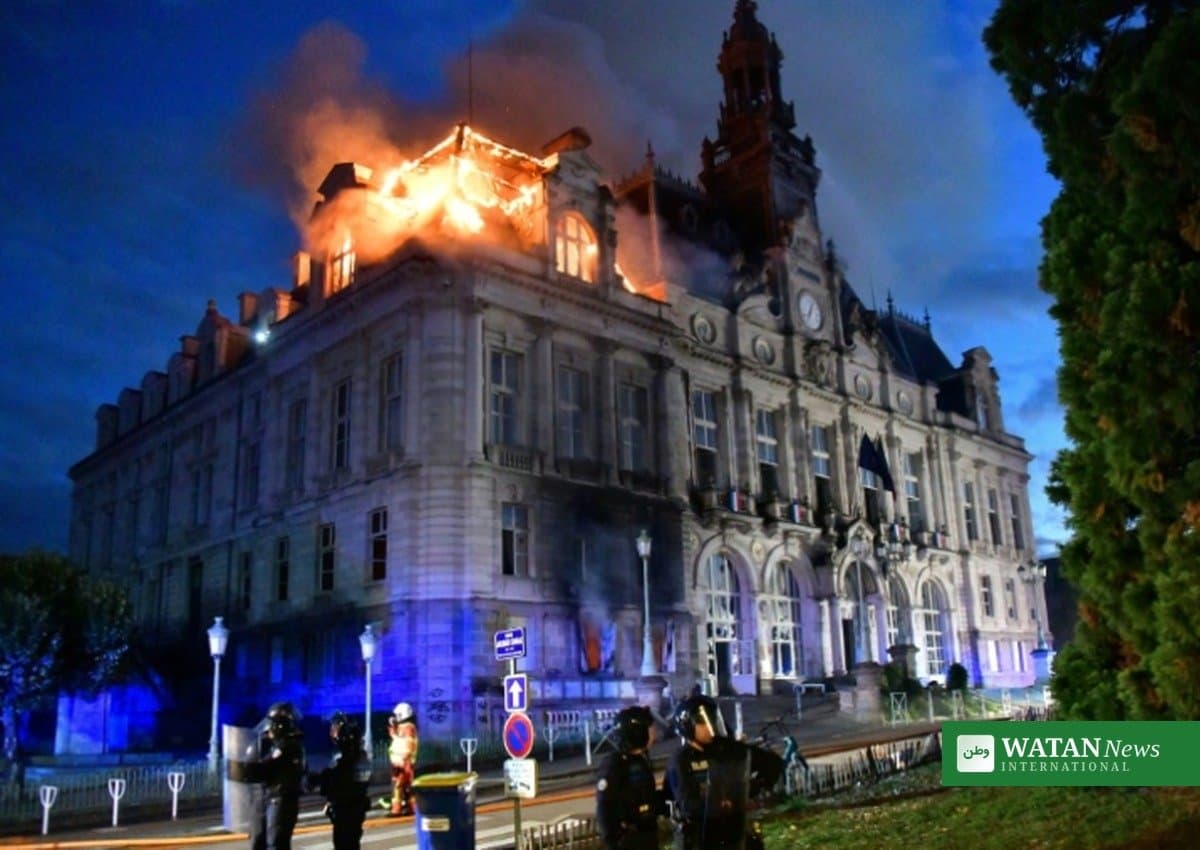
The Limoges town hall fire has left one of France’s most storied civic landmarks “largely lost,” after rioters set the 19th-century building ablaze on Saturday evening, October 17, 2026, as nationwide cost-of-living protests degenerated into riots, looting and arson across the country.
FAKTA
- Historic 1883 Limoges Town Hall largely destroyed by arson on Saturday evening, October 17, 2026, at the end of a cost-of-living demonstration.
- Roof collapsed onto lower floors, two-thirds of the facade gone, belfry and campanile collapsed — the prefect of Haute-Vienne, Maurice Barate, called it a “heritage catastrophe” and a “deliberate act.”
- About 5,000 people demonstrated in Limoges; the prefect said several hundred were “radicalized and extremely violent” individuals; no one inside the building was injured.
- Nationwide: 550,000–800,000 protesters — 550,000 per the interior minister, up to 800,000 per organizers — with around 400 arrests on Saturday.
- Fire timeline: set around 17:00 on the ground floor; firefighters arrived after 18:00; the roof was ablaze by 19:00; the campanile fell around 21:19.
How the Limoges Town Hall Fire Started
Around 17:00 on Saturday, a group smashed windows, forced entry into the town hall and set fire to the ground floor, according to the prefecture. Firefighters arrived shortly after 18:00, but by 19:00 the flames had reached the roof and the timber frame. The campanile collapsed in the evening, and the belfry followed, fanned by the wind.
“The roof has collapsed onto lower floors, except the west wing, and two-thirds of the exterior has already disappeared,” the local prefect, Maurice Barate, told the AFP news agency. Barate called it “a deliberate act by hooligans,” adding that it was a “catastrophe for heritage.”
The wedding hall and the civil registry services were destroyed, and the 1883 facades and roofs — protected as historic monuments — suffered major damage. Mayor Guillaume Guérin, visibly emotional at a press conference, said the building was “very, very heavily damaged.”
Guérin said the attackers had set fire to a building in which elected officials, municipal police officers and staff were present, and that municipal police officers had to extract themselves as the intruders entered. No one inside was injured. Hundreds of onlookers watched in anger and dismay as the blaze consumed the building, inaugurated in 1883 with architecture inspired by the Paris town hall; a municipal employee was seen weeping in the arms of an elected official.
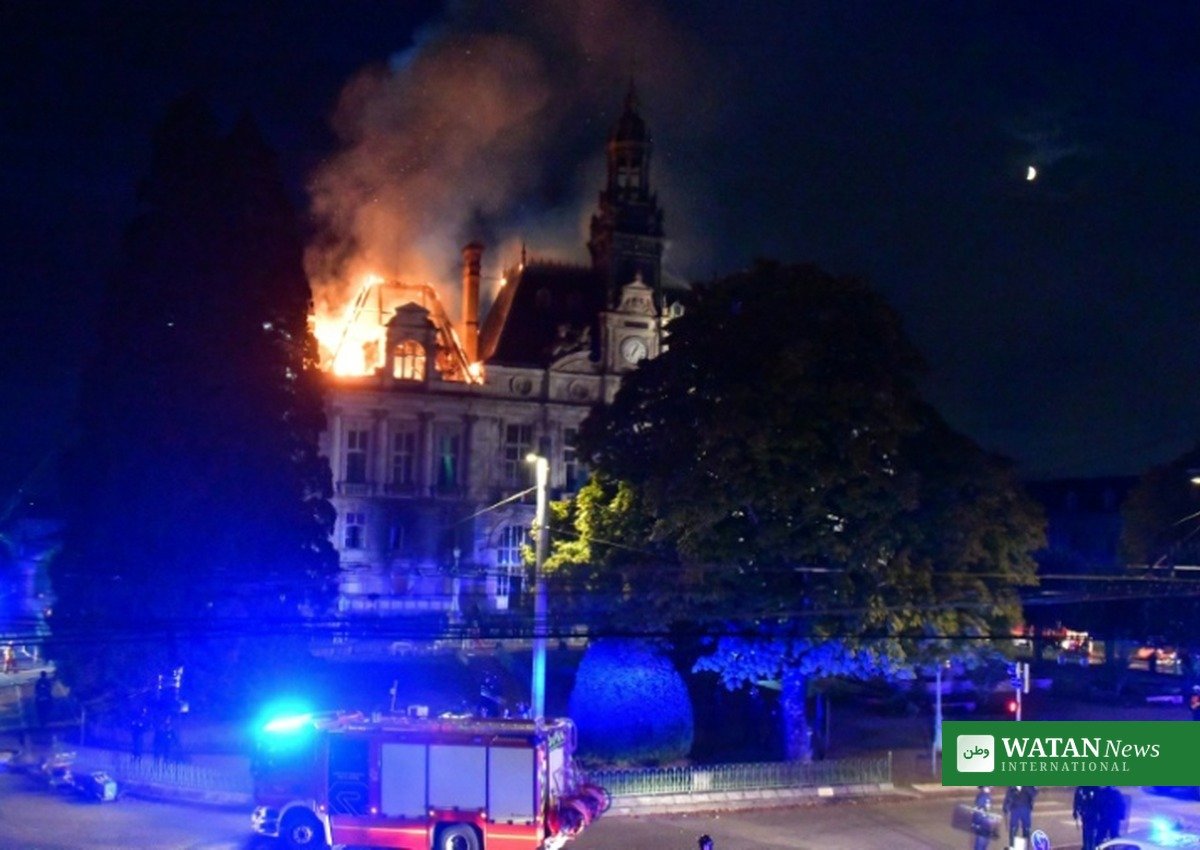
Saturday’s Unrest and the Limoges Town Hall Fire
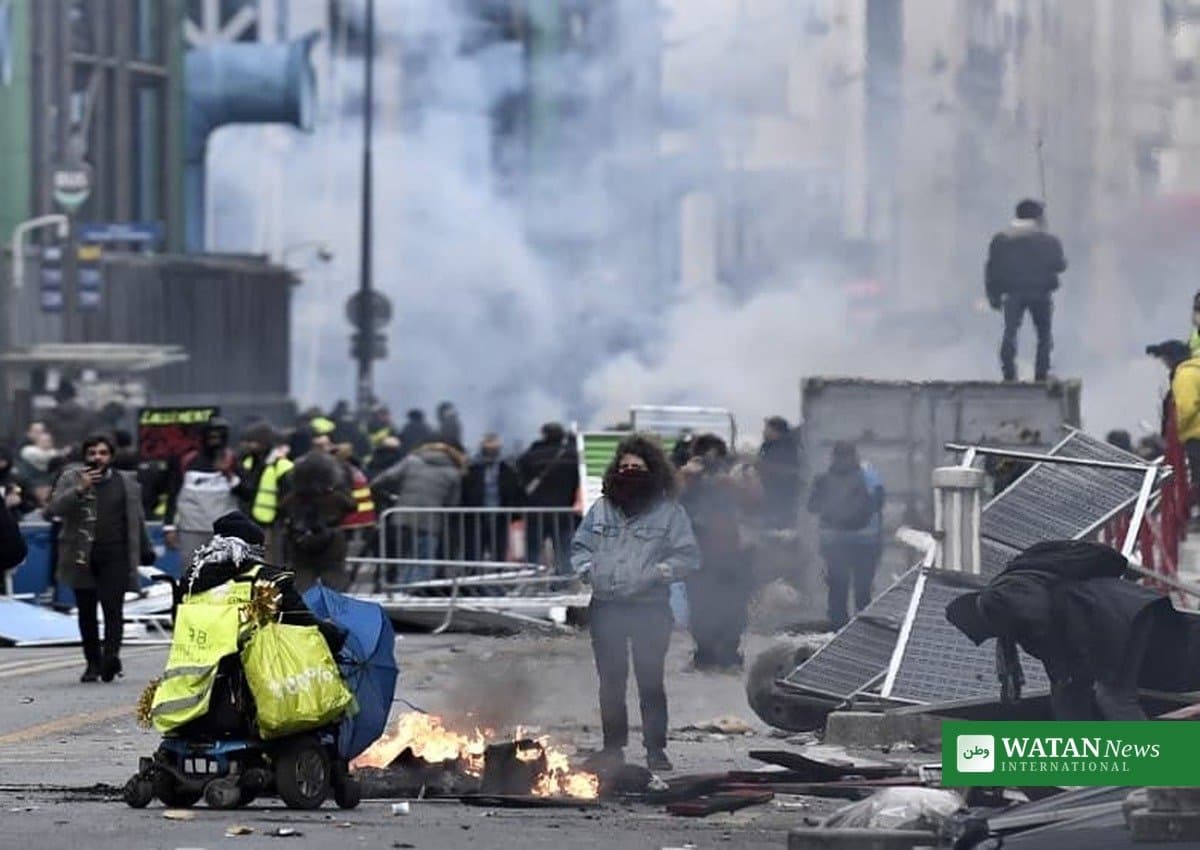
The destruction came as anti-government cost-of-living protests and violent clashes entered their fourth week in France. Interior Minister Laurent Nuñez blamed the unrest on “extremely violent, radical far-left groups,” and reported that masked groups had attempted to break into city halls in Lille and Calais and a police station in Brest, alongside violence in Rennes, Toulouse, Montpellier and Grenoble.
In Limoges, early clashes erupted near the A20 highway interchange, where the prefect said police faced “a rain of projectiles” and motorists were harassed. Four national police vehicles and two municipal police vehicles were burned or heavily damaged, and “opportunistic looters” targeted shops in the city center, including an FNAC store, while the prefecture itself was also attacked.
In Paris, police used tear gas and water cannons to disperse violent groups at the Place de la République, where hooded and masked people threw fireworks and other objects at officers. On Saturday, outgoing President Emmanuel Macron wrote on social media: “There is no place for violence in our republic.” He added that those who had broken, attacked prefectures and businesses, and looted town halls “will be prosecuted and punished.”
For more coverage, see Watan News Europe.