LIVE
BREAKING
Health and Climate Change Conference 2026 to Launch 10th Lancet Countdown Report in LondonPhilippines Vice President’s Office to Launch El Niño Public Info CampaignRCOY Asia-Pacific 2026: 500 Young Leaders Set Youth Climate Priorities for COP31Saudi-Led Coalition Strikes Oil Facilities Near Sanaa as Houthis Threaten Riyadh RetaliationFormer DRC President Joseph Kabila Takes Command of M23 Rebel CoalitionWhy Climate Journalism Matters More Than EverSustainable Living at Home: What the World’s Buildings Teach UsRussia Hits No Ukrainian Energy Targets for First Time Since Trump’s ‘Energy Ceasefire’Drone Attack Sinks Cargo Ship Off Bulgaria, 11 Sailors Missing; Sofia Summons Russian AmbassadorAfrica’s First 24/7 Solar Baseload Plant Powers DRC Copper MineEthiopian Cargo Flight Turned Back by Israel Over Indonesian PilotKashmir Landmine Blast Kills Four Near the LoCCyberattack Hits Hundreds of French Supermarkets, Forces Fridges to 50°CPope Leo XIV Admitted to Gemelli Hospital Ahead of Lung SurgeryDubai Airports CEO: Narrowbody Jets Will Reshape Travel, but Green Fuel Output Must Scale UpAfghanistan Suspends BBC Radio Broadcasts NationwideSaudi Crown Prince Turns Down Israeli Bid to Join Anti-Houthi CampaignKenya’s Green Challenge: 3.3 Million Trees Planted in One HourBreaking Bad Star RJ Mitte Dies Aged 34Health and Climate Change Conference 2026 to Launch 10th Lancet Countdown Report in LondonPhilippines Vice President’s Office to Launch El Niño Public Info CampaignRCOY Asia-Pacific 2026: 500 Young Leaders Set Youth Climate Priorities for COP31Saudi-Led Coalition Strikes Oil Facilities Near Sanaa as Houthis Threaten Riyadh RetaliationFormer DRC President Joseph Kabila Takes Command of M23 Rebel CoalitionWhy Climate Journalism Matters More Than EverSustainable Living at Home: What the World’s Buildings Teach UsRussia Hits No Ukrainian Energy Targets for First Time Since Trump’s ‘Energy Ceasefire’Drone Attack Sinks Cargo Ship Off Bulgaria, 11 Sailors Missing; Sofia Summons Russian AmbassadorAfrica’s First 24/7 Solar Baseload Plant Powers DRC Copper MineEthiopian Cargo Flight Turned Back by Israel Over Indonesian PilotKashmir Landmine Blast Kills Four Near the LoCCyberattack Hits Hundreds of French Supermarkets, Forces Fridges to 50°CPope Leo XIV Admitted to Gemelli Hospital Ahead of Lung SurgeryDubai Airports CEO: Narrowbody Jets Will Reshape Travel, but Green Fuel Output Must Scale UpAfghanistan Suspends BBC Radio Broadcasts NationwideSaudi Crown Prince Turns Down Israeli Bid to Join Anti-Houthi CampaignKenya’s Green Challenge: 3.3 Million Trees Planted in One HourBreaking Bad Star RJ Mitte Dies Aged 34
Climate

Sustainable Living at Home: What the World’s Buildings Teach Us

Usman javedPublished October 13, 2026
Sustainable Living at Home: What the World’s Buildings Teach Us
Share this story

This is an explainer, not a news report: a guide to what sustainable living at home really means, grounded in the latest global data on buildings and emissions.

Most climate conversations focus on power plants, cars and summits. Yet the building you are sitting in right now is part of the single largest piece of the climate puzzle: according to the UN Environment Programme’s Global Status Report for Buildings and Construction 2025-2026, the buildings and construction sector is responsible for around 37 percent of global CO₂ emissions and nearly half of all raw material extraction worldwide.

Bright sustainable living room interior with plants and natural daylight
A sustainable home: daylight, plants and efficient lighting

That makes sustainable living at home far more than a lifestyle choice — it is one of the most direct ways ordinary people touch the climate crisis, every single day.

The numbers behind our homes

The scale is difficult to grasp. In 2024, global building floor area reached 273 billion square metres, growing by 1.7 percent in a single year — adding space equivalent to five Nairobis or two Delhis, according to UNEP. Residential buildings account for 77 percent of that floor area and around 70 percent of buildings’ energy demand. In other words, housing sits at the very heart of both the problem and the solution.

The sector still consumes 32 percent of the world’s energy and contributes 34 percent of CO₂ emissions. UNEP found that building-sector emissions rose around 5 percent over the past decade when they should have fallen 28 percent — though emissions have plateaued since 2023 as green building standards, renewable energy and electrified heating and cooling began to bite.

What sustainable living at home actually means

Sustainable living is often reduced to slogans, but in practice it comes down to four everyday areas:

Energy

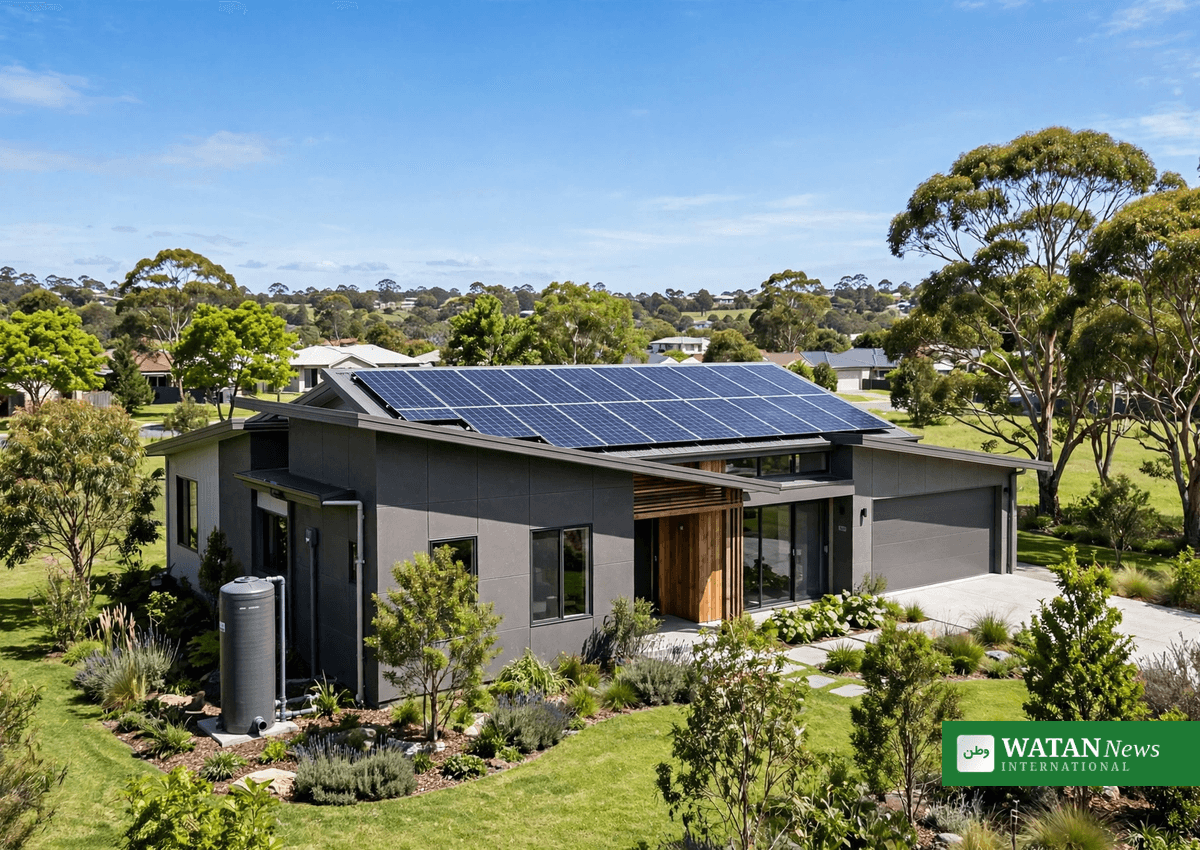
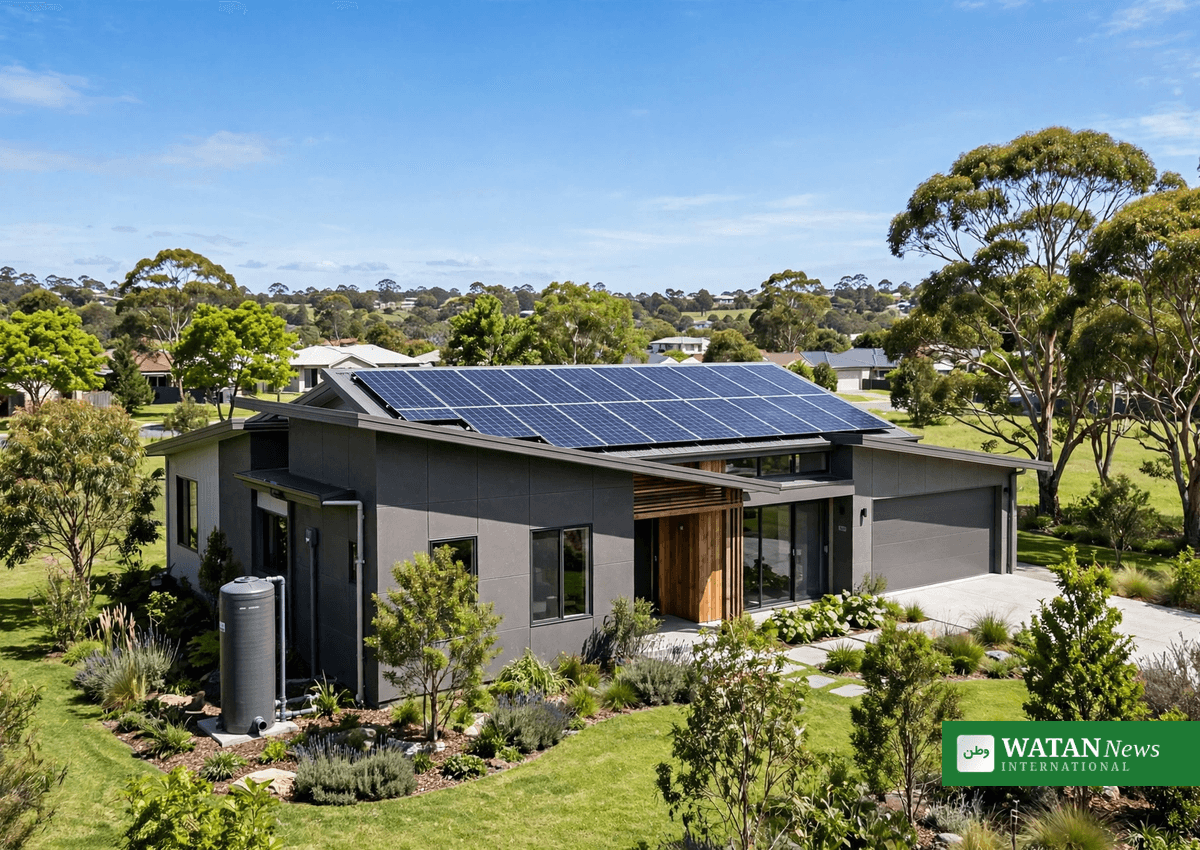
Heating, cooling, hot water and appliances dominate a home’s footprint. Better insulation, efficient heat pumps, LED lighting and rooftop solar all cut both bills and emissions. In Australia, researchers note housing accounts for around 24 percent of electricity use and 12 percent of carbon emissions — a pattern repeated across developed economies.

Materials and waste

Construction devours resources: the sector drives nearly half of global raw material extraction. Choosing durable goods, repairing instead of replacing, and separating waste for recycling extends the life of those materials. UNEP’s Avoid-Shift-Improve approach even shows that repurposing existing buildings generates 50–75 percent fewer emissions than new construction.

Water

Heating water is energy-intensive, and water scarcity is growing. Low-flow fixtures, rainwater harvesting and mindful use cut both.

Food and consumption

What enters the home matters too: reducing food waste, buying local and seasonal produce, and composting organic waste all shrink a household’s footprint.

Key facts: buildings and the climate

  • 37% of global CO₂ emissions come from buildings and construction (UNEP, 2025-2026)
  • ~50% of global raw material extraction is driven by the sector
  • 77% of building floor area is residential — homes are the centre of the challenge
  • 32% of world energy is consumed by buildings
  • 19 countries have sufficiently detailed building goals in their climate plans (UNEP)
  • 50–75% fewer emissions when repurposing buildings instead of building new

Why this matters now

Nearly half of the buildings that will exist in 2050 have not yet been built — most of them in emerging economies, where over half of new floorspace still falls outside any building energy code. The choices made in homes today, from insulation to appliances, will lock in emissions for decades.

Sustainable living is not about perfection. It is about understanding that the home is a climate actor — and acting like it. Explore more guides on green living at Watan News in English.


Related Stories

Planet & environment

Climate & Sustainability

News, stories and solutions driving change towards a greener and more sustainable planet for future generations.

Health and Climate Change Conference 2026 to Launch 10th Lancet Countdown Report in London
Featured story

Health and Climate Change Conference 2026 to Launch 10th Lancet Countdown Report in London

Global health and climate experts gather at the British Library in London on 28 October for a conference marking the 10th Lancet Countdown report on health and climate change.

Read full story

GREEN JOURNALISM

UNESCO: At least 46 Environmental Journalists Killed Since 2010 — Protecting Press Freedom Protects the Planet
Green Journalism

UNESCO: At least 46 Environmental Journalists Killed Since 2010 — Protecting Press Freedom Protects the Planet

Awareness article: Climate reporting is one of the most dangerous beats in modern journalism. UNESCO data shows that environmental journalists are attacked, threatened and in some cases killed for their work — and that protecting the press is a prerequisite for protecting the planet. Journalists who investigate illegal logging, poaching, pollution and the climate crisis

Read full story
How the Washington Post’s ‘Floods Above’ Won the Poynter Climate Journalism Prize
Green Journalism

How the Washington Post’s ‘Floods Above’ Won the Poynter Climate Journalism Prize

WASHINGTON – The Washington Post’s sweeping investigation into the world’s rising flood danger, Floods Above, has won the inaugural Poynter Journalism Prize for Excellence in Climate Change Reporting, a new award for scientifically grounded climate journalism announced by the Poynter Institute. The prize, sponsored by the Hennecke Family Foundation, recognizes rigorous reporting that enlightens and

Read full story

Every Action Counts

Small steps today, big impact tomorrow.

Explore more stories