First global system to count heat’s toll on the youngest
Four United Nations agencies have launched the first-ever heat health indicators to help countries track how extreme heat harms pregnant women, newborns and children, and to act before the next heatwave turns into a health emergency. The framework was announced on 21 October 2026 by the World Health Organization (WHO), the World Meteorological Organization (WMO), UNICEF and the United Nations Population Fund (UNFPA).
Until now, health systems in many countries have had no standard way to count this damage. The new indicators are designed to change that: by linking weather data with routine clinic and hospital records, governments can spot unusual rises in illness during hot spells, prepare services for surges in demand, and find the communities most at risk.
“As our world continues to heat up, it creates new risks for health, and older people, pregnant women, newborns and children are among those least able to escape them,” said Bruce Gordon, Director a.i. of WHO’s Department of Environment, Climate Change, One Health and Migration. “Our health systems need the data to recognize this reality and take action — from protecting people during heatwaves to embedding climate risk consideration into everyday health services.”
What the heat health indicators will track
The framework recommends that countries monitor a set of health outcomes alongside heat exposure. According to the WHO announcement, these include preterm births, stillbirths, low birthweight, pregnancy hypertension, child deaths and health-facility visits during extreme heat. Monitoring school attendance can also reveal how heat disrupts children’s daily lives.
According to Health Policy Watch’s report on the launch, the set contains 19 indicators in total, ranging from birth outcomes and clinic visits to air temperature readings and whether health ministries include mothers and children on their climate task forces. The idea is practical: matched with weather data, routine records can help officials sharpen warnings to pregnant women, prepare for patient surges and pinpoint the neighbourhoods most at risk.
The agencies stress what tracking can and cannot do. A rise in recorded cases during a heatwave is a signal that warrants investigation, not proof of the cause of any individual illness or death. The value lies in the pattern — repeated, comparable signals that let health systems respond earlier and more fairly.
The evidence behind the framework
The case for action rests on figures the agencies themselves published with the launch. Studies cited by the agencies link exposure to extreme heat with a 26 per cent increase in the odds of preterm birth. Babies under one year of age experienced 389 per cent more heatwave days in 2024 than during the 1986 to 2005 baseline period. Globally, an estimated 1.5 billion children are exposed to heatwaves that are becoming more frequent, longer or more severe.
“Heat is already affecting our most vulnerable populations, including pregnant women, newborns and children,” said Dr Pascale Allotey, Director of WHO’s Department of Sexual, Reproductive, Maternal, Child and Adolescent Health and Ageing. “But what health systems do not count, they cannot respond to.”
The framework therefore treats counting as climate action in itself. Without comparable numbers, the health toll of heat stays invisible in budgets, staffing plans and emergency preparations — and the youngest patients pay the price.
What countries are asked to do next
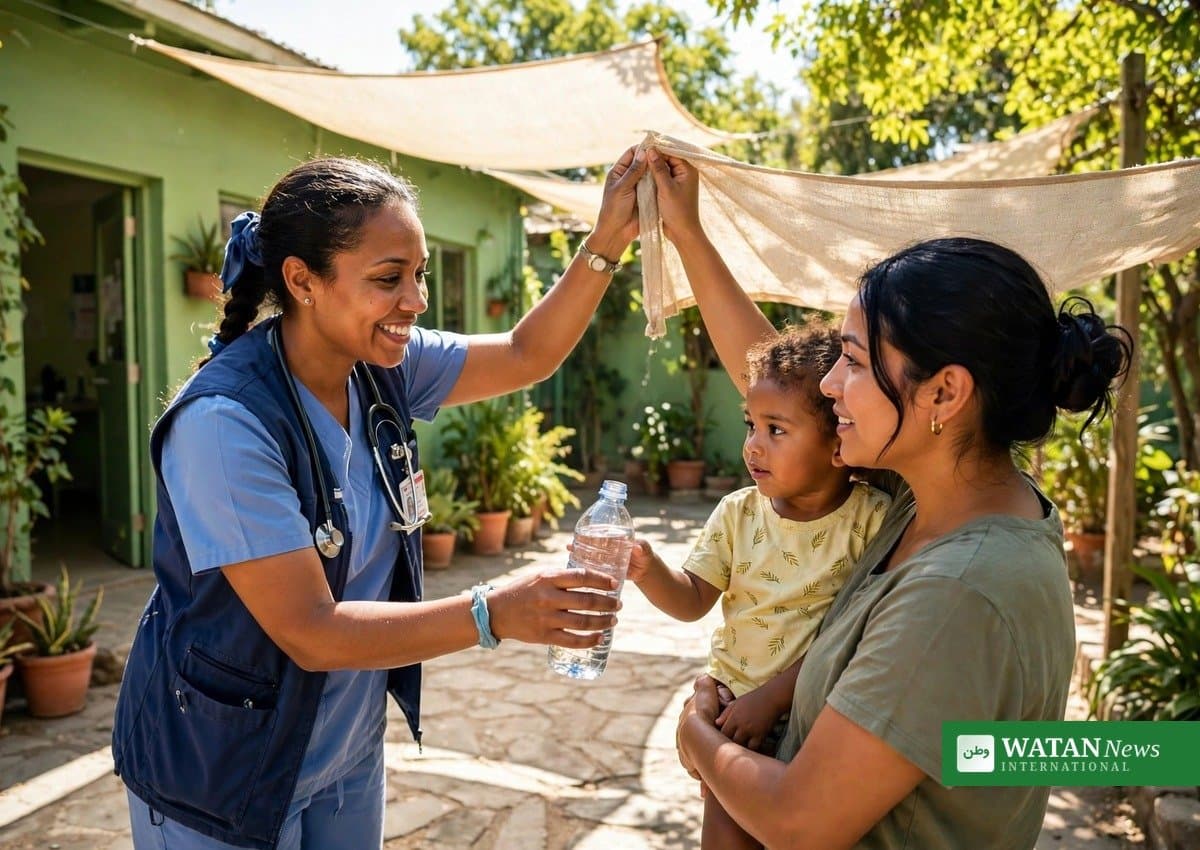
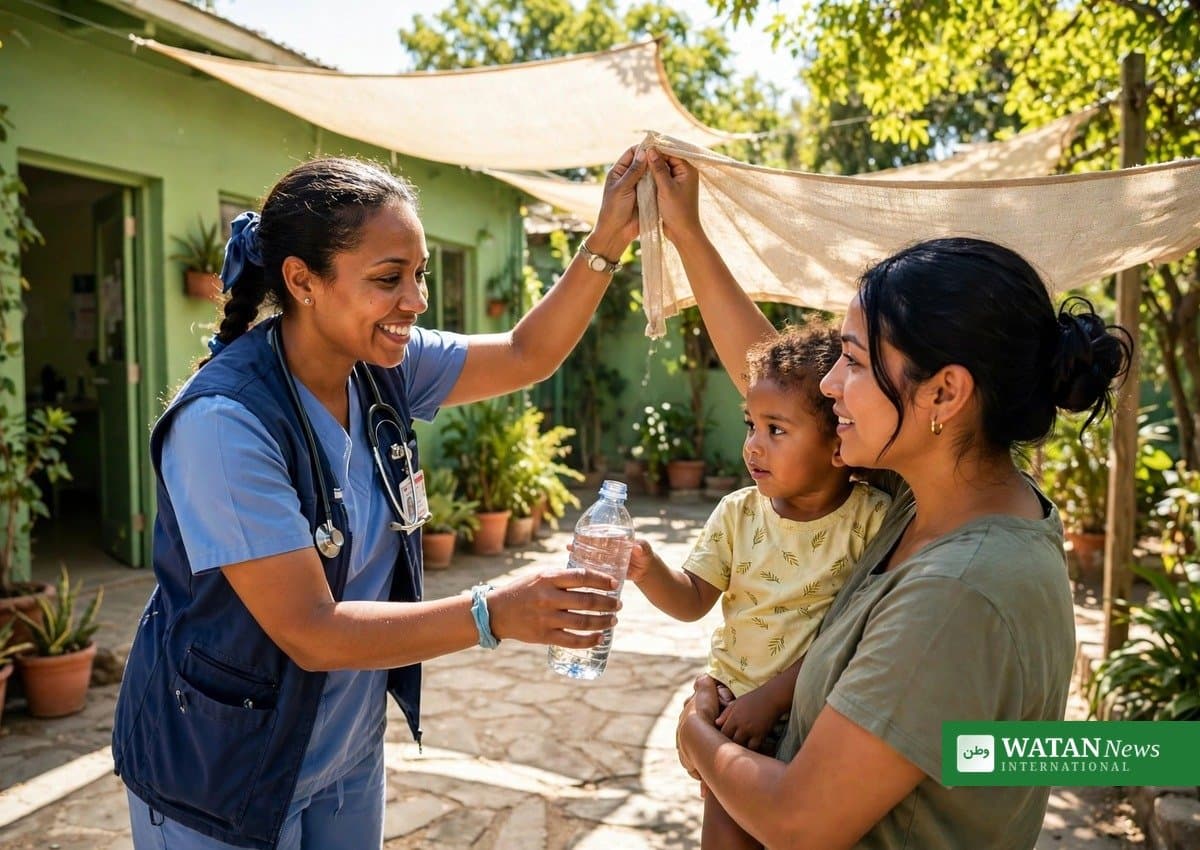
WHO urges every country to develop and put in place heat-health action plans tailored to local conditions, with the needs of pregnant women, newborns and children built in from the start. Those plans should strengthen early-warning systems so that warnings trigger timely action, and should make climate risk a routine part of everyday health services rather than an emergency afterthought.
The launch also lands at a moment when climate and health are moving up the negotiation agenda. According to Health Policy Watch, UN climate chief Simon Stiell told a pre-COP ministerial meeting in Fiji this month that pregnancy and birth are now “a new fault line in the global climate crisis.” The next UN climate conference, COP31, meets in Antalya, Türkiye, from 9 to 20 November 2026, where governments will be pressed to turn pledges into implementation.
Readers following the wider climate picture can read Watan News International’s coverage of the latest global emissions outlook in UNEP Emissions Gap Report 2026: world set to overshoot 1.5 degrees, which sets out the emissions cuts scientists say are still needed this decade.
The framework arrives just days before the International Day of Climate Action on 24 October, a grassroots day of clean-ups, tree planting and education events that turns public concern into visible, coordinated action. For health workers, the message is the same in clinical terms: count the harm, warn earlier, and protect the people least able to escape the heat.
Key facts
- Launched 21 October 2026 by WHO, WMO, UNICEF and UNFPA — the first-ever set of priority indicators of this kind.
- What to track: preterm births, stillbirths, low birthweight, pregnancy hypertension, child deaths, health-facility visits during extreme heat, and school attendance.
- 26 per cent higher odds of preterm birth linked to extreme heat exposure, according to studies cited by the agencies.
- Babies under one experienced 389 per cent more heatwave days in 2024 than in the 1986–2005 baseline.
- An estimated 1.5 billion children worldwide face heatwaves growing more frequent, longer or more severe.
- Countries are urged to adopt locally tailored heat-health action plans and stronger early-warning systems.