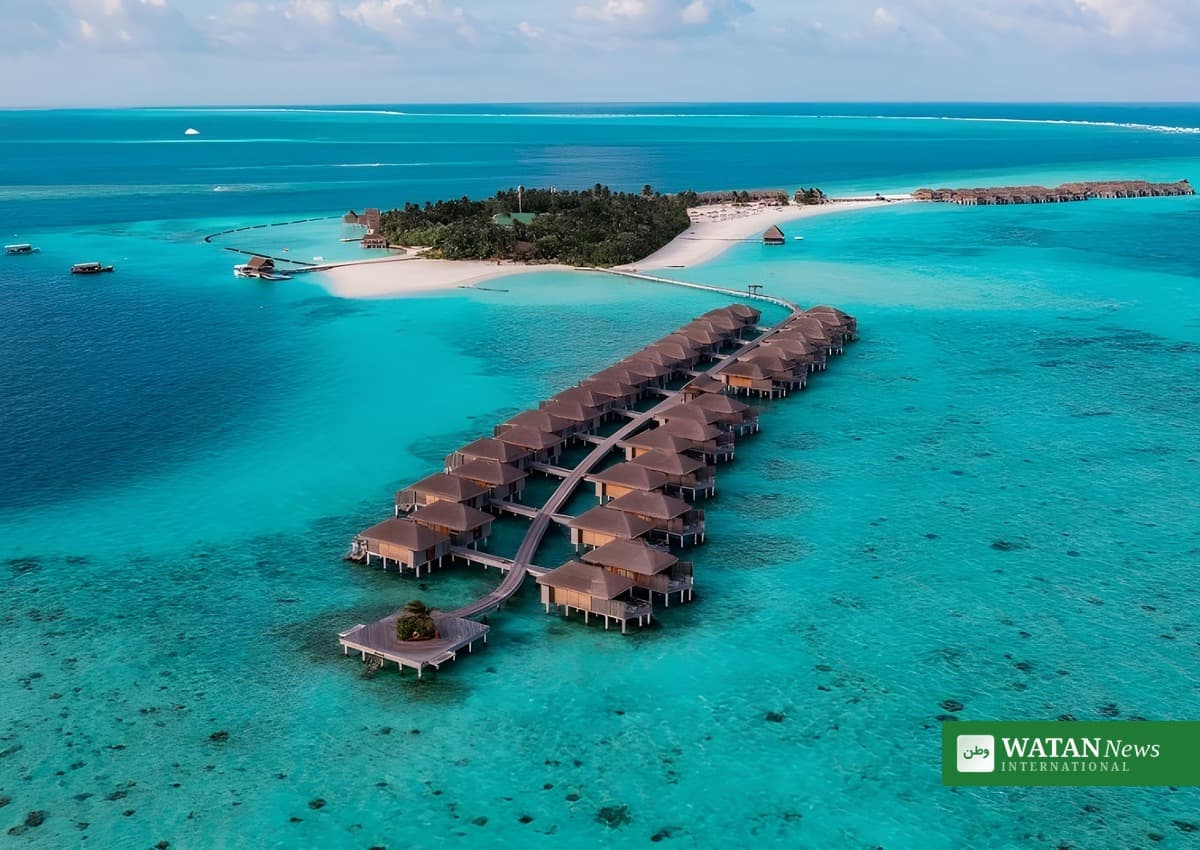
True luxury travel is not measured in thread counts or star ratings alone. It is the feeling of stepping from a private villa straight into a warm lagoon, of watching the sun set over a volcanic peak from your own deck, or of hearing a leopard move through the bush at dawn while a tracker reads the ground. These seven luxury resorts, spread across four continents, are among the most extraordinary places on earth to stay — each one chosen because the place itself, and the experience it offers, cannot be found anywhere else.
Read this story on Watan News: The World’s Most Extraordinary Luxury Resorts: Seven Stays Worth the Journey
FAKTA
- Seven named luxury resorts across the Maldives, French Polynesia, Dubai, Tokyo, the Amalfi Coast and South Africa — from barefoot island hideaways to a city hotel above the Imperial Palace gardens.
- Soneva Fushi in the Maldives opened in 1995 on Kunfunadhoo Island in the Baa Atoll, a UNESCO Biosphere Reserve since 2011, and is widely credited with inventing barefoot luxury.
- Four Seasons Resort Bora Bora opened in 2008 on its own private islet, Motu Tehotu, facing the 727-metre Mount Otemanu across a turquoise lagoon.
- The Burj Al Arab in Dubai, opened in 1999, rises 321 metres from its own artificial island and holds 202 duplex suites, each with a dedicated butler.
- Aman Tokyo occupies the top six floors of the Otemachi Tower, with 84 suites, a 2,500-square-metre spa and a 30-metre indoor pool above the city.
- Caruso, a Belmond Hotel, occupies an 11th-century palace in Ravello, about 350 metres above the Amalfi Coast, with a heated infinity pool and 50 rooms and suites.
- Singita Sabi Sand in South Africa, founded in 1993, sits on a private concession of about 18,000 hectares beside Kruger National Park, in country famous for leopard sightings.
- The Brando, on Tetiaroa atoll in French Polynesia, has 35 private villas on the island actor Marlon Brando bought in 1966, and is a certified LEED Platinum property.
Choosing the World’s Best Luxury Resorts
A great luxury resort does more than offer a beautiful room. It gives guests a setting they could not reach on their own: a private island in a UNESCO biosphere reserve, a lagoon sanctuary patrolled by a marine biologist, a palace above a coastline, or a concession where leopards are so relaxed around vehicles that sightings feel unhurried and close. The seven resorts below were chosen for that quality — the sense that the place itself is the experience — and for the range they cover, from barefoot island calm to city glamour and wild safari country.
Soneva Fushi, Maldives: Barefoot Luxury in a UNESCO Biosphere Reserve
Soneva Fushi, on Kunfunadhoo Island in the Baa Atoll, is the resort that invented barefoot luxury. Opened in 1995 by Sonu Shivdasani and Eva Malmstrom Shivdasani, it asks guests to leave their shoes behind — the “No News, No Shoes” ethos — and runs across one of the Maldives’ largest resort islands, about 1.4 kilometres of old-growth jungle and white beach. The Baa Atoll was declared a UNESCO Biosphere Reserve in 2011, and the resort sits within reach of Hanifaru Bay, the marine protected area famous for its seasonal gatherings of manta rays and whale sharks.
What makes Soneva Fushi special
The resort has 71 villas, from one-bedroom beach hideaways to nine-bedroom residences, and every villa has a private pool and direct access to the beach or lagoon. Eight of the villas are Water Retreats built over the lagoon, among the largest overwater villas of their kind, some with a slide that drops guests straight into the sea. Dining spans more than ten concepts, including Out of the Blue, a two-storey overwater restaurant, and a treetop dinner reached by zipline. An open-air cinema screens films over the water, an observatory hosts stargazing, and the house reef is counted among the best in the country. The island is reached by a seaplane flight of about 30 minutes from Male.
Stay here for slow days: cycling between jungle and beach, snorkelling the house reef, and joining a boat trip to Hanifaru Bay when the mantas gather. It suits families and couples who want space, nature and imagination rather than marble and formality.
Four Seasons Resort Bora Bora: Overwater Bungalows Beneath Mount Otemanu
Few views in luxury travel are as instantly recognisable as Mount Otemanu rising 727 metres above the lagoon of Bora Bora. Four Seasons Resort Bora Bora, which opened in October 2008, sits on its own private islet, Motu Tehotu, about 15 minutes by boat from Bora Bora Airport, with every overwater bungalow suite facing either the lagoon and the mountain or the open Pacific. The bungalows, with thatched pandanus roofs and teak furnishings, have glass floors and ladders leading directly into the water, and many have private plunge pools.
What makes Four Seasons Bora Bora special
The resort’s lagoon sanctuary, a semi-enclosed lagoon at its centre, is one of its most distinctive features. Guests snorkel there among blacktip reef sharks, eagle rays and tropical reef fish, under the supervision of the resort’s marine biologist. There is a private beach, the Te Mahana Spa set in tropical gardens, and five dining venues. The drier season, from May to October, is generally considered the best time to visit, when the weather favours lagoon views, snorkelling and outdoor dining.
Stay here for the classic South Pacific honeymoon: breakfast delivered by outrigger canoe, long swims in water that changes colour by the hour, and evenings watching the light leave the mountain. Book the mountain-view side for the view that made the island famous.
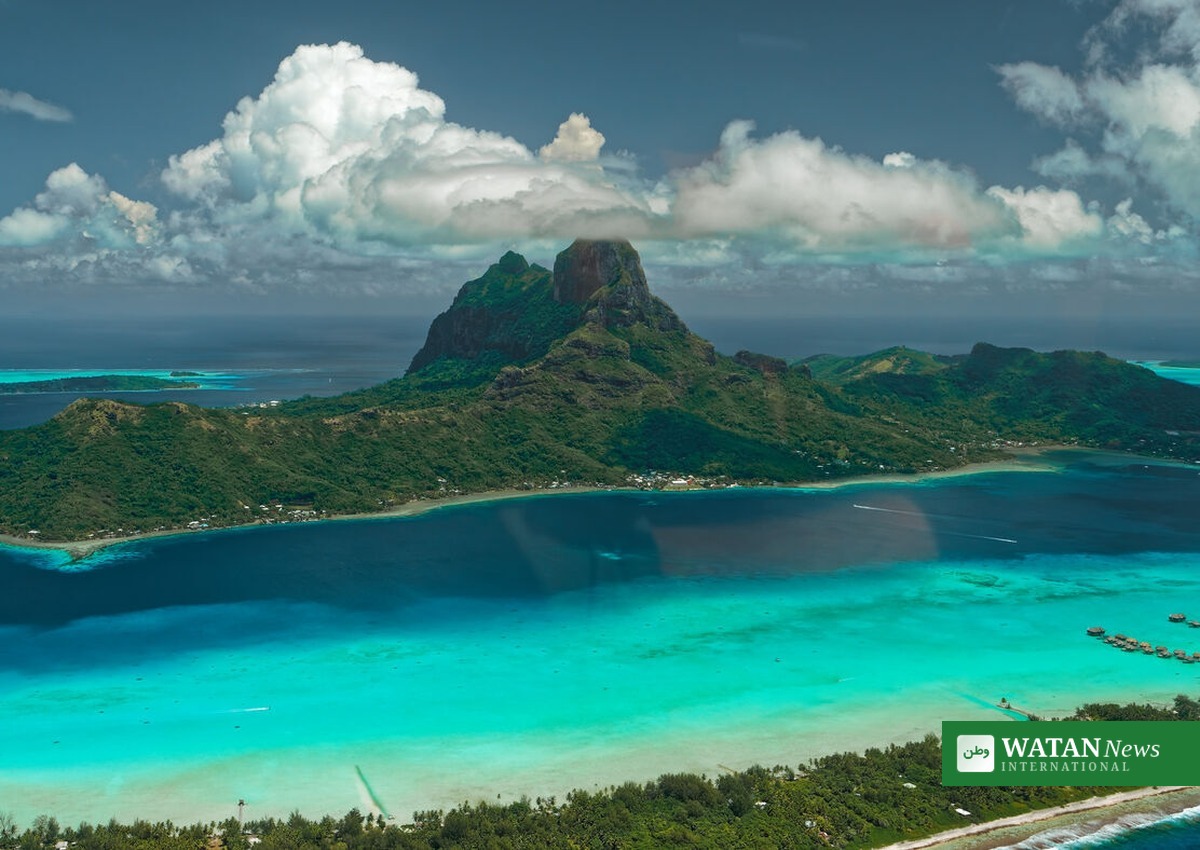
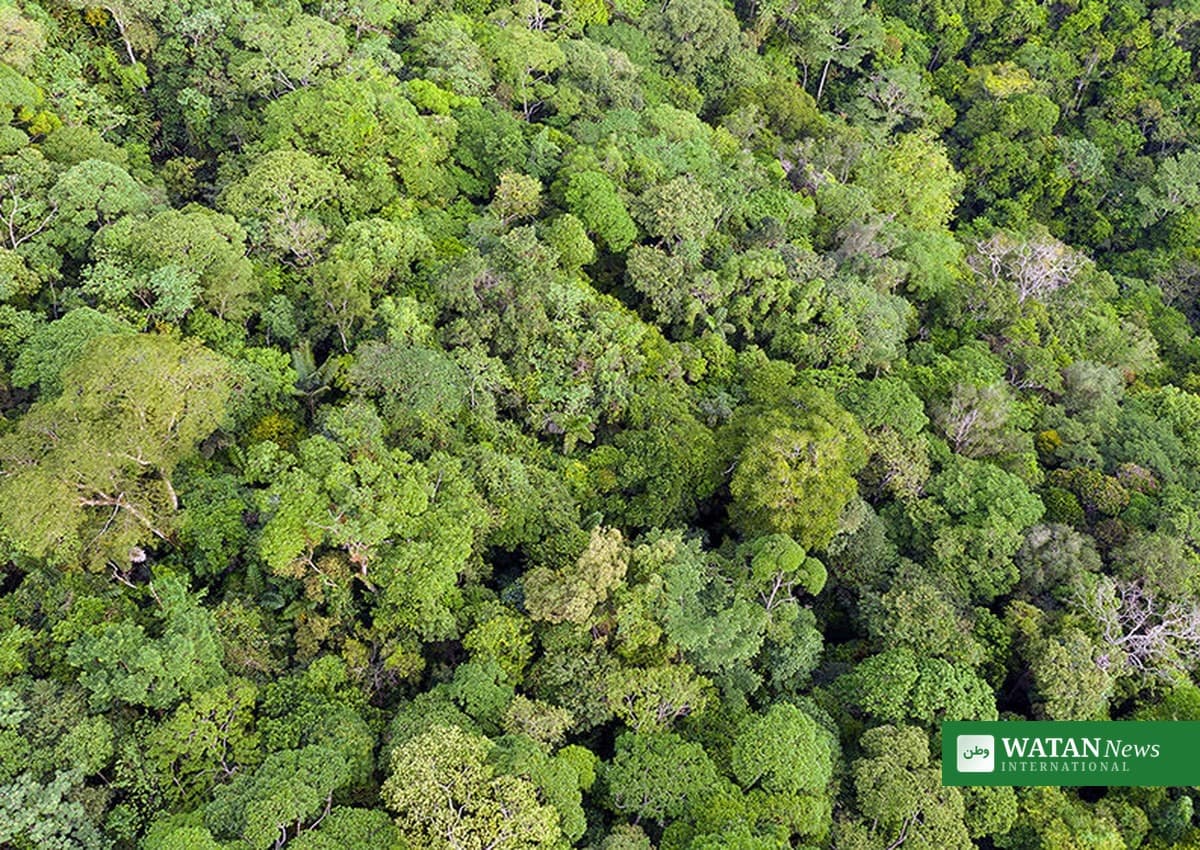
Bora Bora’s lagoon and Mount Otemanu, seen from above. The Four Seasons resort sits on its own private islet across the lagoon from the main island.
Burj Al Arab Jumeirah, Dubai: The Sail on Its Own Island
The Burj Al Arab is Dubai’s most famous silhouette: a sail-shaped tower rising 321 metres from an artificial island 280 metres off Jumeirah Beach, connected to the mainland by a private curving bridge. Designed by architect Tom Wright to resemble the billowing sail of a traditional dhow, it opened on 1 December 1999 and remains one of the most photographed hotels in the world. Inside, a 180-metre atrium rises through the building, and a helipad sits near the roof at a height of 210 metres.
What makes the Burj Al Arab special
Every one of the 202 rooms is a duplex suite, ranging from 169 square metres to the 780-square-metre Royal Suite, each with a dedicated butler and 24-hour butler service. Suites are arranged over two levels, with living space below and the bedroom above, reached by a sweeping staircase. The Talise Spa sits on the 18th floor, about 150 metres above sea level, and the hotel has nine restaurants and bars, a private stretch of beach and an over-water terrace with infinity pools. Few hotels combine spectacle and service at this scale: the building itself is the experience, and the city — the Burj Khalifa, the Dubai Mall, the desert beyond — is the backdrop.
Stay here for a landmark stay in the city: an afternoon at the spa high above the Gulf, dinner in one of the hotel’s restaurants, and the sight of the sail lit up against the night sky from Jumeirah Beach.
Aman Tokyo: A Quiet Sanctuary Above the Imperial Palace
Aman Tokyo is a different kind of luxury resort: a city hotel that feels like a retreat. Opened on 22 December 2014 as Aman’s first city hotel and its first in Japan, it occupies the top six floors — levels 33 to 38 — of the Otemachi Tower in central Tokyo, between Tokyo Station and the Imperial Palace gardens. Designed by Kerry Hill Architects, it translates a traditional Japanese residence into a tower: timber, washi paper and stone, shoji screens, deep furo soaking tubs, and a 33rd-floor lounge designed like the inside of a paper lantern, with a 30-metre ceiling over a stone garden and reflecting pool.
What makes Aman Tokyo special
All 84 rooms are suites, and even the smallest, the Deluxe Suite at 71 square metres, is exceptionally large for central Tokyo. The Aman Spa covers about 2,500 square metres across two floors, with a 30-metre heated indoor pool with panoramic city views, treatment rooms, hot baths and steam rooms, and yoga and Pilates studios. Every stay includes breakfast and access to the spa’s bathing facilities. From the rooms and the pool, the view runs across the Imperial Palace gardens and the capital — a calm, high prospect over one of the world’s busiest cities.
Stay here for slow, spacious days in Tokyo: long mornings in the spa, unhurried walks through the palace gardens below, and evenings in the lounge as the city lights come on. It suits travellers who want quiet, space and wellness without leaving the centre of the city.
Caruso, a Belmond Hotel, Ravello: A Palace Above the Amalfi Coast
High above the Amalfi Coast, in the village of Ravello, Caruso occupies an 11th-century palace — the Palazzo d’Afflitto — about 350 metres above the Gulf of Salerno. The Amalfi Coast is listed as a UNESCO World Heritage Site, and Ravello, a small village of medieval origins, sits above the coast road, away from the crowds of the shore. Belmond acquired the palace in 2000, restored it over four years, and reopened it as a hotel in 2005.
What makes Caruso special
The hotel has 50 individually furnished rooms and suites, each different, with frescoed ceilings, stone arches and terraces over the sea or the gardens. Its heated infinity pool, set at the highest point of the terraced gardens, is one of the most photographed hotel pools in the world: the water appears to merge with the Gulf of Salerno far below. The hotel runs a complimentary shuttle to Amalfi, a complimentary two-hour boat ride along the coast, and boat excursions on its own boat. The Belvedere restaurant serves regional Campanian cooking on a covered terrace. Note that the hotel closes for the winter and reopens in spring, so check the season before planning a stay.
Stay here for the Amalfi Coast at its most romantic and unhurried: long lunches on the terrace, an afternoon by the infinity pool, and evenings in Ravello’s gardens as the light turns gold over the sea.
Singita Sabi Sand, South Africa: The Benchmark Big Five Safari
Singita Sabi Sand is where the modern luxury safari was born. Singita was founded in 1993 by Luke Bailes on a private concession of about 18,000 hectares in the Sabi Sand Game Reserve, which shares an unfenced border with Kruger National Park in South Africa, so animals roam freely across an enormous wilderness. The reserve is world-famous for its leopards: decades of careful, low-impact tourism have habituated generations of these normally secretive cats to vehicles, allowing close, calm sightings at remarkable range.
What makes Singita Sabi Sand special
The operation centres on two intimate lodges, Ebony Lodge and Boulders Lodge, each with just 12 suites — Boulders sits along the boulder-strewn banks of the Sand River — plus Castleton, a six-suite exclusive-use villa. Rates are fully inclusive, covering the suite, all meals, most drinks, two safari activities a day in open vehicles, guided bush walks and laundry. Each drive is led by a ranger and a Shangaan tracker working as a pair, and vehicle numbers are deliberately kept low, so sightings are unhurried and private. Alongside leopards, guests regularly see lion, elephant, buffalo and rhino — the Big Five — as well as wild dog, giraffe, zebra and hippo. The dry winter months, roughly May to September, concentrate animals around water and thin the bush, giving the best sightings.
Stay here for the finest leopard viewing on earth and the deepest safari tradition in Africa: dawn drives in the cool morning air, a pause for coffee in the bush, and evenings around the fire as the sounds of the reserve settle in.
The Brando, Tetiaroa: A Private Atoll Powered by the Sun and the Sea
The Brando is the most remote resort on this list — and the most sustainable. It sits on Onetahi, one of the 12 islets of Tetiaroa Atoll, about 53 kilometres north of Tahiti in French Polynesia, reached by a 20-minute private flight from Papeete. Tetiaroa was a retreat for Tahitian royalty for centuries; actor Marlon Brando fell in love with it while filming Mutiny on the Bounty and bought the atoll in 1966. The resort that carries his name opened in 2014, built in partnership with the Brando family trust and the Tetiaroa Society, which manages conservation, research and education across the atoll.
What makes The Brando special
The resort has 35 private villas, each set back from the beach among palms, with a private plunge pool, outdoor shower and direct beach access, plus one private residence. It is a certified LEED Platinum property: solar power supplies more than 60 percent of its electricity, and about 90 percent of its air conditioning is generated by a seawater air-conditioning system that draws cold water from the deep ocean. A research station operated by the Tetiaroa Society works alongside the resort, and green sea turtles nest on the atoll’s beaches from September to March. Dining includes Les Mutines, the signature restaurant named for the film that first brought Brando to French Polynesia.
Stay here for total seclusion with a clear conscience: snorkelling a protected lagoon, walking empty white-sand beaches, and learning from the resident naturalists about the atoll they help to protect.
How to Choose Between These Luxury Resorts
| Resort | Setting | Signature experience |
|---|---|---|
| Soneva Fushi, Maldives | Private island, Baa Atoll | Barefoot luxury, Hanifaru Bay manta rays, overwater dining |
| Four Seasons Bora Bora | Private islet, French Polynesia | Overwater bungalows facing Mount Otemanu, lagoon sanctuary |
| Burj Al Arab, Dubai | Artificial island, Jumeirah Beach | 321-metre sail tower, duplex suites, spa above the Gulf |
| Aman Tokyo | Otemachi Tower, central Tokyo | 84 large suites, 2,500-square-metre spa, 30-metre pool |
| Caruso, Ravello | Clifftop palace, Amalfi Coast | Heated infinity pool 350 metres above the sea |
| Singita Sabi Sand | Private concession, South Africa | Big Five safari, world-class leopard viewing |
| The Brando, Tetiaroa | Private atoll, French Polynesia | 35 private villas, solar power, turtle nesting beaches |
The right choice depends on the journey you want. Choose the Maldives or Bora Bora for barefoot island calm and water; Dubai or Tokyo for city glamour and service at scale; Ravello for romance and history; the Sabi Sand for wildlife; and Tetiaroa for seclusion with sustainability at its heart. Wherever you go, book early: the smallest and most celebrated resorts have few rooms, and the best villas and suites are reserved months ahead.
Conclusion
The world’s most extraordinary luxury resorts share one quality: they could not exist anywhere else. A barefoot island in a UNESCO biosphere reserve, a private islet beneath a volcanic peak, a sail rising from its own island, a quiet sanctuary above a palace garden, an 11th-century palace above the sea, a concession where leopards walk calmly past the vehicles, and a private atoll cooled by the deep ocean — each one turns a stay into a memory that lasts for years. Luxury, at this level, is not about excess. It is about the right place, the right view, and the feeling that every detail has been considered before you ask.
Related Articles
- Eight Luxury Destinations Around the World for an Unforgettable Escape
- The World’s Most Luxurious Resorts and Premium Escapes: Islands, Mediterranean, Cities and Alps
- Luxury by Landscape: Six Breathtaking Destinations, From Islands to Alpine Peaks
- Winter Sun Seaside and Island Escapes: From the Maldives to Santorini and Bali