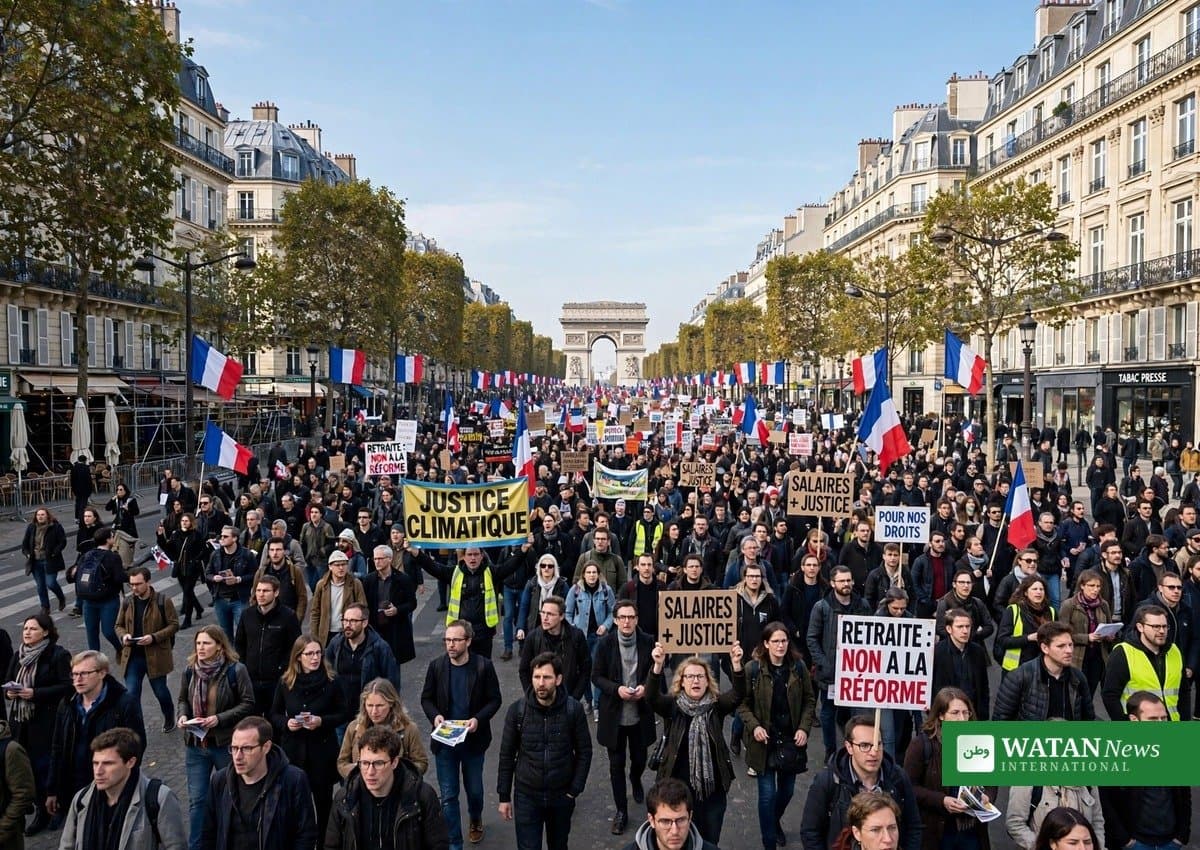
Tens of thousands of people are expected to take to the streets across France on Saturday, as students, trade unionists and Yellow Vest activists join forces in nationwide demonstrations against high living costs and a strained social safety net.
FAKTA
- Who is marching: students, trade unions and Yellow Vest activists, protesting together at this scale for the first time.
- Why: anger over high living costs, inequality and the state of public services.
- How it started: last month at high schools in the poor northern suburbs of Paris, over teacher shortages and poor facilities.
- The toll so far: more than 900 police officers injured since the unrest began; an internal watchdog is examining at least two dozen reports of alleged police violence.
A School Protest That Grew Into a National Movement
The wave of anger began in September at high schools in the poor northern suburbs of Paris, where students complained of missing teachers and crumbling buildings. What started as school-level complaints quickly broadened into a wider movement against inequality, underfunded public services and declining living standards.
The protests have spread nationwide, drawing in trade unions and reviving the Yellow Vest movement, born in 2018 from fuel-tax demonstrations.
A Difficult Moment for France
The demonstrations arrive at a sensitive time. President Emmanuel Macron is approaching the final stretch of his presidency amid a polarised electorate, while investors selling French government debt have pushed borrowing costs to their highest level in more than twenty years. Many households say rising expenses have squeezed their budgets. More European news at Watan News.
Warnings of Unrest and Fears of Violence
Prime Minister Sébastien Lecornu warned on Thursday that the protests could turn violent, describing France as exhausted by repeated crises. “This is a moment of fatigue in the country,” he said, pointing to wars, inflation and pressure on purchasing power. The government has accused the hard-left France Unbowed party of stoking the unrest, an accusation the party denies.
Jordan Bardella, leader of the far-right National Rally, said he expected the day to bring chaos, describing himself as “extremely concerned” during a visit to the Paris car show.
Clashes and Questions Over Police Tactics
The protests have already seen serious clashes: more than 900 police officers have been injured since the unrest began — among the most violent protests in decades, according to the government. Police tactics have also faced scrutiny after serious demonstrator injuries, including a teenager who lost a hand after picking up a stun grenade.
Authorities have suspended the use of stun grenades at student protests, though Interior Minister Laurent Nuñez said other crowd-control weapons could still be used if clashes break out. A police watchdog is examining at least two dozen reports of alleged police violence.
With students, unions and Yellow Vests marching together on Saturday, France faces one of its largest days of protest in recent years — and a major test for the government.