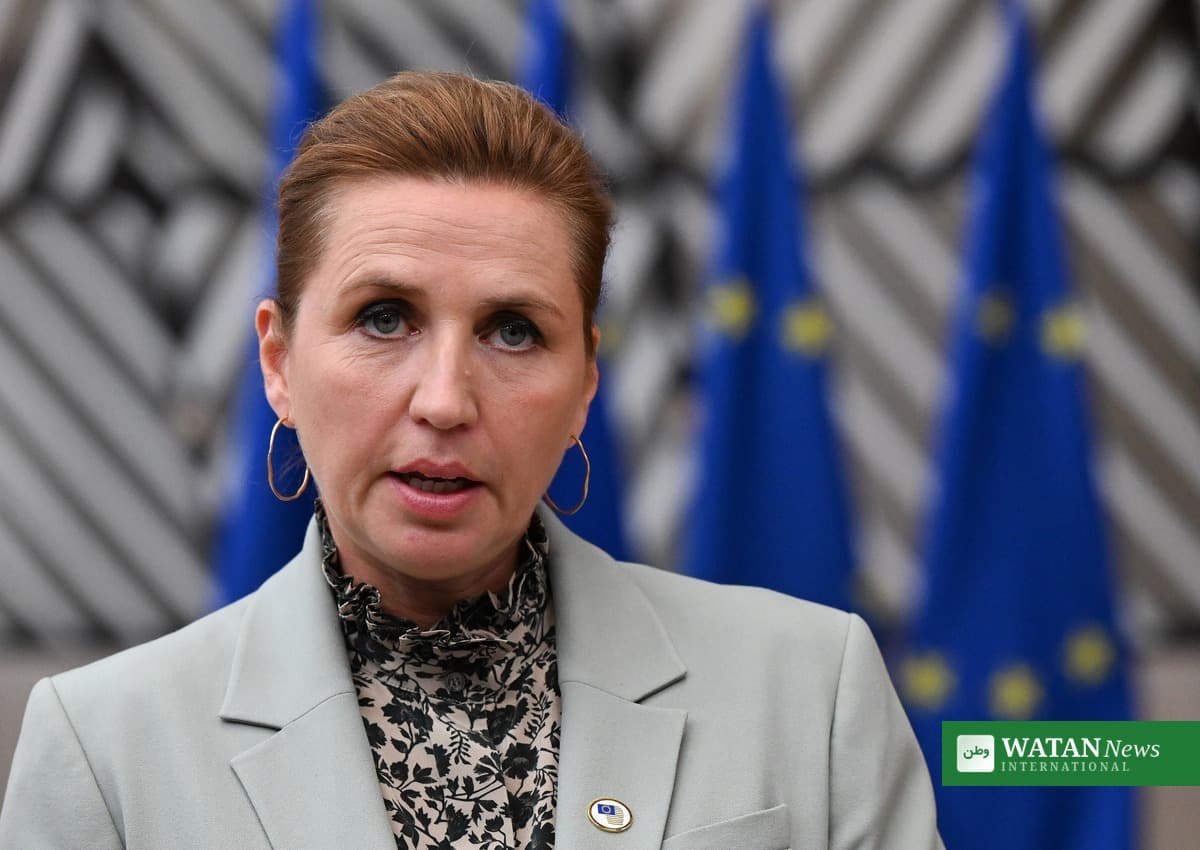
Danish Prime Minister Mette Frederiksen has said Denmark must keep a strong majority culture and that she does not support a multicultural society or large-scale population change, in a podcast interview that has drawn wide attention in Denmark and across Europe. The remarks were made on the Borgerlig Tabloid podcast from the Danish daily B.T., released on Tuesday, 17 November 2026.
FAKTA
- Who: Danish Prime Minister Mette Frederiksen, leader of the Social Democratic Party.
- Where: The Borgerlig Tabloid podcast, hosted by Joachim B. Olsen for the newspaper B.T.
- When: The episode was released on Tuesday, 17 November 2026.
- What she said: She said she is not in favour of a multicultural society where cultures are treated as equal, and not in favour of a large population replacement, adding that there needs to be a strong majority culture.
- On identity: She described Danes as an ethnically Danish indigenous people and said Denmark must remain Danish, while noting that the majority culture evolves as new people arrive.
- Context: The interview followed the announcement on 16 November that Denmark and four other European countries plan a return hub in Rwanda for rejected asylum seekers.
What she said
Speaking on the podcast, Frederiksen said: “I am not in favour of a multicultural society where one equates cultures.” She added: “I am European, Danish and from Aalborg. And I am also not in favour of a large population replacement. I believe there needs to be a strong majority culture.”
Asked what she meant by a Denmark that stays Danish, she said: “We are a Danish society, and we form an ethnically Danish indigenous tribe. Of course, this evolves when new people arrive here. But it is also necessary that, in the future, Denmark still has a strong majority culture.” She added that she wants a Denmark that is Danish, and that she stands by that position fully.
The MENAPT remarks
Frederiksen singled out immigration from MENAPT countries — the Middle East, North Africa, Pakistan and Turkey — as a particular challenge for integration. MENAPT is an official Danish statistical grouping used by the immigration authorities. She said that a dominance culture among some arrivals rejects homosexuality, opposes equal rights for women and seeks to place Islam above national law.
She also said that Denmark does not have religious equality in the sense of treating all religions alike, adding: “We are a Christian country. We shall continue to be so.” The remarks were reported from the podcast episode by several outlets, including the French daily Le Monde and the Danish press.
The context: a week of migration announcements
The podcast appearance came the day after Frederiksen, together with leaders from Germany, Austria, Greece and the Netherlands, announced plans in Vienna to negotiate a return hub in Rwanda for rejected asylum seekers who cannot be sent back to their home countries. She described that plan as a potential game changer for European migration policy, saying it would break the business model of human smugglers and restore control over borders.
Denmark already has some of the most restrictive immigration policies in Europe, and asylum inflows to the country are among the lowest on the continent. Frederiksen has led that approach throughout her time as prime minister, and her government has continued to tighten the rules while arguing that a strong majority culture must be preserved.
Reaction
The remarks drew praise from far-right figures in Europe, according to Le Monde, which reported that it was the first time the head of the Danish government had used the expression about population replacement. Le Monde also noted that the language echoes a conspiracy theory promoted by the European far right. The interview was widely shared on social media after its release, and the prime minister’s words were quoted across European media within a day.
Supporters of the prime minister’s approach point to Denmark’s low asylum numbers and to her argument that integration requires a clear majority culture. The debate in Denmark now turns to what the remarks mean in practice for integration policy, and whether they signal further tightening of the rules for newcomers.
Conclusion
Frederiksen’s podcast remarks put Denmark’s integration debate back at the centre of European attention. By rejecting multiculturalism and large-scale population change in plain terms, the Social Democratic prime minister has restated the direction of Danish policy — a strong majority culture, restrictive immigration rules and return arrangements outside the European Union — and the discussion over that direction is set to continue.