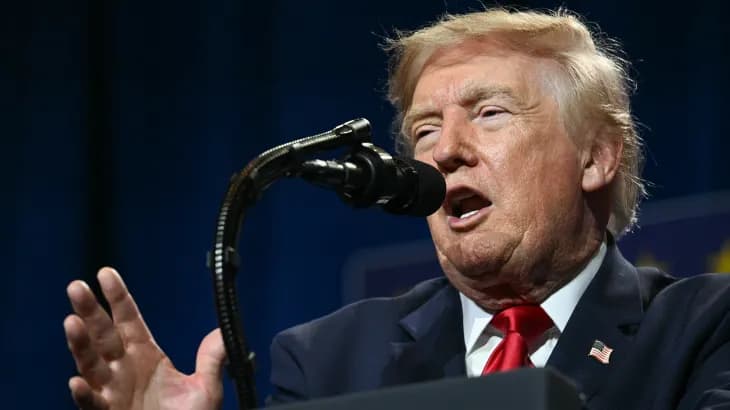
President Donald Trump has denied reports that his administration offered sanctions relief and frozen funds to Iran, amidst ongoing tensions and stalled negotiations between the two nations. The denial comes as a significant development in the complex geopolitical landscape surrounding Iran and the United States.
- President Trump explicitly rejected claims of offering sanctions relief to Iran.
- The reports suggested a potential offer of frozen funds to Tehran.
- This denial occurs amid a backdrop of stalled diplomatic talks.
- Tensions remain high between the United States and Iran.
US Denials Amidst Speculation
Recent news reports suggested that the Trump administration had made overtures to Iran, including the possibility of easing economic sanctions and releasing frozen assets. These reports fueled speculation about a potential shift in US policy towards Iran, particularly in light of escalating rhetoric and military posturing.
- Reports indicated potential offers of sanctions relief.
- The possibility of releasing frozen Iranian funds was also mentioned.
- These claims emerged despite ongoing diplomatic impasses.
Stalled Negotiations and Escalating Tensions
The relationship between the United States and Iran has been fraught with tension since the US withdrawal from the Joint Comprehensive Plan of Action (JCPOA) in 2018. Despite numerous attempts at dialogue, direct negotiations have largely stalled, with both sides engaging in a war of words and occasional military provocations.
US Withdrawal from JCPOA
The decision by the Trump administration to withdraw from the Iran nuclear deal and reimpose stringent sanctions significantly altered the dynamics of US-Iran relations. This move was met with strong criticism from European allies and Iran itself, which has since begun to exceed some of the limits set by the deal.
- US withdrew from JCPOA in 2018.
- Sanctions were reimposed on Iran.
- Iran subsequently increased its nuclear activities beyond JCPOA limits.
Trump’s Stance on Iran War
President Trump has previously stated that the US would win any potential conflict with Iran “one way or another.” This assertion underscores the administration’s firm stance and willingness to use force if deemed necessary, although diplomatic channels remain ostensibly open, albeit unproductive.
- Trump has asserted US victory in any Iran conflict.
- This statement reflects a strong, potentially aggressive, US posture.
- The administration maintains a dual approach of pressure and potential dialogue.
Iran’s Position on Negotiations
Iran has consistently maintained that it has no intention of negotiating with the United States under the current circumstances. Iranian officials have often cited the US’s unilateral withdrawal from the JCPOA and its “maximum pressure” campaign as reasons for the lack of trust and willingness to engage in direct talks.
- Iran denies any intention to negotiate with the US.
- Past US actions are cited as reasons for mistrust.
- The “maximum pressure” campaign is a key point of contention.
International Reactions and Concerns
The ongoing standoff between the US and Iran has drawn significant attention from the international community, with many nations expressing concern over the potential for escalation and its impact on regional stability. Calls for de-escalation and a return to diplomatic solutions have been frequent, but progress remains elusive.
European Allies’ Concerns
European powers, signatories to the JCPOA, have repeatedly urged both sides to exercise restraint and engage in constructive dialogue. They have expressed concerns that the current trajectory could lead to a wider conflict, with devastating consequences for the region and global security.
- European nations advocate for de-escalation.
- They emphasize the importance of diplomatic engagement.
- Concerns are high regarding regional stability and potential conflict.
Conclusion
President Trump’s unequivocal denial of offering sanctions relief to Iran serves to clarify the US administration’s position amidst a period of intense speculation and geopolitical maneuvering. The persistent lack of direct communication and the deep-seated mistrust between Washington and Tehran continue to cast a shadow over prospects for de-escalation.
While the door for dialogue may not be entirely closed, the path forward remains uncertain, with both nations maintaining firm stances that complicate any potential for a breakthrough in their adversarial relationship.
What did President Trump deny?
President Trump denied reports that his administration offered Iran sanctions relief and frozen funds.
Why are US-Iran negotiations stalled?
Negotiations are stalled due to the US withdrawal from the JCPOA and ongoing sanctions.
What is Iran’s stance on talks with the US?
Iran has stated it has no intention of negotiating with the US under current circumstances.
What was the JCPOA?
The JCPOA was the Iran nuclear deal, from which the US withdrew in 2018.