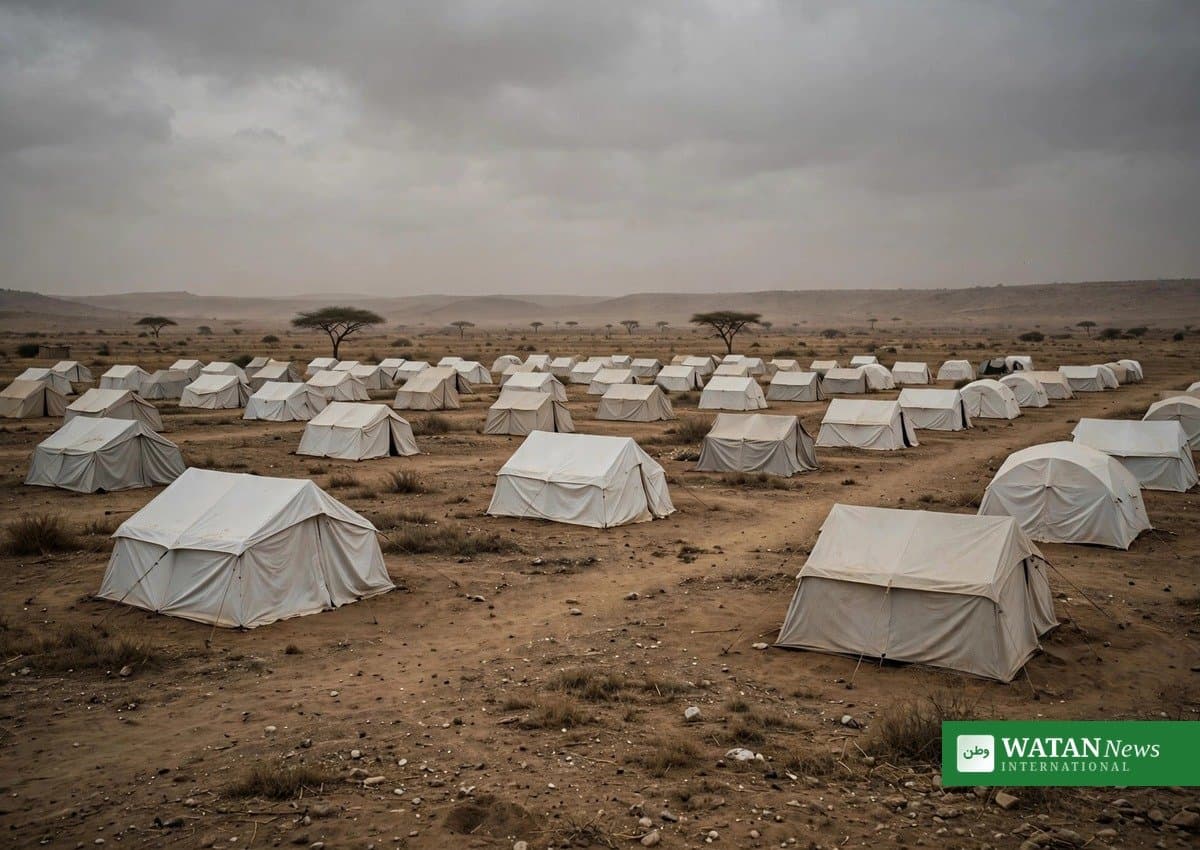
A drone strike blamed on Sudan’s paramilitary Rapid Support Forces killed 41 people at a gathering of displaced civilians in the Blue Nile region near the Ethiopian border, a rights group said on Friday, in one of the deadliest recent attacks on people already forced from their homes.
FAKTA
- What happened: A drone strike hit a gathering of displaced people in the Abu Shandi area of Blue Nile province, near Sudan’s border with Ethiopia.
- Casualties: 41 killed, including eight children and many women; dozens more wounded, according to the rights group Emergency Lawyers.
- When: Friday, October 9, 2026.
- Blamed on: The Rapid Support Forces (RSF) paramilitary group, which did not respond to a request for comment.
- UN response: The UN Office for the Coordination of Humanitarian Affairs said it was “appalled”; the UN humanitarian coordinator in Sudan demanded accountability.
Strike on Displaced Families
The attack struck a settlement housing displaced civilians in the Abu Shandi area of Blue Nile state, according to Emergency Lawyers, a Sudanese rights group that tracks the war. Initial reports indicated that most of the victims were women and children.
The UN Office for the Coordination of Humanitarian Affairs said it was appalled by the reported strike, which also left dozens of people wounded. The agency noted that the area had been under sustained attack in recent weeks, displacing thousands of civilians and exposing many more to grave harm.
UN Demands Accountability
Denise Brown, the UN resident and humanitarian coordinator in Sudan, condemned the killings in a statement and described them as a flagrant disregard for international humanitarian law. She said that condemning the senseless killings was essential, but that there must also be accountability.
Both sides in Sudan’s war have been accused of using drone attacks against civilian areas. Drones have become a defining weapon of the conflict, putting civilians at risk from more than one direction.
A Widening Humanitarian Catastrophe
Sudan’s war began in April 2023, when tensions between the military and the RSF exploded into open fighting in the capital, Khartoum, and spread across the country. The conflict has killed at least 150,000 people, according to the conflict monitor ACLED, though aid groups say the real number is likely higher.
More than 12.4 million people have been forced to flee their homes, according to UN figures, creating what aid groups call the world’s largest humanitarian crisis. Across Sudan, 33.7 million people, including 17.3 million children, urgently need aid this year, and an estimated 825,000 children face severe acute malnutrition.
The Sudanese army controls much of the country’s central and eastern regions, while the RSF is based in the western Darfur region and has extended its reach into southern areas. The Blue Nile strike shows that the violence is not confined to the main battlefronts — displaced people remain at risk even after fleeing their original homes.
Follow Watan News International for continuing coverage of the crisis in Sudan.