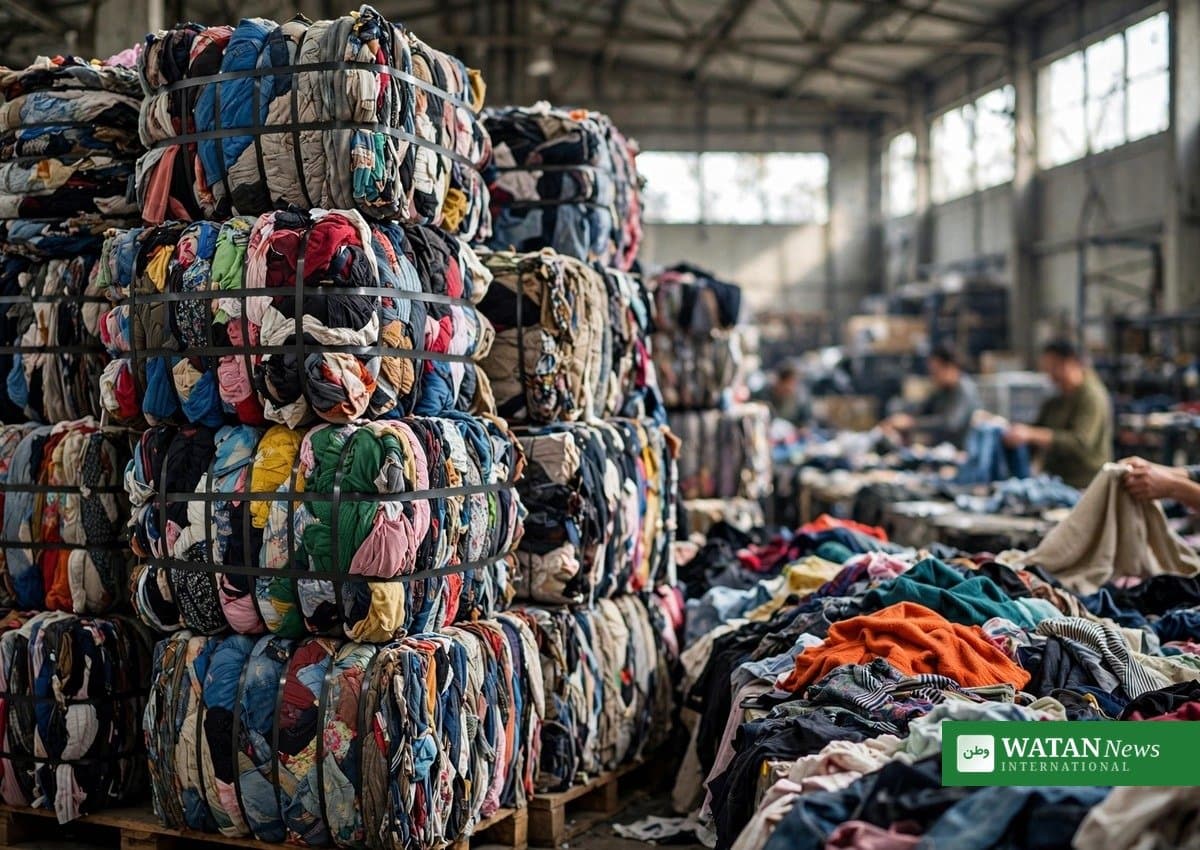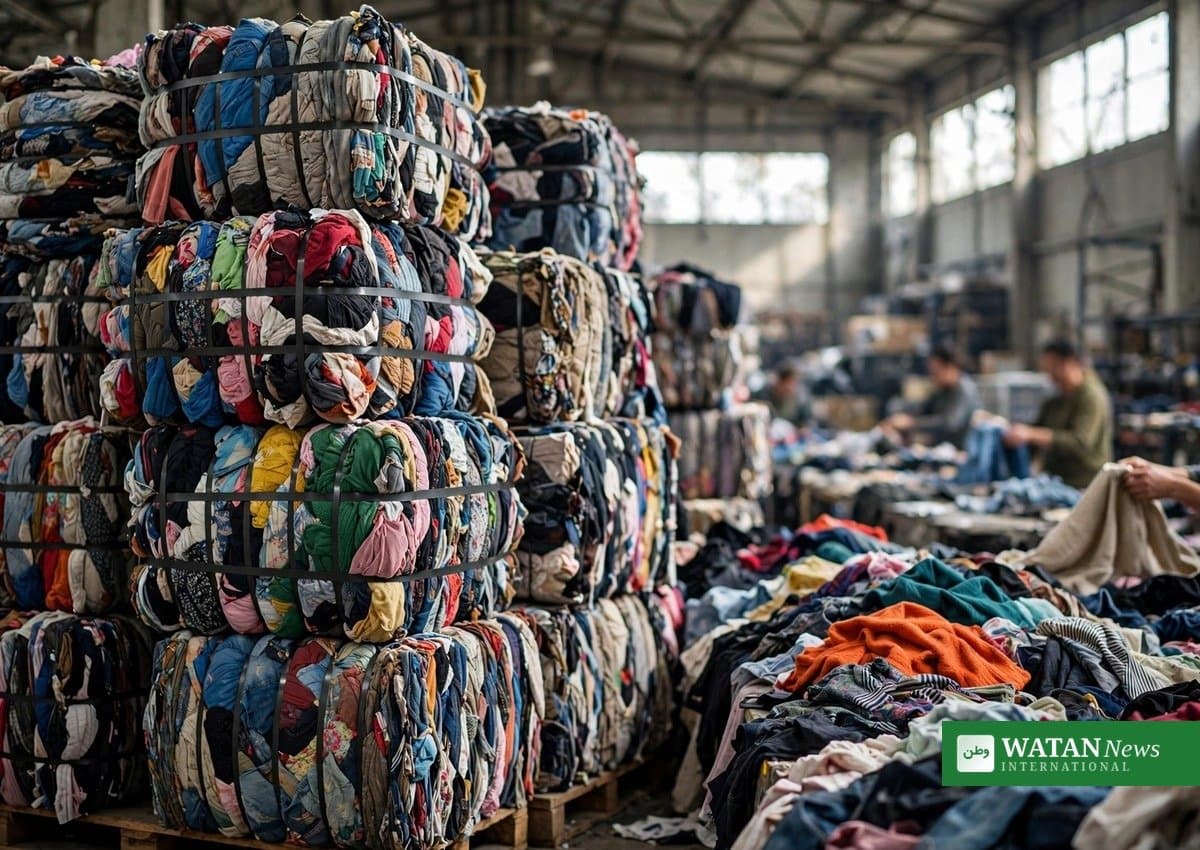
The United States has taken a first federal step toward tackling one of the fastest-growing waste streams in the world: discarded clothing. Congresswoman Chellie Pingree has introduced the Textile Waste Reduction Act, a bill that would create the first coordinated federal strategy to reduce textile waste and build a circular textile economy in the country.
Key facts
- Who: U.S. Representative Chellie Pingree (Maine), founder and chair of the Congressional Slow Fashion Caucus.
- What: The Textile Waste Reduction Act (TWRA) — the first bill of its kind at the U.S. federal level addressing fast-fashion-driven textile waste.
- Based on: The first-ever Government Accountability Office (GAO) report on fast fashion pollution, requested by Pingree and Representative Rosa DeLauro in 2023.
- Key measure: The Environmental Protection Agency (EPA) would develop a National Textile Circularity Strategy, coordinate an Interagency Working Group, and publish updated textile waste data every year.
- Background: Millions of tonnes of textiles are discarded in the U.S. each year, the vast majority ending up in landfills, where they can leach contaminants such as PFAS and microplastics into water and soil.
What the Textile Waste Reduction Act would do
The bill is built around the idea that no single agency or company can fix the clothing-waste problem alone. It directs the EPA administrator to take coordinated federal action to advance textile circularity, and requires the agency to develop a comprehensive National Textile Circularity Strategy together with a needs assessment — identifying the investments and policy priorities needed to put the strategy into practice.
The legislation would also create an Interagency Working Group on Textile Circularity to coordinate federal activities, establish an Advisory Board to feed recommendations into that group, and require the EPA to identify and publish federal funding opportunities available to states, Tribal governments, local governments and nongovernmental organizations that support textile circularity.
Importantly for accountability, the EPA would have to publish updated data on textile waste generation and management every year — a response to what supporters call a severe lack of reliable numbers on how much clothing Americans throw away and where it goes.
Why textile waste is a climate problem
Textile waste is now one of the fastest-growing waste streams in the United States, according to the GAO report that underpins the bill. Millions of tonnes of textiles are discarded each year and the vast majority end up in landfills. These discarded materials may leach contaminants, including PFAS and microplastics, into water and soil, while piling extra costs onto communities already struggling with shrinking landfill capacity.
The problem is driven largely by fast fashion: clothes designed to be worn a few times and discarded. The impact does not stop at America’s borders — a Greenpeace Africa survey found that nearly 90 percent of discarded clothing collected in Accra, Ghana, was made of synthetic fibers such as polyester, contributing to microplastic pollution and what the organization calls “plastic beaches” along the coast.
Supporters of the bill also point to jobs: over the past several decades, hundreds of thousands of fibre and textile jobs that once sustained American communities have shifted overseas, harming American farmers and manufacturing towns in the process.
Europe is pushing for the same fix
The U.S. bill lands as local authorities across Europe are demanding stronger action on the same crisis. At a workshop on 14 October organized by the Catalan Association of Municipalities, municipal leaders from Catalonia, Portugal and Prato, Italy, called on the EU to guarantee Extended Producer Responsibility schemes, stronger ecodesign rules to stem the flow of low-quality fast-fashion products, and a closed-loop recycling chain so fibres from discarded textiles can be used in new garments.
The European Commission already requires EU member states to collect textiles separately, but municipalities say they lack the financing and producer support to make collection systems work. Similar debates about producer responsibility have been running at state level in the U.S., with Washington state advancing a textile producer-responsibility proposal earlier this year.
What it means for everyday sustainable living
Pingree founded the Congressional Slow Fashion Caucus in June 2024 to promote climate-smart policies around reducing, repairing, re-wearing and recycling textiles. The caucus has drawn support from American Circular Textiles, the Garment Worker Center, the Climate Reality Project, Patagonia and the resale platform ThredUp.
“The GAO report confirmed what we’ve known for years: that textile waste is one of the fastest-growing waste streams in the U.S.; that it’s being driven largely by fast fashion; and that federal action is necessary to confront this crisis in a real, impactful way,” Pingree said. “It’s well past time we turn that potential into action — and help transform this wasteful industry into one that’s more efficient, more sustainable, and better for people and the planet.”
For consumers, the message behind the policy push is practical: repair clothes instead of replacing them, buy secondhand, and support brands that design garments to last. Industry data cited in recent reporting shows that secondhand platforms are growing fast and that mechanically recycled cotton projects are scaling — but analysts note that without policy backing, reuse alone cannot keep up with the volume of new clothing entering the market.
Related reading: Canada backs 162 home retrofit projects with $66.3M for sustainable living.
Conclusion
The Textile Waste Reduction Act is still an early bill, not yet law. But it marks the first time the U.S. federal government has been asked to treat clothing waste as a national climate and waste-management priority — with a strategy, a budget map and annual data to match. Whether Congress takes up the bill will determine if “reduce, repair, rewear and recycle” moves from a slogan to a federal plan.