AB de Villiers has pushed the Sandpapergate controversy back to the very start of the 2018 series, claiming Australia were already tampering with the ball in the opening Test in Durban. The de Villiers ball tampering claim, made on his YouTube channel on Monday, argues that the ball was reversing far too early at Kingsmead for it to have happened by fair means, and that the practice began in Durban rather than in the second Test at Port Elizabeth, as recent accounts have described.
The former South Africa captain, who played in all four Tests of the series, was at the crease alongside Aiden Markram when Cameron Bancroft was caught by television cameras hiding sandpaper during the third Test at Newlands in Cape Town. Now 42, de Villiers has added his voice to a saga reignited more than two weeks ago by Usman Khawaja’s autobiography, in which the former opener wrote that every member of the Australian side knew ball tampering was taking place.
FAKTA
- The claim: Australia tampered with the ball from the first Test of the 2018 series in Durban, not only from the second Test in Port Elizabeth.
- Who said it: AB de Villiers, 42, former South Africa captain, speaking on his YouTube channel on Monday, 23 November 2026.
- The Durban Test: Australia won by 118 runs, 1–5 March 2018 at Kingsmead; Mitchell Starc took nine wickets with devastating reverse swing.
- The counterpoint: Cameron Bancroft says sandpaper was not used in Durban, though other methods of altering the ball may have been.
- The background: Khawaja’s autobiography Sabr reopened the saga; Bancroft, Chadd Sayers and David Warner have backed his account of the Port Elizabeth Test.
- What happens next: Cricket Australia is setting up an independent forum for people from the 2018 tour to share their recollections; there will be no further sanctions and no reopened investigation.
What de Villiers said about Durban
De Villiers said the ball was reversing at a very interesting time in the Durban Test, far earlier than anyone should expect at Kingsmead, a ground he knows well from a long playing career there. “It started in Durban, by the way, not in PE,” he said, adding that he was happy to be quoted on the point. South Africa lost that match, and he argued that the early reverse swing could not be explained by ordinary means.
He said he did not care whether the method used was sandpaper, a nail or something else. The point, in his view, was that the ball had been altered illegally and that everyone involved knew it. He said the bowlers in particular must have known, because a cricket ball does not simply start reversing on its own, and he called on the players to stand up and admit they were wrong.
De Villiers said he had “zero per cent doubt” that a premeditated decision had been taken to do something illegal on the field, and that every person involved knew about it. He questioned why so much attention has been placed on the sandpaper itself, arguing that the object used matters less than the decision to break the rules.
He also admitted he was no angel himself. Teams all try to make the ball reverse and to push the boundaries as far as they can, he said, but they try to do it in a legal manner — not by taking an object onto the field and cheating blatantly.
His sharpest criticism was reserved for Cricket Australia’s handling of the affair in 2018. He said the board “threw the guys under the bus” and described the punishments handed to Steve Smith, David Warner and Bancroft as “absolutely ridiculous”. Smith and Warner were banned for 12 months and Bancroft for nine months after the Cape Town incident.

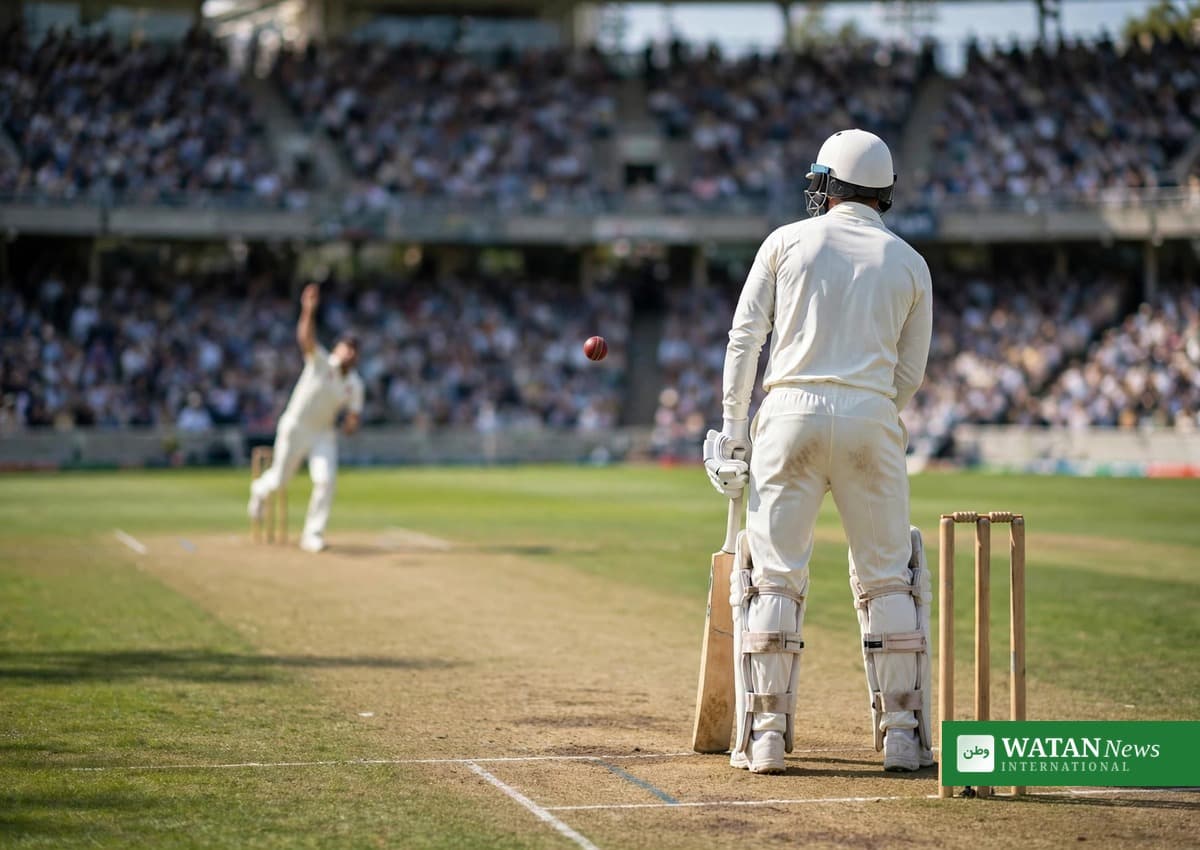
The red ball was at the centre of the storm after Australia’s reverse swing in Durban raised questions. (Watan News)
Bancroft’s account differs on Durban
Bancroft, the player caught on camera at Newlands, has given a different version of the Durban Test. In a 4,000-word account published last week, he wrote that sandpaper was not used at Kingsmead, where Starc had proved so devastating with the reverse-swinging ball. Instead, he said, Australia relied on more traditional methods of maintaining the ball, including saliva, and that quarter-seam picking probably took place. He could not say with certainty whether mints or lollies were involved.
Bancroft also wrote that he was not responsible for looking after the ball in that Test, and that the second Test in Port Elizabeth was different — a significant escalation in which he became directly involved. Khawaja, Sayers and Bancroft have all said sandpaper was used in Port Elizabeth, and Warner has backed Khawaja’s account.
Warner himself had noted the reverse swing on offer after the first day in Durban, saying at the time that Australia had not expected the ball to reverse so early in the match.
The Durban Test and the series
Australia won the first Test by 118 runs. They made 351 and 227, while South Africa were bowled out for 162 and 298 at Kingsmead between 1 and 5 March 2018. Starc took five wickets for 34 runs in the first innings and four for 75 in the second, nine wickets in the match, and was named Player of the Match. De Villiers carried his bat with 71 not out in South Africa’s first innings of 162, and Aiden Markram made 143 in the second innings.
South Africa hit back in the second Test, where de Villiers made an unbeaten 126 and the hosts won by six wickets to level the series. The third Test at Newlands produced the defining image of the saga, when Bancroft was filmed using sandpaper on the ball. South Africa went on to win the four-match series 3–1, their first home series victory over Australia since 1970.
What happens next
Cricket Australia has ruled out reopening its investigation into the scandal, but it is setting up an independent forum where anyone from the 2018 tour can share their recollections without fear of punishment. The person who will lead the forum and its terms of reference are expected to be confirmed this week, and the board has made clear there will be no further sanctions.
Pat Cummins, who was given the unanimous backing of the Cricket Australia board at the weekend, has said he will take part in the forum and has spoken of difficult conversations ahead. Bancroft and former coach Darren Lehmann have also indicated they will take part, while Khawaja and Warner have expressed doubts about the value of the process. Cricket Australia chief executive Todd Greenberg said the board would decide how much of the findings are made public, balancing transparency with protecting those who speak.
More sports news on Watan News.