Pakistan’s first astronaut has reached orbit. Muhammad Zeeshan Ali, a 40-year-old Pakistan Air Force pilot, arrived at China’s Tiangong space station aboard the Shenzhou-24 spacecraft on Wednesday, becoming the first Pakistani to reach orbit and the first foreign astronaut ever to visit the Chinese station.
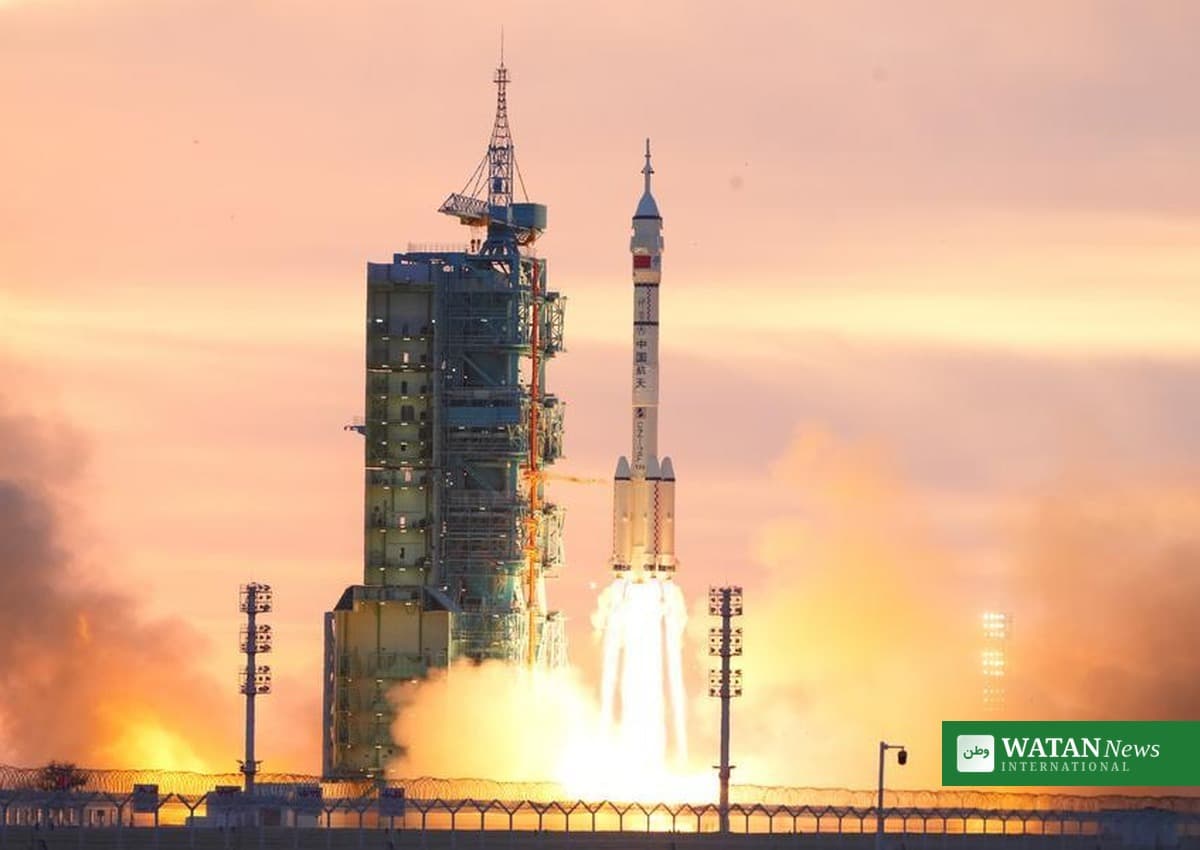
The Shenzhou-24 spacecraft lifted off from the Jiuquan Satellite Launch Center in north-western China at 08:18 Beijing time (05:18 in Pakistan) on 25 November, carried by a Long March-2F rocket. About ten minutes after liftoff it separated from the rocket and entered its designated orbit, and the China Manned Space Agency declared the launch “a complete success”.
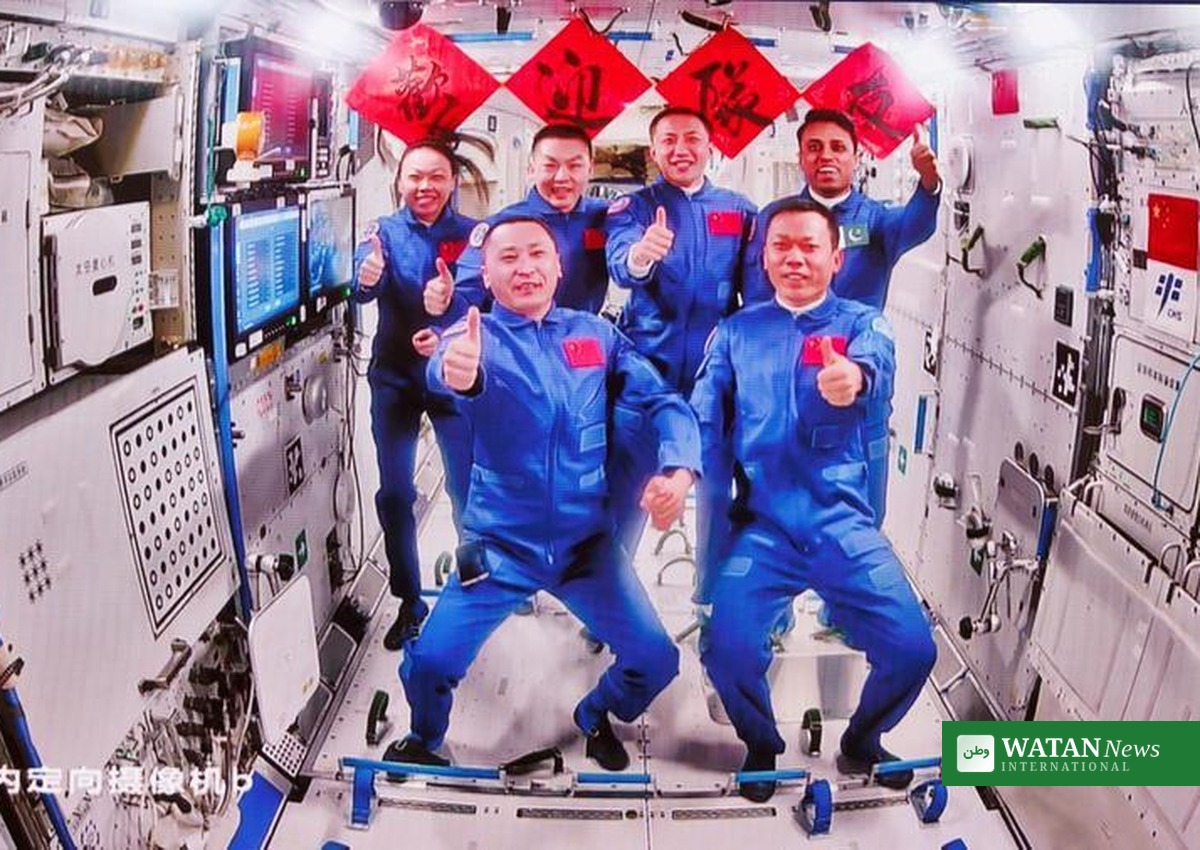
The spacecraft docked with the forward port of Tianhe, the station’s core module, about three and a half hours later. The Shenzhou-23 crew aboard Tiangong opened the hatch at 14:35 Beijing time and welcomed the new arrivals, and the two crews took group pictures marking the ninth space get-together in China’s aerospace history.
FAKTA
- Mission: Shenzhou-24 to China’s Tiangong space station
- Launch: Wednesday, 25 November 2026, at 08:18 Beijing time (00:18 GMT, 05:18 Pakistan time)
- Rocket: Long March-2F, from the Jiuquan Satellite Launch Center in north-western China
- Crew: Tang Hongbo (commander, 51), Wu Yi (flight engineer, 39), Muhammad Zeeshan Ali (payload specialist, 40)
- Docking: about three and a half hours after launch, at the forward port of the Tianhe core module
- Firsts: first Pakistani to reach orbit; first foreign astronaut aboard Tiangong; first joint flight of Chinese and foreign astronauts in China’s crewed space programme
- Ali’s stay: about one week, returning to Earth aboard Shenzhou-23
Pakistan’s first astronaut: a week in orbit
Ali, a Wing Commander in the Pakistan Air Force, was selected as Pakistan’s crew member under an agreement signed between China and Pakistan in February 2025. He trained in Beijing alongside fellow candidate Khurram Daud since April; Daud served as backup. The crew’s names were announced only the day before launch, in line with the practice followed for previous Chinese crewed missions.
As payload specialist, Ali will spend about a week aboard Tiangong before returning to Earth aboard the Shenzhou-23 spacecraft, alongside Shenzhou-23 crew members Zhang Zhiyuan and Li Jiaying. His crewmates Tang and Wu will stay in orbit for roughly six months, while Shenzhou-23 commander Zhu Yangzhu remains aboard to complete a year-long stay, the first time a Chinese astronaut spends a year in orbit in a single visit.
The mission patch features Pakistan’s national flower, the jasmine, in its design.
Four joint experiments in orbit
More than 90 scientific experiments and technology tests are planned for the Shenzhou-24 mission, covering space life sciences, space material science, microgravity fluid physics and combustion science, fundamental physics, space medicine and new space technologies, according to the China Manned Space Agency.
Four of the projects are joint China-Pakistan work. Ali will conduct an experiment on photosynthetic cyanobacteria proposed by Pakistan’s Space and Upper Atmosphere Research Commission (SUPARCO), which is expected to provide data for oxygen regeneration and biomanufacturing at future space stations and deep-space bases.
Another project, led by the University of Agriculture, Faisalabad, will expose 32 quinoa seed samples to the space environment outside the station for about a year to investigate their stress tolerance and longevity, with the aim of screening for superior varieties. The other two experiments focus on multilayer graphene-based hybrid composites and solar-heated self-healing carbon fibre composites.
Pakistan’s Federal Minister for Planning, Development and Special Initiatives, Ahsan Iqbal, said the mission gives Pakistani scientists rare access to space laboratories, offering potential breakthroughs to boost productivity and climate resilience. Pakistan is one of the countries most vulnerable to climate change, he said.
A mission 75 years in the making
The joint flight comes as China and Pakistan mark the 75th anniversary of diplomatic relations this year. Zhang Jingbo, spokesperson for the China Manned Space Agency, described it as a landmark achievement in bilateral cooperation.
China-Pakistan space cooperation spans more than three decades. In 1990, Pakistan’s first experimental satellite, Badr-1, was launched aboard a Chinese rocket from the Xichang Satellite Launch Center. More recently, China launched a Pakistani cube satellite aboard the Chang’e-6 probe in 2024 and placed a Pakistani remote-sensing satellite in orbit via a Long March-6 rocket in April 2026.
Pakistan’s Ambassador to China, Syed Ali Asad Gillani, said the joint flight takes bilateral relations “from Earth to space”, calling it a dream come true for more than 250 million Pakistanis and “an excellent model for South-South cooperation”.
Ali himself said China and Pakistan had turned a pilot into an astronaut in a remarkably short span of time. “Now it is time to show this great achievement in orbit and send the world a message that we work hand in hand for the peaceful utilization of space,” he said.
The United Nations also welcomed the mission: UN spokesperson Stephane Dujarric said the UN welcomed the peaceful use of outer space and the international cooperation the mission represents.
What happens next
After about a week aboard Tiangong, Ali will return to Earth with two members of the Shenzhou-23 crew, landing at the Dongfeng landing site in Inner Mongolia. Tang and Wu will remain aboard the station for roughly six months, conducting science work, maintenance and outreach, alongside Zhu Yangzhu’s year-long stay experiment.
Watan News reported the naming of Pakistan’s first astronaut ahead of the launch. The Shenzhou-24 mission is China’s 18th crewed spaceflight, and Pakistan’s first astronaut has now reached the Tiangong space station.