
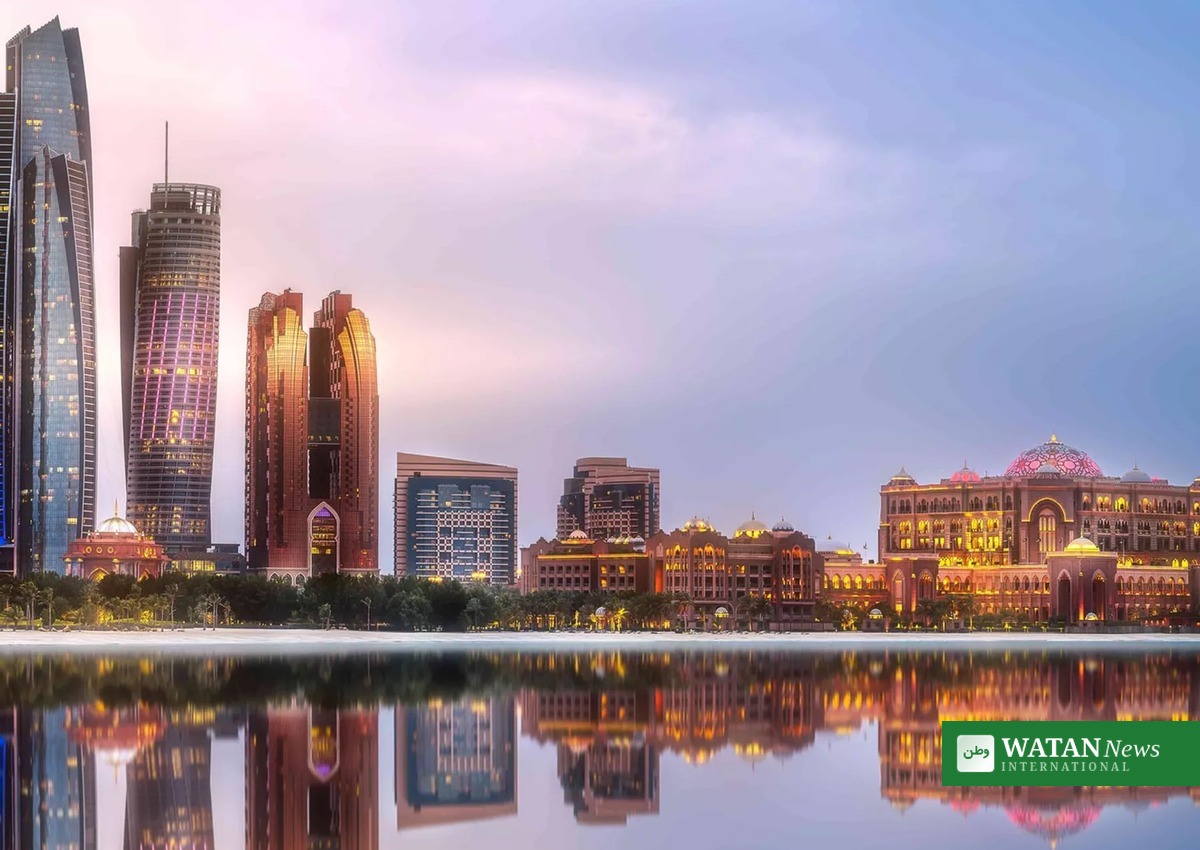
ABU DHABI — UN Tourism has put local communities at the centre of its plans for the future of travel, unveiling a new community-led tourism initiative to help people in lesser-known destinations build tourism businesses of their own. The announcement came at the organisation’s 127th Executive Council session in Abu Dhabi, held from 23 to 25 November 2026, where representatives of 33 member states gathered to set the sector’s direction ahead of 2027, the United Nations International Year of Sustainable and Resilient Tourism.
What is Project Unity?
Secretary-General Shaikha Al Nuwais announced Project Unity at the opening of the council session on 24 November. The initiative aims to bring together people from destinations that have yet to gain international recognition, help them develop relevant skills and support them in turning their ideas into practical tourism projects.
The objective is to widen participation in the tourism economy so that residents can take part in, and benefit from, visitor activity in their home regions. For travellers, the approach could eventually mean more opportunities to explore destinations through locally developed experiences, rather than relying solely on established tourism circuits.
It also places greater emphasis on the people who live in these destinations, their knowledge and their ability to shape the tourism experiences offered to visitors. The initiative comes as global international tourist arrivals grew by just 0.4 per cent in the first half of 2026, according to UN Tourism, with an estimated 690 million international tourists travelling between January and June.
Key facts
- What: Project Unity, a UN Tourism initiative for community-led tourism in lesser-known destinations
- Announced: 24 November 2026, at the opening of the 127th Executive Council session in Abu Dhabi
- Where: Abu Dhabi, United Arab Emirates; the session ran from 23 to 25 November 2026
- Who: UN Tourism Secretary-General Shaikha Al Nuwais; representatives of 33 member states attended
- Funding: A proposed Tourism Acceleration Fund, with a USD 15 million contribution from the UAE over 2026–2029, is being finalised
- Context: 2027 is the United Nations International Year of Sustainable and Resilient Tourism
A proposed USD 15 million fund
The Abu Dhabi meeting also considered a proposed Tourism Acceleration Fund, through which the UAE will contribute USD 15 million over 2026–2029. According to UN Tourism’s management report, the funding will be deployed through Project UNI-T, a framework designed to help member states measure tourism’s economic contribution, strengthen skills, support innovation and generate demand for destinations.
Project UNI-T is structured around a measurement framework called UNT-nomics and three pillars: UNT-Build, which focuses on professional skills and institutional capacity; UNT-Impact, which supports targeted innovation projects and pilot programmes; and UNT-Explore, which aims to help travellers discover destinations and experiences through a public platform organised around travel interests. The funding agreement is being finalised, with the first release expected in the first quarter of 2027.
On the sidelines of the session, UAE Minister of Economy and Tourism Abdulla bin Touq Al Marri held bilateral meetings with tourism officials from Egypt, Brazil, Argentina and Nigeria. The discussions covered joint destination promotion, investment, knowledge-sharing, hospitality and stronger air connectivity. With Brazil, the talks included increasing visitor flows and attracting investment in tourism infrastructure; the UAE’s hotel establishments received approximately 165,000 Brazilian visitors in 2025, according to the Emirates News Agency.
A UN resolution backs the same direction
Days before the Abu Dhabi session, the United Nations General Assembly’s Second Committee adopted, by consensus and without a vote, a biennial resolution on the promotion of sustainable and resilient tourism, including ecotourism, for poverty eradication and environmental protection. The resolution, submitted by Morocco and supported by 84 member states from all regional groups, was adopted on 23 November 2026.
The text calls for stronger access to financing and investment for sustainable infrastructure, climate action, biodiversity conservation and the digital transition in tourism. It also paves the way for the implementation of the International Year of Sustainable and Resilient Tourism in 2027, encouraging countries to establish national coordination mechanisms and strengthen cooperation with UN Tourism.
Why community-led tourism matters for the climate
Tourism accounted for 8.8 per cent of global greenhouse gas emissions in 2019, according to research published in Nature Communications, and its carbon emissions grew twice as fast as the global economy between 2009 and 2019. Under the Glasgow Declaration on Climate Action in Tourism, the sector has committed to halving its emissions by 2030 and reaching net zero by 2050 at the latest.
Community-led tourism is part of that shift. When tourism is developed by local people, more of the money visitors spend stays in the destination, trips spread beyond overcrowded hotspots, and local knowledge shapes how natural and cultural assets are protected. Research supports the direction: the European Travel Commission’s 2026 assessment of responsible travel behaviours, based on a survey of 3,000 travellers across six international source markets, recorded a modest increase in interest in locally rooted and less conventional travel. Compared with its 2024 baseline, the index for engagement with local communities rose to 105, while the index for visiting destinations beyond established tourist routes reached 106, with 100 representing the baseline.
Booking.com’s 2026 Travel and Sustainability Report, based on 32,500 respondents across 35 markets, found that 85 per cent considered more sustainable travel important or very important, and 43 per cent planned to avoid overcrowded destinations in 2026, an 11 per cent increase year on year.
Yet a United Nations progress report published in 2026 found that only 42 per cent of responding countries had formal legal requirements for involving Indigenous peoples and local communities in tourism governance, while another 38 per cent reported partial provisions. It also highlighted gaps in financing, local participation and the monitoring of tourism’s social and environmental impact. Initiatives such as Project Unity are designed to close those gaps — not simply by encouraging travellers to visit lesser-known places, but by ensuring that the communities hosting them have the skills, resources and decision-making opportunities to benefit from the activity.
The road to 2027 began in Tashkent, where the International Year of Sustainable and Resilient Tourism was formally opened on 27 November. Read more in our report: Tashkent Opens the Road to 2027: Fair Launches the International Year of Sustainable and Resilient Tourism
What happens next
The funding agreement for the Tourism Acceleration Fund is being finalised, with the first release expected in the first quarter of 2027. UN Tourism will continue preparations for the International Year of Sustainable and Resilient Tourism, which runs through 2027, and is due to report to the UN General Assembly at its 83rd session in 2028 on how the year was implemented.
For travellers, the test of Project Unity will be practical: whether new, locally run experiences appear in places that previously sat outside the main tourism circuits — and whether the communities behind them keep a fair share of the value they create.