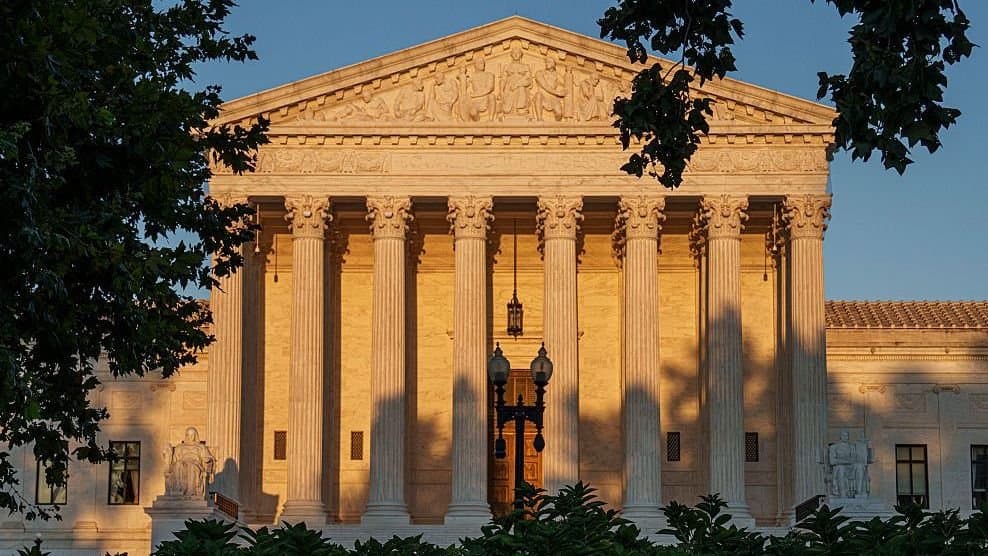
The U.S. Supreme Court has lifted restrictions on the Trump administration’s ability to utilize a federal database containing citizenship information and other sensitive data, aimed at identifying voters suspected of not being U.S.
citizens. This decision, made on Friday, allows for the use of the Systematic Alien Verification for Entitlements (SAVE) program, though its application is voluntary for individual states.
Critics, however, have voiced significant concerns, warning that the database’s reliability is questionable and could lead to the wrongful removal of eligible U.S. citizens from electoral rolls, particularly in the crucial weeks leading up to midterm elections.
The top court’s conservative majority ruled that the National Voter Registration Act, while prohibiting broad purges of voter rolls shortly before an election, does not prevent states from verifying the citizenship of individual voters. This ruling effectively overrides a June decision by a federal judge who had deemed the system illegal and a violation of Americans’ privacy rights.
The three liberal-leaning justices on the Supreme Court dissented from the majority opinion, expressing deep reservations about the potential for disenfranchising lawful voters.
Concerns Over Voter Disenfranchisement and Privacy
Justice Ketanji Brown Jackson, one of the dissenting justices, articulated concerns that the database’s use could mistakenly revoke the voting rights of eligible citizens. She argued in her dissent that the potential harm caused by burdening or disenfranchising even a small number of lawful voters significantly outweighs any perceived harm to the government when it is prevented from taking an action for which it may lack the authority.
This sentiment underscores the core of the opposition’s argument: the protection of voting rights for all eligible citizens must take precedence over efforts that risk erroneous exclusions.
Voting rights organizations have reacted with profound disappointment to the Supreme Court’s decision. The League of Women Voters, a lead plaintiff in the case, issued a statement asserting that the ruling puts millions of Americans at risk of being unlawfully targeted by the administration’s unreliable voter purge database just weeks before the midterm elections.
The organization pledged to exhaust all available legal avenues to protect Americans’ voting and privacy rights, aiming to ensure the district court’s original decision remains in effect.
History and Expansion of the SAVE Program
The SAVE program was initially established in 1986 with the primary purpose of assisting officials in verifying the citizenship or immigration status of individuals applying for public benefits. However, the Trump administration expanded its capabilities significantly last year by enabling bulk searches that incorporate sensitive information drawn from Social Security rolls.
This expansion broadened the scope of the database beyond its original intent, raising alarms about its potential misuse and the privacy implications for a wider population.
In June, U.S. District Judge Sparkle L.
Soonnan, appointed by President Biden, ruled that the revamped SAVE system demonstrated that the federal government had knowingly infringed upon the privacy rights of U.S. citizens in a manner that threatened the fundamental right to vote.
A federal appeals court initially upheld her ruling, but the Supreme Court’s intervention has now set aside that decision. The Supreme Court’s majority opinion stated that a 1996 law permits the Department of Homeland Security (DHS) to acquire citizenship and immigration data from federal agencies and mandates that DHS respond to states requesting such information.
State Adoption and Criticisms
The utilization of the SAVE program by individual states remains voluntary. Despite the Supreme Court’s ruling, which suggests the federal government is being prevented from using a program it deems most effective for voter verification, the decision’s practical impact on the upcoming midterms is somewhat limited.
The court’s interpretation of the National Voter Registration Act restricts broad purges immediately before elections, but the ability for states to conduct individual voter checks remains.
Currently, a total of 27 states are employing the SAVE system to verify the citizenship of voters on their rolls. Lawyers representing the Trump administration have consistently argued that the system is both lawful and essential for preventing non-citizens from participating in elections.
However, critics point to a history of errors associated with the SAVE program. Instances have been cited where the system has mistakenly flagged eligible voters, leading to concerns about its accuracy and the potential for widespread disenfranchisement.
Legal Battle and Dissenting Opinions
The legal challenge against the SAVE database culminated in a significant battle that reached the nation’s highest court. The core of the dispute revolved around the balance between election integrity and the protection of civil liberties, particularly the right to vote and the right to privacy.
The federal judge’s initial ruling highlighted the perceived overreach of the administration’s expanded use of the database, emphasizing the potential for irreparable harm to U.S. citizens.
The Supreme Court’s majority, however, focused on the statutory interpretation of the National Voter Registration Act and the DHS’s obligations under existing law. By lifting the restrictions, the court has enabled the administration to proceed with using the SAVE database for citizenship verification, albeit with the caveat that broad purges are prohibited close to elections.
The dissenting justices, including Justice Jackson, have signaled their continued opposition, underscoring the ongoing debate about the methods used to ensure election integrity and the potential consequences for democratic participation.
Future Implications and Ongoing Debate
The Supreme Court’s decision regarding the SAVE database is likely to fuel ongoing discussions about voter verification methods and their impact on election fairness. While proponents argue that such tools are necessary to safeguard election integrity, opponents emphasize the critical need to prevent the disenfranchisement of eligible voters and protect personal privacy.
The voluntary nature of state participation means that the extent of the database’s use will vary across the country.
The League of Women Voters and other voting rights advocates are expected to continue their efforts to challenge the database’s use and mitigate any potential negative consequences. The debate over voter citizenship verification touches upon fundamental aspects of American democracy, including who is eligible to vote and how that eligibility is determined and protected.
The Supreme Court’s ruling represents a significant development in this complex and often contentious legal and political landscape.
Frequently Asked Questions
What is the SAVE database?
The Systematic Alien Verification for Entitlements (SAVE) program is a federal database used to verify the citizenship or immigration status of individuals, originally created to check eligibility for public benefits. The Trump administration expanded its use to help identify voters suspected of not being U.S.
citizens.
What was the Supreme Court’s ruling?
The Supreme Court lifted restrictions on the Trump administration’s use of the SAVE database for voter citizenship checks. The majority ruled that while broad purges before elections are prohibited, states can still verify the citizenship of individual voters.
Why is the database controversial?
Critics argue that the SAVE database is unreliable and could lead to eligible U.S. citizens being wrongly removed from voter rolls.
Concerns have also been raised about the privacy implications of using sensitive data for voter verification.
What were the dissenting opinions?
The three liberal-leaning justices dissented, with Justice Ketanji Brown Jackson expressing concern that the database could mistakenly disenfranchise lawful voters. They argued that the harm to eligible voters outweighs the government’s interest in using the program.
How many states use the SAVE program?
A total of 27 states currently use the SAVE system to check voter citizenship. However, the program’s use by individual states is voluntary.