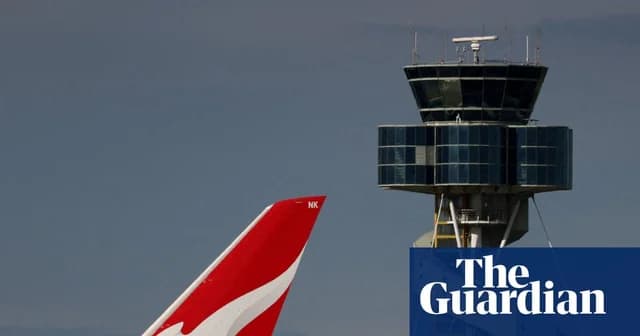
Sydney Airport is facing heightened concern following a series of runway incursions and near misses, with incidents occurring at a rate 20% above the national average. The Australian Transport Safety Bureau (ATSB) is investigating whether low staffing levels at the airport contributed to four separate incidents between July and August.
- Sydney Airport experiences runway incursions and near misses 20% above the national average.
- The ATSB is investigating potential links between low staffing and four incidents in July and August.
- Air traffic control modelling predicted elevated fatigue risks for staff during the period of the incidents.
- One incident involved a near miss between two Qantas aircraft, rated with the most serious safety classification.
Investigating Staffing Gaps
The Australian Transport Safety Bureau (ATSB) has identified staffing gaps at Sydney Airport as a potential key factor in four serious incidents that occurred in July and August. ATSB Chief Commissioner Angus Mitchell stated that staffing levels have “emerged as a recurring area of enquiry” during preliminary investigations.
- Staffing levels are a primary focus of the ATSB’s investigation.
- Preliminary reports confirm staffing as a recurring theme in the incidents.
- Air traffic control operators had predicted fatigue risks for staff.
- The effectiveness of fatigue risk management measures is under scrutiny.
Analysis of Incident Rates
While national ground confliction rates have remained largely steady over the past decade, Sydney Airport recorded the highest rate per aircraft movement post-Covid. This figure is approximately 20% higher than the national average, a statistic viewed in the context of Sydney’s operational complexity.
Specific Incidents Under Review
The four incidents under investigation include a significant near miss on July 27 . A Qantas Boeing 737 was cleared to cross a runway in front of a Qantaslink Dash 8.
The two aircraft came within 120 meters of each other as a controller, experiencing high fatigue risk levels for their shift, completed a handover to a colleague before taking a rest break.
- July 27: Near miss between a Qantas Boeing 737 and a Qantaslink Dash 8.
- The incident was classified with the most serious safety rating, a rare occurrence.
- August 9: A Jetstar A320 performed an abrupt braking manoeuvre.
- The Jetstar A320 narrowly avoided collision with a Qatar Boeing 777 being towed.
- A flight attendant sustained a fractured wrist during the Jetstar braking incident.
Factors Beyond Staffing
Investigators are also examining whether staff combining operational roles contributed to the incidents. The routine reliance on overtime to fill shifts and the conduct of training and supervision alongside normal duties are also being considered as potential contributing factors.
Overtime and Training Concerns
The ATSB is looking into the impact of overtime on controller fatigue and whether training activities might have compromised operational safety during peak times.
- Investigating the impact of overtime on staff fatigue.
- Assessing if training activities affected operational safety.
- Examining the combination of operational roles by staff.
Complexity of Sydney Airspace
Commissioner Mitchell emphasized that Sydney Airport’s status as the most complex in the country must be considered when evaluating incident rates. The unique operational demands and high traffic volume at Sydney necessitate stringent safety protocols.
Conclusion
The ongoing investigation into the runway incursions and near misses at Sydney Airport highlights critical safety concerns. The ATSB’s focus on staffing levels, combined with an examination of operational practices like overtime and combined roles, aims to identify the root causes of these elevated risks.
The findings are expected to lead to significant recommendations to enhance safety protocols at one of Australia’s busiest and most complex airports, ensuring the well-being of passengers and crew.
What is the national average for runway incursions?
The report indicates Sydney’s rate is 20% above the national average, but a specific national figure is not provided.
How many incidents are being investigated?
The ATSB is investigating four specific incidents that occurred at Sydney Airport in July and August.
What was the most serious incident classification?
One incident received the most serious safety classification, a rating used only three times previously in Australian records.