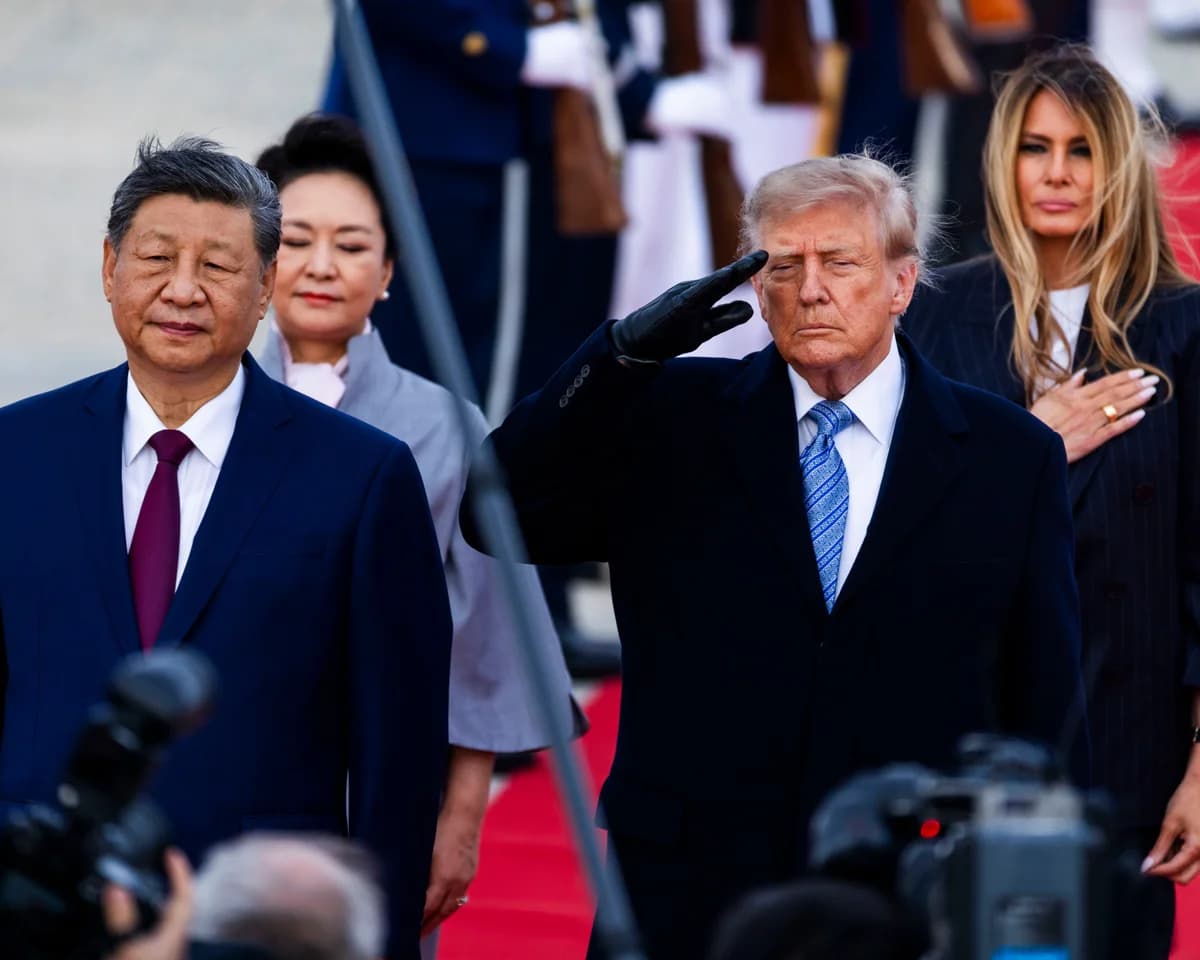
A planned display of historical documents at the National Archives Museum was altered at the last minute due to Chinese objections concerning the status of Taiwan, according to sources familiar with the matter. The sudden change to the itinerary for President Donald Trump and Chinese President Xi Jinping’s visit on September 29, 2026, underscored the ongoing sensitivity surrounding Taiwan in U.S.-China relations.
- Chinese displeasure over the Treaty of San Francisco of 1951 prompted a last-minute change to the National Archives visit.
- Beijing objected to the treaty because China was not a signatory, and it leaves Taiwan’s political status undetermined.
- The U.S. had planned to display the treaty, which ended World War II hostilities between Japan and Allied Powers, including the U.S.
- Other documents related to U.S.-Taiwan relations, such as the Six Assurances and Three Communiques, were considered but ultimately not displayed.
Diplomatic Sensitivity Over Historical Documents
The National Archives Museum had prepared a special display for the leaders, including a brick from the Great Wall of China and an imperial scroll. However, this display was removed shortly before the visit commenced.
A Chinese diplomat, speaking anonymously, confirmed that the alteration was due to Chinese displeasure over a specific document the U.S. intended to showcase.
- The initial display included artifacts like a Great Wall brick and an 19th-century Qing emperor scroll.
- This display was dismantled due to a sudden change in the event’s arrangements.
- The change was directly linked to Chinese objections regarding a planned document presentation.
The Treaty of San Francisco: A Point of Contention
The primary document causing friction was the Treaty of San Francisco, signed in 1951. This treaty officially ended World War II hostilities between Japan and the Allied Powers.
However, China was not a signatory to this agreement, a fact that Beijing found objectionable.
- The Treaty of San Francisco formally concluded World War II hostilities between Japan and the Allied Powers.
- The United States and Japan were signatories to the treaty.
- China’s absence as a signatory was a key point of contention for Beijing.
- The treaty’s text leaves the political status of Taiwan undetermined.
Taiwan’s Undetermined Status and Chinese Objections
Ryan Hass, a Taiwan and China expert at the Brookings Institution, explained the significance of the treaty’s ambiguity regarding Taiwan. The fact that the treaty does not explicitly state that Taiwan belongs to Beijing is a major concern for China.
Historical Context of U.S.-China Cooperation
Both President Trump and President Xi had recently referenced the historical cooperation between the U.S. and China during World War II, where they fought on the same side.
This shared history was intended to be a backdrop for their discussions at the National Archives.
- The treaty’s ambiguity on Taiwan’s status is a significant point of contention for China.
- Beijing dislikes that the treaty does not definitively assign Taiwan’s political status.
- The U.S. and China fought together as allies during World War II.
Alternative Documents Considered
officials involved in the visit planning indicated that other documents crucial to defining the U.S. relationship with Taiwan were also considered for display.
These included the Six Assurances and the Three Communiques, key policy statements guiding U.S. interactions with Taiwan.
- The Six Assurances are a set of policy guidelines from the U.S. to Taiwan.
- The Three Communiques are joint statements issued by the U.S. and the People’s Republic of China.
- These documents help delineate the U.S. stance on cross-strait relations.
- Ultimately, these documents were not included in the final display plans.
Broader Implications for U.S.-China Relations
An administration official, speaking on condition of anonymity, stated that the visit provided an opportunity for leaders to discuss the history of both nations and concluded a productive state visit. The incident, however, highlights how Taiwan remains a highly sensitive issue in the complex relationship between the United States and China.
Even minor differences in historical interpretation or presentation can lead to significant diplomatic adjustments.
Conclusion
The planned tour of the National Archives by Presidents Trump and Xi was significantly altered due to Chinese objections over the Treaty of San Francisco and its implications for Taiwan’s status. This last-minute change underscores the persistent sensitivity of the Taiwan issue in U.S.-China relations, demonstrating how historical documents and their interpretations can impact high-level diplomatic engagements.
The incident serves as a reminder of the delicate balance required in managing bilateral ties between the two global powers.
What caused the last-minute change to the Trump-Xi National Archives visit?
Chinese displeasure over the Treaty of San Francisco, which leaves Taiwan’s status undetermined, prompted the change.
Why was China upset about the Treaty of San Francisco?
China was not a signatory to the treaty and objected to its ambiguity regarding Taiwan’s political status.
What other documents were considered for display?
The Six Assurances and the Three Communiques, related to U.S.-Taiwan relations, were considered but not displayed.
What does the Treaty of San Francisco concern?
It concerns the end of World War II hostilities between Japan and the Allied Powers, including the U.S.