
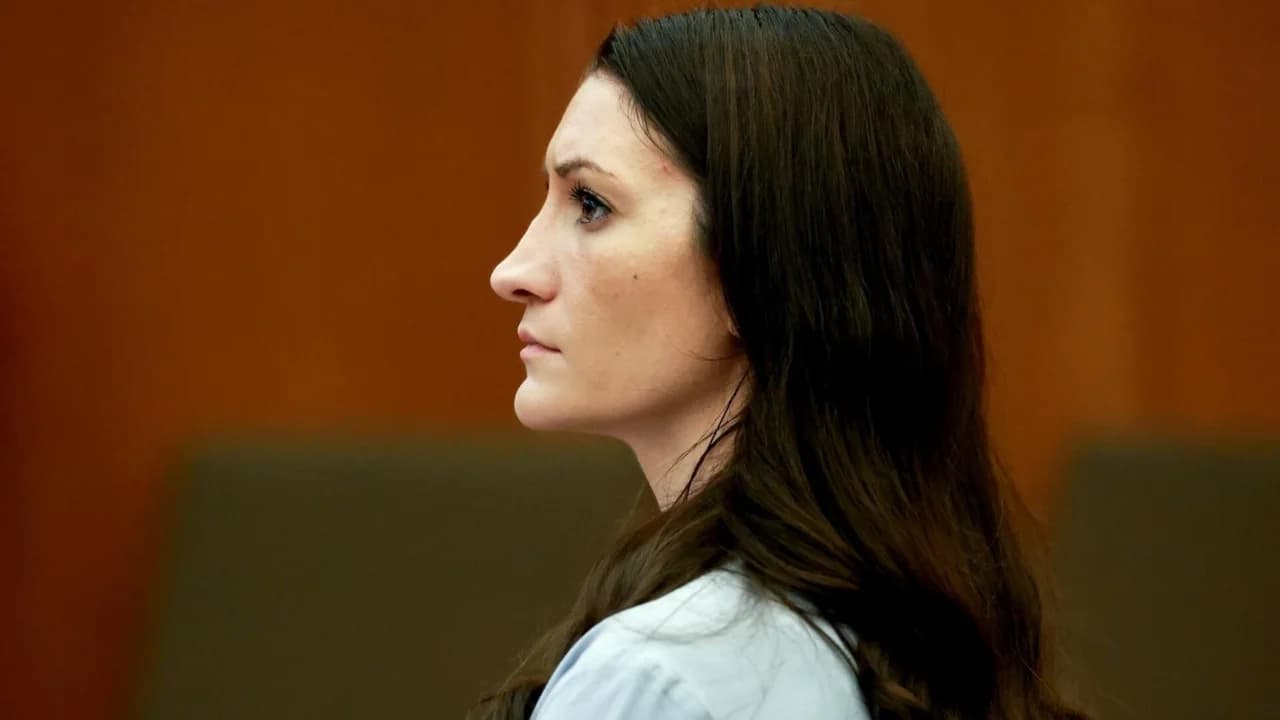
Lindsay Clancy returned to court on Tuesday, as her legal team sought to prevent a new trial by asking a judge to rule her not guilty of murder in the deaths of her three young children. The hearing follows a mistrial declared on September 4, 2026, after a single juror prevented a unanimous verdict.
- Lindsay Clancy‘s lawyers are arguing against a retrial, seeking a not-guilty verdict based on lack of criminal responsibility.
- A mistrial was declared on September 4, 2026, due to a lone juror’s inability to reach a unanimous decision.
- The 36-year-old is accused of strangling her three children, Cora, five; Dawson, three; and eight-month-old Callan, on January 24, 2023.
- Defense attorneys contend Clancy suffered from postpartum psychosis and did not understand her actions were wrong.
Legal Maneuvers to Avoid Retrial
Lindsay Clancy‘s defense attorneys, led by Kevin Reddington, are employing a strategy to persuade Judge William Sullivan to declare her not guilty. Their primary argument is that a retrial would constitute double jeopardy, a legal principle preventing someone from being tried again for the same crime after an acquittal or conviction.
- Defense seeks a ruling of not guilty to bar any potential retrial.
- The argument hinges on preventing double jeopardy.
- Attorneys claim insufficient evidence was presented to prove Clancy knew her actions were wrong.
The Mistrial and the Holdout Juror
The initial trial concluded with a mistrial after a 12-member jury could not reach a unanimous verdict. One juror’s dissent prevented a decision on whether to convict Clancy or find her not guilty by reason of insanity, a legal status in Massachusetts known as lack of criminal responsibility.
- A single juror’s dissent led to the mistrial on September 4, 2026.
- The jury was divided on convicting Clancy or finding her not guilty by reason of insanity.
- Lack of criminal responsibility in Massachusetts leads to commitment in a psychiatric hospital.
Defense’s Case: Postpartum Psychosis
During the first trial, Reddington aimed to convince the jury that Clancy was experiencing severe postpartum psychosis at the time of the killings. He argued that this condition rendered her unable to comprehend the wrongfulness of her actions.
The defense presented evidence suggesting she was not in a sound state of mind when she strangled her children with exercise bands and subsequently attempted suicide by jumping from a second-story window, an act that left her paralyzed.
- Defense attorney Kevin Reddington argued Clancy suffered from postpartum psychosis.
- This condition, he claimed, meant she did not understand her actions were wrong.
- Evidence suggests she attempted suicide after the children’s deaths.
- The suicide attempt resulted in paralysis.
Public Perception and Political Rhetoric
Reddington expressed concern about public perception, stating that many individuals, influenced by public figures and politicians, view Clancy as a “demon” and call for her execution. He specifically mentioned rhetoric from politicians, including former President Trump, as contributing to this sentiment.
This public pressure, he argued, makes it difficult for the legal system to function impartially, particularly when dealing with complex mental health defenses.
Concerns over Public Opinion
The defense highlighted that public figures and politicians have contributed to a negative public perception of Clancy. This rhetoric, they argue, can unduly influence jury pools and the broader legal process.
- Public figures and politicians have labeled Clancy negatively.
- Rhetoric from some politicians has fueled calls for harsh punishment.
- Defense fears public opinion may prejudice fair legal proceedings.
Prosecution’s Options and Future Proceedings
The Plymouth County District Attorney’s office, led by Timothy Cruz, has remained silent on its plans regarding a retrial. However, prosecutors have several avenues available.
They could pursue a plea deal, potentially involving lesser charges such as second-degree murder, which might allow Clancy to waive a jury trial and proceed before a judge. Alternatively, they could opt for a full retrial on the original first-degree murder charges, which carry a potential life sentence.
Several jurors from the initial trial have reportedly stated in interviews that, had it not been for the holdout juror, they would have found Clancy not guilty by reason of insanity. This indicates a potential division within the jury and highlights the significance of the mental state defense.
If found not guilty by reason of insanity, Clancy would be committed to a state psychiatric hospital for evaluation, with subsequent court reviews determining the duration of her commitment.
Conclusion
The legal battle surrounding Lindsay Clancy continues as her defense team fights to prevent a retrial. The core of their argument rests on the legal principle of double jeopardy and the assertion that insufficient evidence was presented to prove criminal intent, especially given her alleged state of postpartum psychosis.
The outcome of this hearing will significantly shape the future course of this deeply tragic case, impacting not only Clancy but also the broader conversation around mental health defenses in the legal system.
What is the current legal status of Lindsay Clancy?
Lindsay Clancy is back in court as her lawyers seek to prevent a retrial after a mistrial was declared in her murder case.
Why was a mistrial declared in Lindsay Clancy’s case?
A mistrial was declared because one juror could not reach a unanimous verdict with the other 11 jurors.
What is the defense’s main argument?
The defense argues Clancy was suffering from postpartum psychosis and did not understand her actions were wrong.
What are the potential charges Clancy faces?
Clancy faces first-degree murder charges, with potential for lesser charges like second-degree murder if a plea deal is reached.