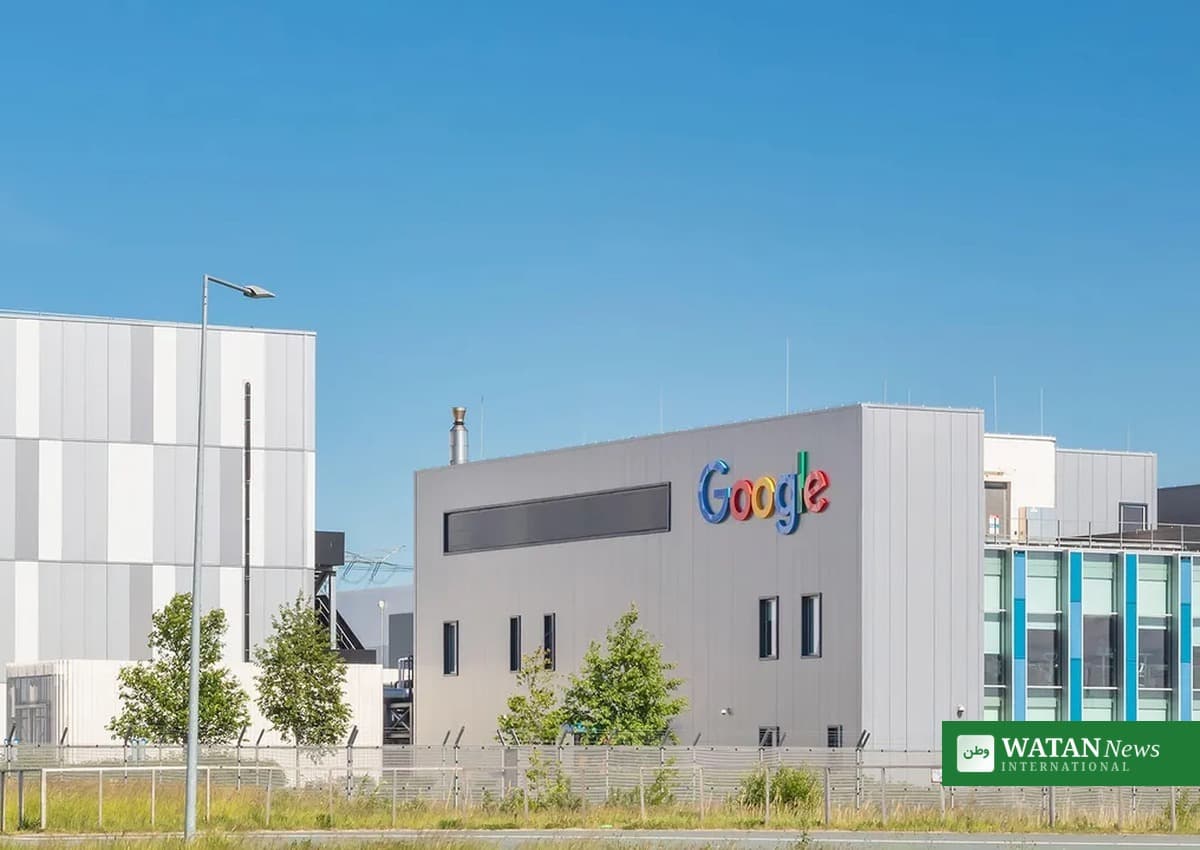
US President Donald Trump has announced plans for a Trump data centres tax, saying the United States will penalize American companies that build data centres overseas. The president said firms that move data centre construction abroad would face a “tremendous tax”, in a move he said was intended to help the US artificial intelligence sector compete with China.
A Google data centre in the Netherlands. Trump named Google’s planned data centre project in Finland when announcing the move.
FAKTA
- What happened: President Donald Trump said on Friday, 20 November 2026, that the US would impose a “tremendous tax” on American companies that build data centres outside the country.
- Where it was announced: At a White House news conference following Trump’s trip to Asia, where he met the leaders of China and Russia.
- Why: Trump said the move would keep AI infrastructure in the United States and stop China gaining an edge in the AI race.
- What is still unclear: No tax rate, timeline or enforcement mechanism was announced, and Trump said he had not yet told his own advisers about the plan.
- Project named: Google’s roughly €13 billion data centre and AI investment in Finland, announced in September, was the project Trump named, CNBC reported.
- Wider context: Alphabet announced a $15 billion data centre investment in Malaysia earlier in November, and the US Commerce Department moved on Monday to restrict exports of advanced AI chips to several Southeast Asian countries.
Trump data centres tax: what the president announced
“We’re not going to allow our companies to build data centers outside of our country,” Trump said at the White House news conference. “If they do that, they can. But we’re going to put a tremendous tax on them.”
Trump said American firms should build their data centres in the United States instead. “We want them to build it here. If they won’t go in Texas or they won’t go in California, they’re going to go in West Virginia,” he said, adding that places such as Loudoun County in Virginia, home to many data centres, were “making so much money they don’t know what to do with it”.
The president said the policy was aimed at China, arguing that if data centres were allowed to go to other countries, “China will take all of them”. He compared the situation with the chip industry, saying: “They allowed that to happen with chips and everything else, and it was very destructive to our country.”
Trump made the announcement at a White House news conference following his trip to Asia, where he met Chinese President Xi Jinping and Russian President Vladimir Putin. He said he had not discussed the plan with his own staff before announcing it. “That’s a breaking story, but I haven’t even said that to my people,” he said.
Why data centres are at the centre of the AI race
Data centres are critical to the AI boom because they provide the computing power needed to train and run increasingly complex AI systems, and a penalty on building them abroad could complicate the global AI buildout. Developers often locate facilities close to users to reduce delays for time-sensitive tasks, and moving large volumes of data over long distances can add significant costs.
Several major American companies build and operate data centres outside the United States, including Google, Meta, Amazon and Microsoft, as well as developers such as Equinix and Digital Realty. Oracle and CoreWeave have also shared plans to expand abroad in recent days. Alphabet, Google’s parent company, announced earlier in November that it would invest $15 billion in data centre infrastructure in Malaysia in 2027 and 2028.
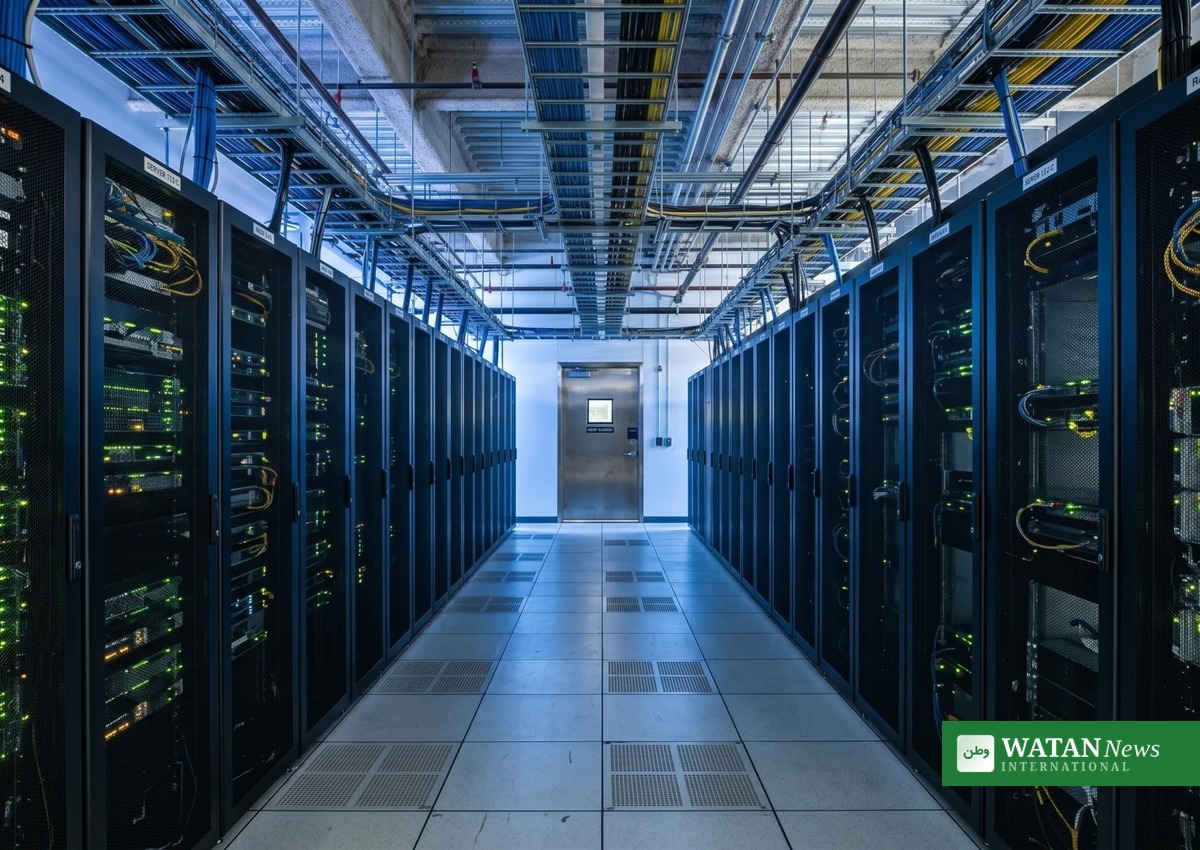
Rows of server racks inside a modern data centre. Such facilities provide the computing power behind today’s AI systems.
The announcement follows other recent US moves to control AI technology. The Commerce Department moved on Monday to restrict exports of advanced AI chips to several Southeast Asian countries, part of a broader effort to prevent China from obtaining the technology through third countries.
What happens next
No tax rate, timeline or legal mechanism for the penalty has been set out, and it is not yet clear which companies or projects it would cover, or when it could take effect. Google, Oracle and CoreWeave did not immediately respond to requests for comment on the announcement.
Trump has repeatedly said the US needs to win the artificial intelligence race against China, a field he calls “super intelligence” rather than artificial intelligence. He said President Xi had congratulated him on how well the US was doing on AI advances, and that the two leaders had agreed to work on joint guardrails for AI.