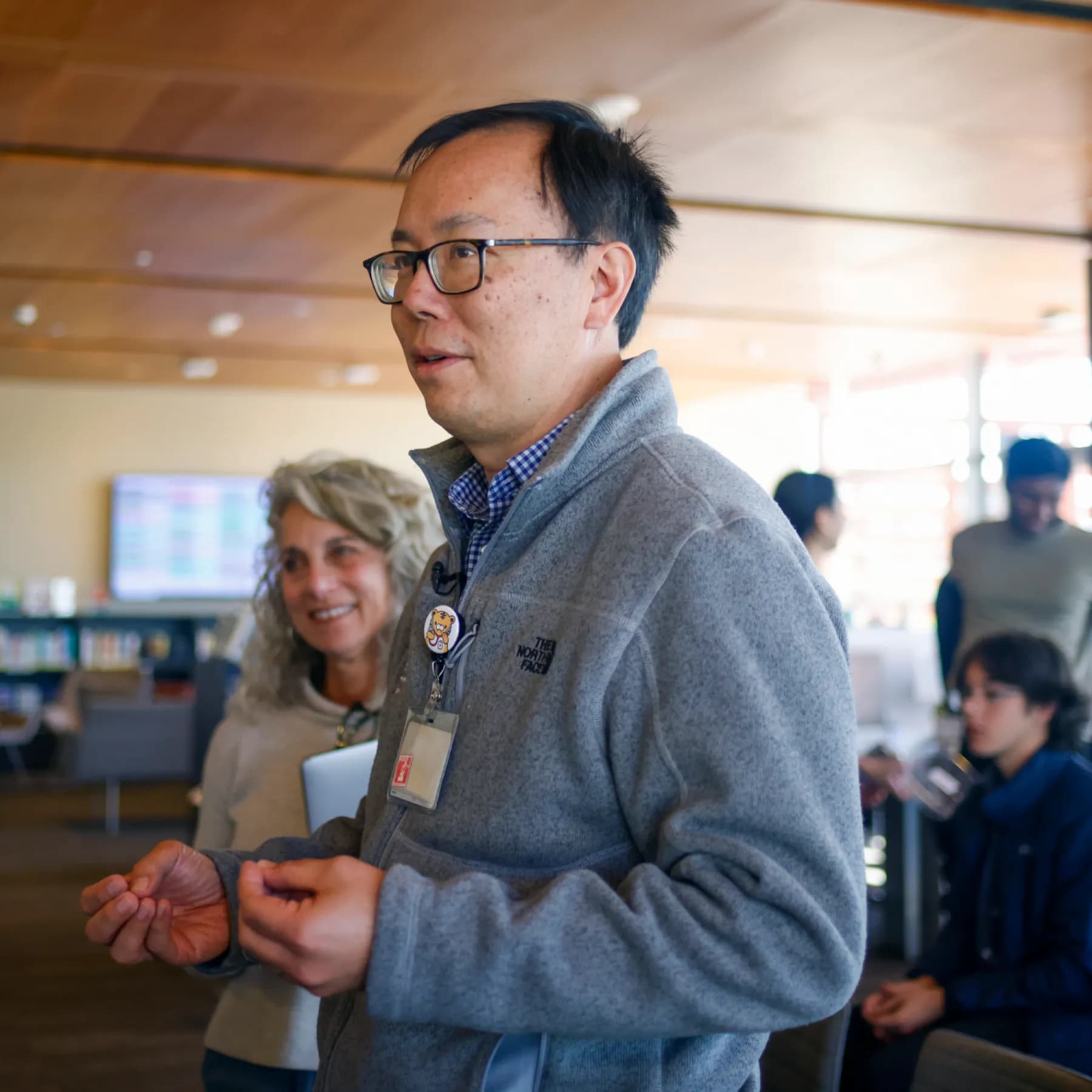
Stanford medical professor Dr. Bryant Lin, a leading advocate for lung cancer screening, found himself on the other side of the diagnosis two years ago when he became a Stage IV patient. Despite the irony of battling the disease he dedicated his career to understanding, Dr. Lin expresses optimism about the rapidly evolving landscape of lung cancer treatment.
He emphasizes that while a cure remains elusive for many, the advancements in personalized medicine are transforming the disease into a more manageable chronic condition. This shift offers a beacon of hope for patients facing a diagnosis that was once considered a near-certain death sentence, underscoring a significant turning point in oncology.
- Dr. Bryant Lin, a Stanford professor and lung cancer advocate, was diagnosed with Stage IV lung cancer.
- He views the future of lung cancer treatment as bright due to personalized and precision therapeutics.
- The five-year survival rate for lung cancer has doubled over three decades but remains at 30% overall.
- Genetic testing to identify specific mutations is key to developing targeted treatments with fewer side effects.
A Personal Journey on the Medical Frontier
Lin’s personal diagnosis with Stage IV lung cancer, a disease he actively campaigned to improve screening for, presents a poignant narrative. Co-leading the Center for Asian Health Research and Education at Stanford, which focuses on better lung cancer screening, made his own diagnosis particularly striking. “Super ironic that I would be co-leading the center that supports research and education in this disease, and I get diagnosed myself,” he shared. Despite the challenging circumstances, Dr.
Lin, a non-smoker, maintains a hopeful outlook, attributing it to the groundbreaking developments in personalized and specialized precision therapeutics now available for lung cancer. He articulates a vision where, even if a complete cure isn’t always possible, lung cancer can be effectively managed as a chronic illness.
Transforming Prognosis: From Death Sentence to Chronic Condition
Lung cancer, historically the leading cause of cancer-related deaths, is witnessing a paradigm shift in patient prognosis. While the overall five-year survival rate has doubled in the past thirty years, it still stands at a challenging 30%. However, this figure is significantly higher for early-stage, localized cancers, where the survival rate exceeds 67% between 2015 and 2021. These notable improvements are largely attributed to the rapid pace of new developments, many of which are only beginning to impact survival statistics.
The aspiration is to move beyond mere survival, aiming to transform lung cancer into a manageable chronic condition for a growing number of patients.
The Power of Precision: Genetic Testing and Targeted Therapies
The complexity and diversity of lung cancer genetics have historically made treatment a difficult endeavor. A pivotal advancement in overcoming this challenge is the capability, through genetic testing, to pinpoint the specific mutation driving abnormal cell growth. Jonathan Goldman, an oncologist and researcher at UCLA, explains that this allows for the selection of drugs specifically designed for that cancer subtype. “We can pick a drug that’s really been developed for that type of cancer,” he stated.
This targeted approach not only aids in managing or shrinking tumors but also minimizes collateral damage to healthy cells, leading to more tolerable side effects for patients. The impact is profound, extending survival from under a year to potentially many years.
Targeted Treatments vs. Traditional Chemotherapy
The efficacy of treatments is dramatically enhanced when they are tailored to the genetic subtype of the cancer, whether it be breast, liver, or lung cancer. Dr. Goldman highlights that these precision medicines are engineered to specifically target the mutated cells responsible for abnormal growth, a significant improvement over the generalized treatments of the past. Consequently, these targeted therapies typically exhibit fewer severe side effects compared to traditional chemotherapy regimens. This shift represents a more patient-centric approach to cancer care, prioritizing both treatment effectiveness and quality of life during therapy.
Conclusion
Dr. Bryant Lin’s personal battle with lung cancer underscores the dramatic progress being made in its treatment. The journey from a grim prognosis to the potential for managing the disease as a chronic condition is fueled by innovative genetic research and the development of highly targeted therapies. While challenges remain, the optimism surrounding these advancements offers renewed hope for patients and signifies a new era in the fight against lung cancer, moving towards more personalized and effective care.
What is the current five-year survival rate for lung cancer?
The overall five-year survival rate for lung cancer is approximately 30%, but significantly higher for early-stage disease.
How has lung cancer treatment evolved?
Treatment has evolved from generalized approaches to personalized, precision therapies targeting specific genetic mutations.
What is the main benefit of targeted lung cancer treatments?
Targeted treatments are more effective and generally cause fewer severe side effects than traditional chemotherapy.
Can lung cancer be cured?
While a cure is not always possible, advancements aim to turn lung cancer into a manageable chronic disease.