A strike on a busy market in Yemen’s city of Taiz has resulted in the deaths of at least seven people and left 40 others wounded, according to Houthi authorities. The incident occurred on 27 September 2026, with conflicting accounts emerging regarding the target and perpetrator, complicating independent verification of the events.
Initial reports from Houthi authorities indicate a significant loss of civilian life and injuries sustained by market-goers. The exact nature of the strike and the forces responsible remain subjects of dispute, underscoring the challenges in obtaining verified information from the conflict zone.
Conflicting Reports Emerge on Strike Details
Houthi authorities have attributed the strike to an unknown assailant, reporting significant casualties among civilians at the market. However, government sources suggest that Houthi fighters had established a military camp in close proximity to the market area, raising questions about the intended target of the strike.
- Houthi authorities confirmed the strike and the subsequent civilian casualties.
- Government sources allege the presence of a Houthi military camp near the market.
- The precise target of the strike remains unclear due to these divergent accounts.
- Limited ground access hinders independent verification efforts by international bodies.
The Precarious Situation in Taiz
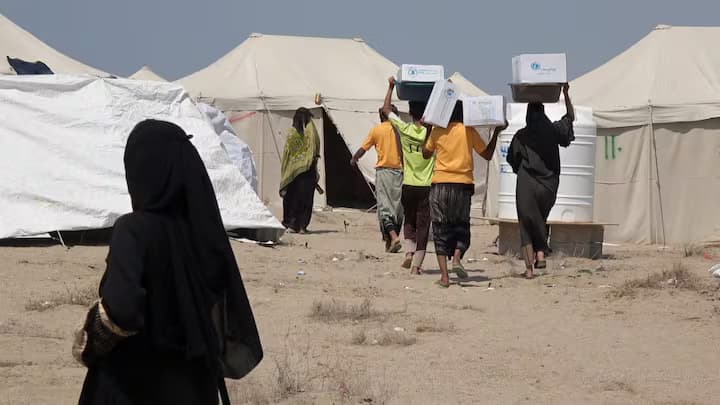
Taiz has been a focal point of the ongoing conflict in Yemen, experiencing periods of intense fighting and severe civilian hardship. Markets, often crowded with people conducting their daily lives, are unfortunately vulnerable to such incidents, exacerbating the already dire humanitarian crisis gripping the region.
The city’s strategic importance has made it a battleground, leading to frequent disruptions and a constant threat to the safety of its inhabitants. The vulnerability of civilian spaces like markets highlights the devastating impact of the conflict on everyday life.
International Concern and Humanitarian Impact
The strike has drawn significant international attention, highlighting the precarious security situation for civilians caught in the crossfire of Yemen’s protracted conflict. Humanitarian organizations continue to issue urgent calls for de-escalation and the enhanced protection of civilian infrastructure, emphasizing the devastating impact of such attacks on an already strained and vulnerable population.
- The incident underscores the extreme vulnerability of civilian areas in Yemen’s conflict zones.
- International bodies have expressed deep concern over the rising civilian toll in recent attacks.
- Humanitarian groups are advocating strongly for increased protection measures for non-combatants.
- The ongoing conflict continues to severely impact the well-being and survival of Yemen’s population.
Background of the Yemeni Conflict
Yemen has been embroiled in a devastating civil war since late 2014, pitting the Houthi movement against the internationally recognized government, which is supported by a Saudi-led coalition. This conflict has tragically led to one of the world’s worst humanitarian crises, with millions displaced and facing severe food insecurity and starvation.
- Late 2014: Houthi forces successfully seize control of the capital city, Sanaa.
- March 2015: A Saudi-led coalition intervenes militarily to support the Yemeni government.
- Ongoing: The conflict persists, characterized by widespread fighting, a severe humanitarian crisis, and sporadic, often unsuccessful, peace talks.
- 27 September 2026: A market strike in Taiz results in significant civilian casualties, adding to the ongoing tragedy.
Challenges to Verification in Conflict Zones
The difficulty in independently verifying the precise details of the Taiz market strike is a recurring and significant issue within the broader context of the Yemeni conflict. Disparate and often contradictory accounts from the warring factions, coupled with severe restrictions on access for international observers and journalists, create an environment where establishing definitive facts can be exceedingly challenging.
This lack of transparency and access makes it difficult to hold perpetrators accountable and to fully understand the scope of human suffering. International efforts to monitor and report on the conflict are consistently hampered by these access limitations.
Conclusion
The strike on the Taiz market on 27 September 2026 serves as a grim and stark reminder of the ongoing human cost of the conflict in Yemen. With at least seven confirmed deaths and 40 injuries, the incident highlights the urgent need for accountability and a sustainable, peaceful resolution to the protracted war that has devastated the nation.
The conflicting narratives surrounding the event underscore the persistent challenges in obtaining verified information from the ground, complicating efforts to understand the full scope of the tragedy and to implement measures that could prevent future occurrences of such devastating attacks on civilian populations.
What happened in Taiz?
A strike hit a market in Taiz, Yemen, killing at least seven and wounding 40, according to Houthi authorities.
Who was responsible for the strike?
Houthi authorities reported the strike, but government sources claim Houthi fighters were nearby.
When did the incident occur?
The market strike in Taiz took place on 27 September 2026.
How many casualties were reported?
At least seven people were killed and approximately 40 others were wounded in the incident, according to Houthi authorities.