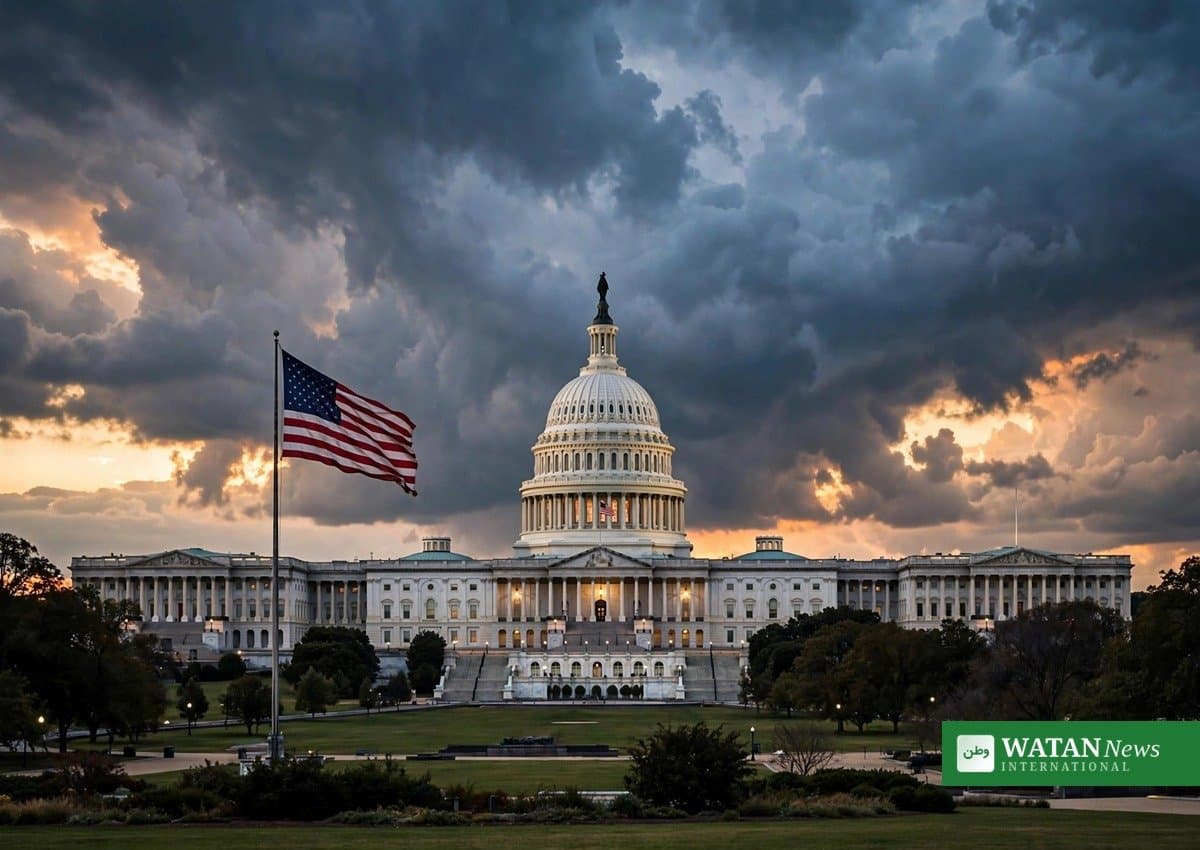
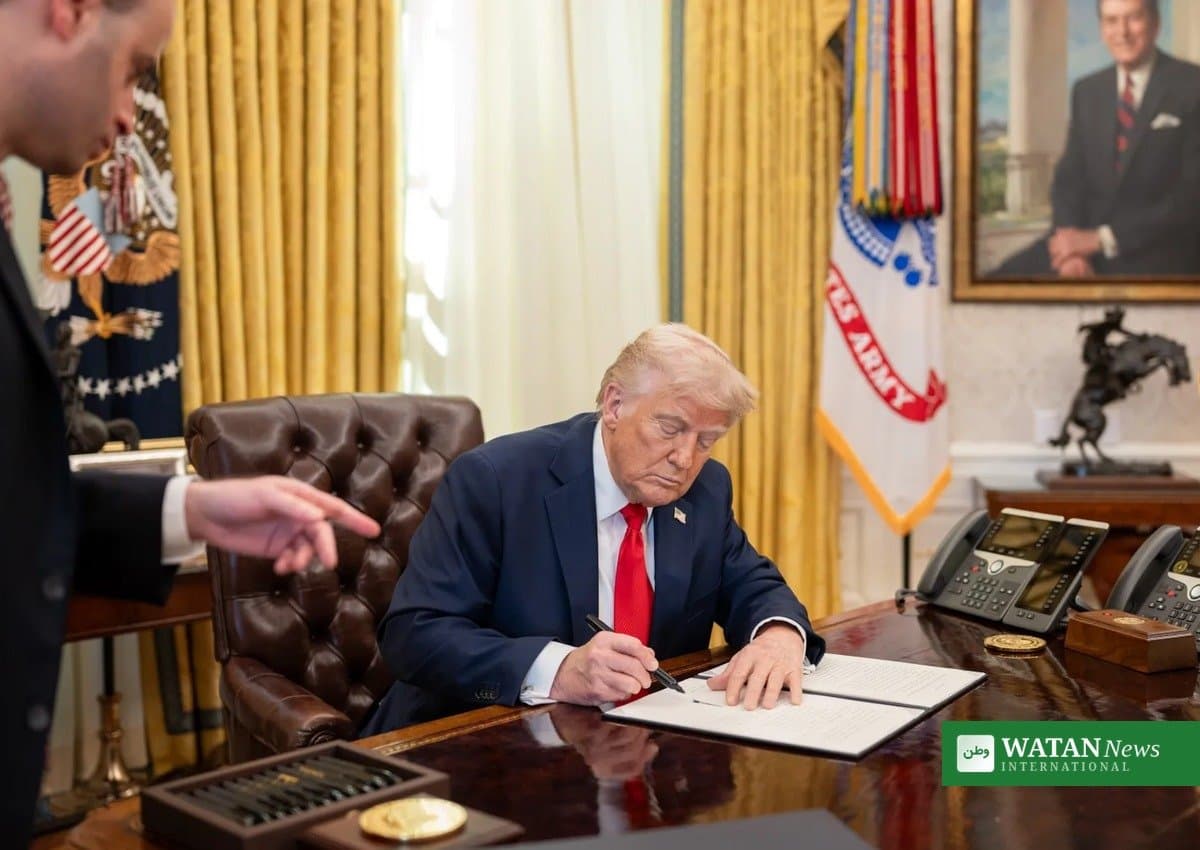
WASHINGTON — President Donald Trump’s executive order to reschedule marijuana from Schedule I to Schedule III, signed on December 18, 2025, was described at the time as the most significant shift in US drug policy in decades. Ten months on, the Trump marijuana executive order is still working its way through the federal rulemaking process — and in late September a Drug Enforcement Administration judge paused the proceedings again, even as the president voiced frustration over the delays.
FAKTA
- Executive Order 14370, “Increasing Medical Marijuana and Cannabidiol Research,” was signed on December 18, 2025 — not this week.
- It directs the attorney general to complete rulemaking moving cannabis from Schedule I to Schedule III of the Controlled Substances Act “in the most expeditious manner.”
- Schedule I means no accepted medical use and high abuse potential (heroin, LSD, ecstasy); Schedule III means accepted medical use and moderate-to-low dependence potential (Tylenol with codeine, ketamine, testosterone).
- The order does not legalize marijuana and does not sanction recreational use.
- It also orders work with Congress on access to full-spectrum CBD products and expanded medical research.
- Status now: a partial reclassification of state-licensed medical cannabis took effect in April 2026; the broader Schedule III rule is still pending after a DEA judge paused proceedings in late September 2026, with a government response due October 13.
What the Trump marijuana executive order changes
Cannabis has been classified in the same federal category as heroin, ecstasy and LSD since the Controlled Substances Act of 1970. The order directs federal officials to finish the rulemaking process that would move it to Schedule III, the tier the Drug Enforcement Administration defines as “drugs with a moderate to low potential for physical and psychological dependence.”
| Classification | Schedule I (current) | Schedule III (target) |
|---|---|---|
| Accepted medical use | None recognized | Yes |
| Abuse / dependence potential | High | Moderate to low |
| Examples | Heroin, LSD, ecstasy | Tylenol with codeine, ketamine, testosterone |
| Research access | Severely restricted | Eased; FDA can study medical applications |
The order states: “It is the policy of my Administration to increase medical marijuana and CBD research to better inform patients and doctors. It is critical to close the gap between current medical marijuana and CBD use and medical knowledge of risks and benefits.”
In practical terms, Schedule III status would ease regulatory hurdles and let the Food and Drug Administration study cannabis for medical applications — including treatment of pain, nausea and anorexia — potentially opening it up for wider medical use by seniors, veterans and others as a pharmaceutical, irrespective of state laws. A senior administration official said the primary goal is to “remove barriers to research.” It would also end the punishing federal tax rule, section 280E, that bars cannabis businesses from deducting ordinary expenses and has left some operators with effective tax rates of around 70 percent.
“It doesn’t legalize marijuana,” Trump stressed
At the signing ceremony in December 2025, Trump was careful to stress that the order does not make cannabis legal across the country. “It doesn’t legalize marijuana in any way, shape or form, and in no way sanctions its use as a recreational drug,” he said, adding that the action was aimed at helping people struggling with chronic pain. He also indicated he would not be open to legalizing cannabis for recreational use.
“We have people begging for me to do this. People who are in great pain,” Trump said, describing appeals from patients suffering extreme pain, incurable diseases, aggressive cancers, seizure disorders and neurological problems — including veterans with service-related injuries and older Americans with chronic medical conditions. “It’s never safe to use powerful controlled substances in a recreational manner,” he added. “Unless a drug is recommended by a doctor for medical reasons, just don’t do it.”
CBD also addressed
The order specifically addresses cannabidiol (CBD) derived from hemp. It directs the White House Deputy Chief of Staff for Legislative, Political and Public Affairs, James Blair, to work with Congress so Americans can benefit from access to appropriate full-spectrum CBD products — while still restricting products that pose serious health risks. The Department of Health and Human Services is instructed to develop research methods and models using real-world evidence to improve access to hemp-derived cannabinoid products and inform standards of care.
How rescheduling got here
The formal rescheduling process long predates the order. In October 2022, then-President Joe Biden directed health officials and the attorney general to review marijuana’s scheduling. In August 2023, the Department of Health and Human Services completed its scientific evaluation — with the FDA finding credible scientific support for marijuana’s medical use in treating pain, anorexia and chemotherapy-induced nausea — and recommended Schedule III.
The Justice Department published a proposed rule in May 2024, which drew nearly 43,000 public comments, the vast majority favoring rescheduling or going further to descheduling. But the legally required administrative hearings stalled in early 2025 amid procedural disputes. According to the order, more than 30,000 licensed health care practitioners across 43 US jurisdictions are authorized to recommend medical marijuana to more than six million registered patients, and chronic pain affects nearly one in four US adults.
Where the process stands in October 2026
The order did not reschedule marijuana by itself — it ordered the completion of a rulemaking process, and that process is still grinding on. In April 2026, Acting Attorney General Todd Blanche issued a final order moving state-licensed medical cannabis and FDA-approved marijuana products to Schedule III, effective on publication in the Federal Register on April 28. That was a partial step: it did not resolve the broader question of whether all marijuana moves to Schedule III.
The DEA issued a new notice of hearing in April 2026, and merits hearings on the broader proposal took place between June 29 and July 15, 2026, before Chief Administrative Law Judge Derek Julius. Then, in late September, the judge paused the proceedings after opponents of rescheduling sought to introduce a newly released Government Accountability Office report. The September 23 report found that the DEA lacks comprehensive written policies for evaluating and scheduling controlled substances — a recommendation the agency agreed with. Julius granted a stay and asked the DEA to respond on whether the report should enter the record by October 13.
The delay has reached the White House: in late September a senior adviser said Trump was “not happy” with the holdup and planned to contact Attorney General Blanche and DEA Administrator Terrance Cole about speeding things up.
Industry and political reaction
The order was a major win for the cannabis industry, which had campaigned for years for clearer federal rules. Trump discussed the plans with Health and Human Services Secretary Robert F. Kennedy Jr. and Centers for Medicare and Medicaid Services Administrator Dr. Mehmet Oz, and spoke with industry leaders ahead of the decision, including Trulieve chief executive Kim Rivers. Also present at the signing were NIH Director Jay Bhattacharya, FDA Commissioner Dr. Marty Makary, National Institute on Drug Abuse Director Dr. Nora Volkow and American Legion National Commander Dan Wiley.
Harvard Medical School psychiatry researcher Staci Gruber called the shift “pretty significant,” adding: “First and foremost, it recognizes that cannabis has accepted medical use. That’s a big shift.” Follow further US policy developments on Watan News.
Conclusion
The executive order was the starting gun, not the finish line. Ten months after Trump signed it, the federal government has formally recognized that cannabis has accepted medical use — a line that took more than 55 years to cross — yet the broader Schedule III rule remains unfinished, caught between a paused DEA hearing, a watchdog’s critique of the scheduling process and the threat of court challenges. The October 13 deadline for the DEA’s response is the next marker in a saga that began with a 2022 review, survived a stalled hearing process and now tests how fast “the most expeditious manner” can really move.