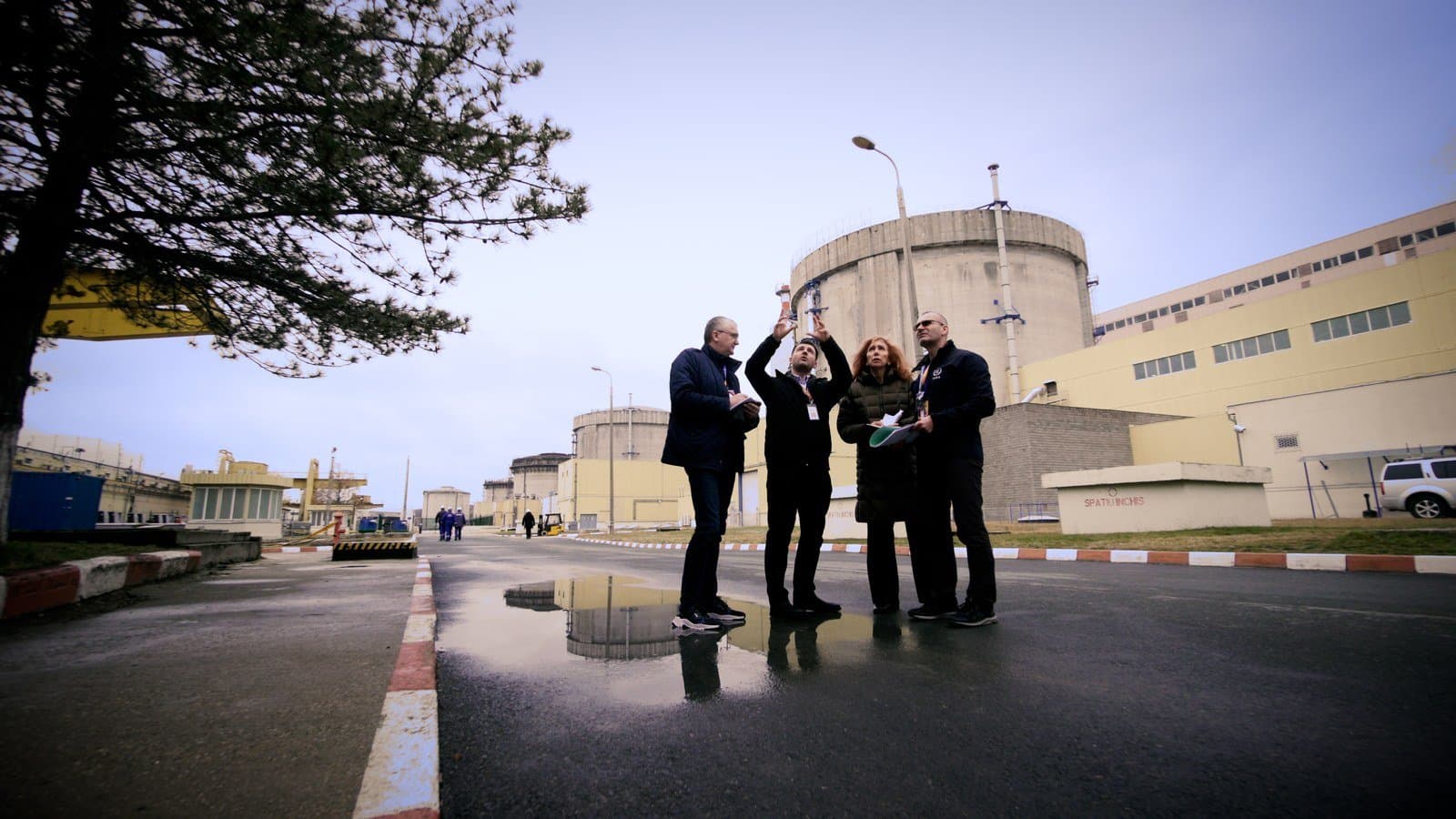
CERNAVODĂ / BUDAPEST — Romania’s only nuclear power station remains fully offline into late September after record-low Danube River levels cut off reliable cooling water, removing about 1.4 gigawatts of low-carbon baseload from a grid that normally draws roughly one-fifth of its electricity from the plant. Neighbouring Hungary has moved to protect cooling at its Paks station with temporary engineering fixes and deratings — not a permanent shutdown.
The outage at Cernavodă, operated by Nuclearelectrica, is a clear illustration this summer of how extreme drought can constrain nuclear plants that depend on rivers for cooling.
Record-low Danube forces both reactors offline
According to the World Nuclear Association, severe drought in July 2026 cut Danube flow near the plant to about a third of the long-term monthly average — roughly 1,630–1,750 cubic metres per second against a July average of about 4,700 m³/s, approaching the 1985 historic low. Unit 1 was taken offline on 28 July under severe-drought procedures.
Authorities tried emergency works — rock blasting, dredging and sinking rock-filled barges at the Bala–Old Danube junction — briefly raising the local basin by about four centimetres. Flows then worsened: at Romania’s entry the river fell to about 1,400 m³/s in early August, matching 1985, then to new record lows near 1,370 m³/s on 11 August and about 1,350 m³/s on 12–13 August, far below the August average of about 3,900 m³/s.
On 12 August the Danube level near the plant was reported at 182 centimetres — below the 185-centimetre mark for normal operation. Unit 2’s controlled shutdown began at 7:00 a.m. on 13 August; disconnection finished at 10:53 a.m., the Energy Ministry said. Force majeure certificates for its supply contracts had been issued on 10 August.
“Depending on how the forecasts for the Danube’s water level evolve, CNE Cernavoda specialists will decide when to restart the nuclear units, prioritising all nuclear safety margins,” Nuclearelectrica CEO Cosmin Ghita wrote to the Bucharest Stock Exchange, as reported by World Nuclear News. He said safe shutdown did not affect nuclear safety parameters for personnel, the environment or the public.
Romania declared a nationwide state of alert from 31 July over drought impacts on the energy system; Reuters later reported a state of emergency through August. Late-August measures included further dredging, a groyne on the Old Danube channel, temporary Olt reservoir releases, and high-capacity pumps if needed.
As of mid-September regional energy reporting, both CANDU units (about 650 MWe net each) remained unavailable, possibly through end-September. Local assessments suggest sustained flows near 1,700–1,800 m³/s before even one reactor could return. Coal, gas and imports have helped cover the gap; the Energy Ministry said the system remained stable after Unit 2 shut.
Hungary’s Paks: temporary stress, not permanent closure
Hungary faced the same low-water stress at Paks, which normally supplies about half of national electricity. World Nuclear News reported Units 1, 3 and 4 shut during the episode while Unit 2, after 11 days at half power, returned to full output on 10 August. Budapest did not announce a permanent plant closure.
On 12 August the government ordered a riverbed bottom sill near Dunaszentbenedek — using 35,000 then 110,000 cubic metres of stone — and placed two 80-metre barges on standby for controlled sinking that could raise local levels by up to about 20 centimetres. Officials put the package at roughly HUF 6 billion (about USD 10 million) and stressed nuclear safety would not be compromised.
Romania’s full Cernavodă outage is a temporary, hydrology-driven shutdown pending safer Danube flows; Hungary’s response has been to idle or derate some units while building engineering buffers. Both cases show how prolonged European heat and drought can turn river cooling into a binding constraint on low-carbon power as winter demand approaches. Restart will turn on sustained hydrological recovery and safety margins — while every additional week without that baseload tightens Southeast Europe’s reliance on fossil generation, weather-dependent renewables and imports.