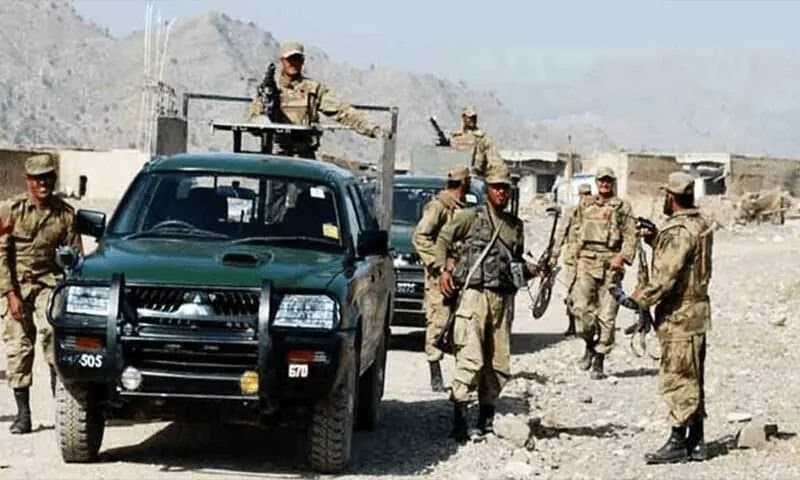
In a significant counter-terrorism operation, Pakistan’s security forces have neutralized over 70 terrorists affiliated with India-backed groups in Balochistan over the past four days. The Inter-Services Public Relations (ISPR), the military’s media wing, announced the successful operations on Sunday, stating that these actions have delivered a serious blow to Indian-backed proxies operating from Afghanistan. The ISPR highlighted that Kabul’s involvement in terror activities within Pakistan continues to result in the loss of precious lives, underscoring the cross-border nature of the threat. This operation marks a critical development in the ongoing efforts to maintain stability and security within the region, particularly in the restive province of Balochistan.
- Over 70 terrorists were killed in Balochistan operations.
- The operations were conducted over the past four days.
- The ISPR stated the terrorists were India-sponsored and linked to Afghan proxies.
- Kabul’s alleged involvement in terror activities in Pakistan was cited as a continuing concern.
Balochistan Operations Target ‘Fitna al-Khawarij’ and ‘Fitna al-Hindustan’
The security forces’ successful campaign targeted elements identified by the ISPR as ‘Fitna al-Khawarij’ and ‘Fitna al-Hindustan’. These designations suggest a focus on specific extremist ideologies and alleged foreign backing. The operations, conducted across multiple locations in Balochistan, aimed to dismantle terrorist networks and disrupt their ability to carry out attacks. The swiftness and scale of these operations indicate a coordinated and intensified effort by Pakistan’s security apparatus to address the persistent threat of terrorism emanating from across its borders.
Impact on Indian-Backed Proxies
According to the ISPR’s statement, the neutralization of these over 70 terrorists represents a significant setback for the Indian-backed proxies operating in the region. The military’s media wing explicitly linked the killed terrorists to India, alleging their sponsorship and support. This assertion points to a broader geopolitical dimension of the conflict in Balochistan, with Pakistan accusing its neighbor of destabilizing activities through proxy groups. The successful counter-terrorism efforts are intended to curb such external interference and protect Pakistan’s national security interests.
Concerns Over Kabul’s Role
The ISPR statement also raised serious concerns regarding the involvement of Kabul in facilitating terror activities within Pakistan. By highlighting that Kabul’s involvement continues to cause loss of precious lives, the military suggests that Afghanistan, under its current administration, is not adequately addressing or preventing the use of its territory by anti-Pakistan militant groups. This accusation underscores the complex and often strained relationship between Pakistan and Afghanistan, particularly concerning cross-border terrorism and security cooperation.
Broader Security Context in Balochistan
Balochistan has long been a focal point for security challenges in Pakistan, with various militant groups active in the province, often citing grievances related to resource distribution and autonomy. The recent operations underscore the government’s commitment to combating terrorism, regardless of its alleged origins or affiliations. The ISPR’s detailed statement aims to provide transparency and assert control over the narrative surrounding security operations in the strategically important province. The successful elimination of a large number of terrorists is presented as a victory for Pakistan’s security forces and a step towards restoring lasting peace.
Conclusion
The successful neutralization of over 70 India-backed terrorists in Balochistan by Pakistan’s security forces marks a significant achievement in the fight against terrorism. The ISPR’s statement not only details the operational success but also points to the alleged role of external actors and neighboring territories in fueling instability. These operations are crucial for Pakistan’s national security and regional stability, signaling a firm stance against terrorist threats and their alleged sponsors. The ongoing efforts in Balochistan are vital for ensuring the safety and security of its citizens and for fostering an environment conducive to development.
Who conducted the operations in Balochistan?
Pakistan’s security forces, including the army, conducted the operations.
What was the alleged affiliation of the neutralized terrorists?
They were described as India-sponsored terrorists, linked to Afghan proxies.
What is the significance of these operations?
They are seen as a major blow to Indian-backed proxies and a step towards regional stability.
What concerns were raised about Kabul?
Kabul’s alleged involvement in facilitating terror activities within Pakistan was highlighted.