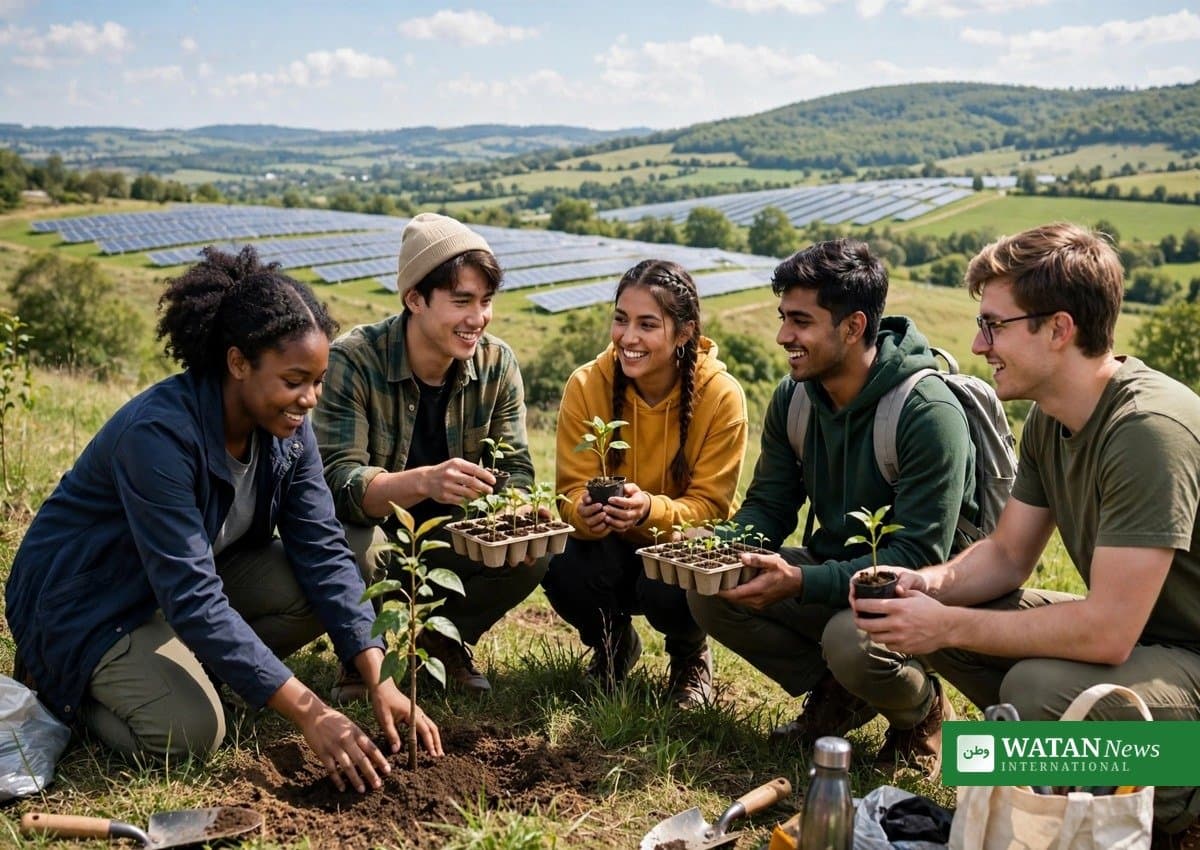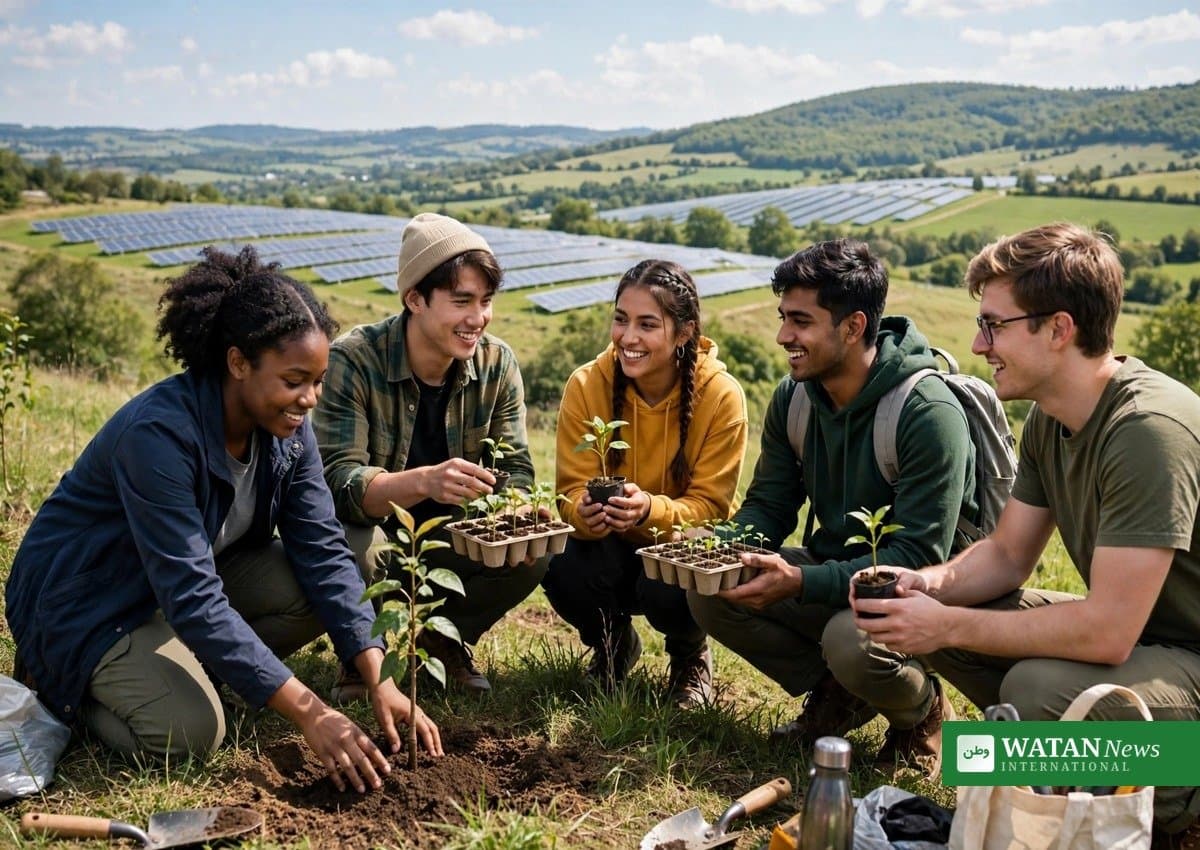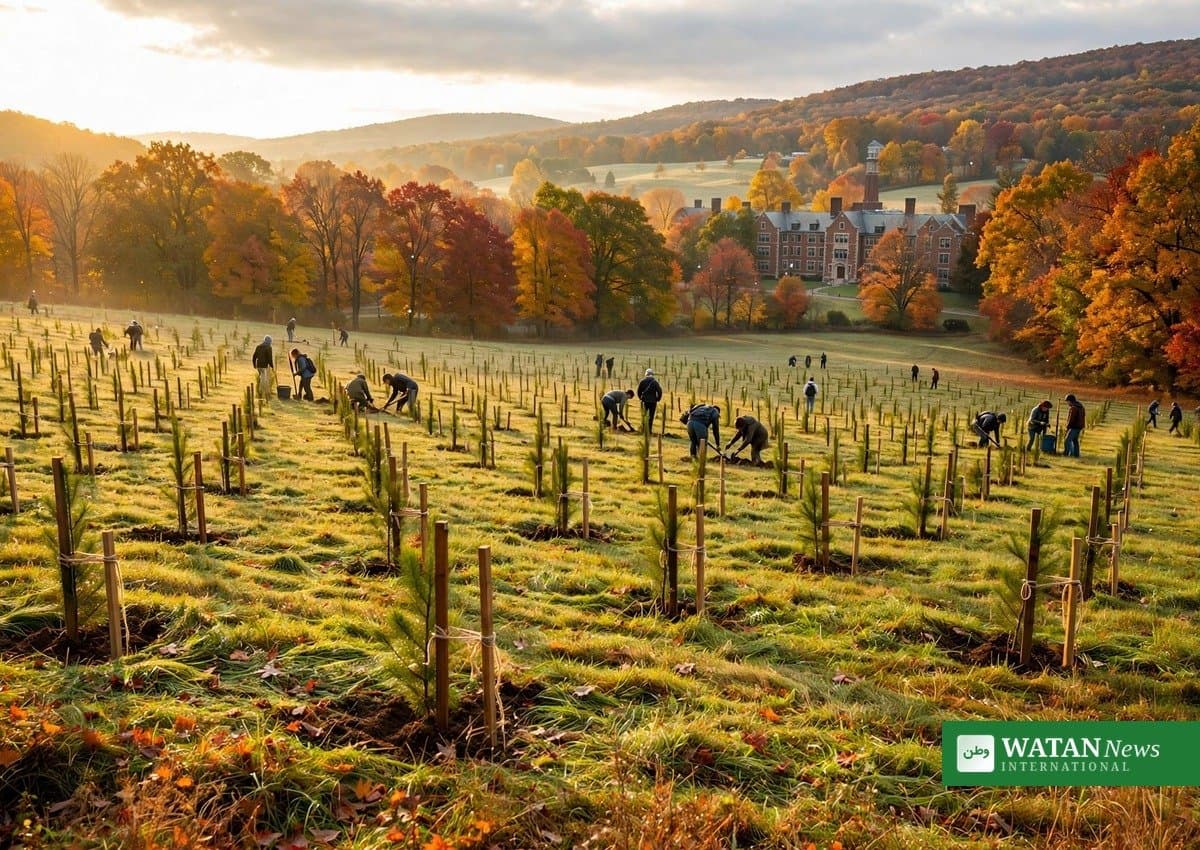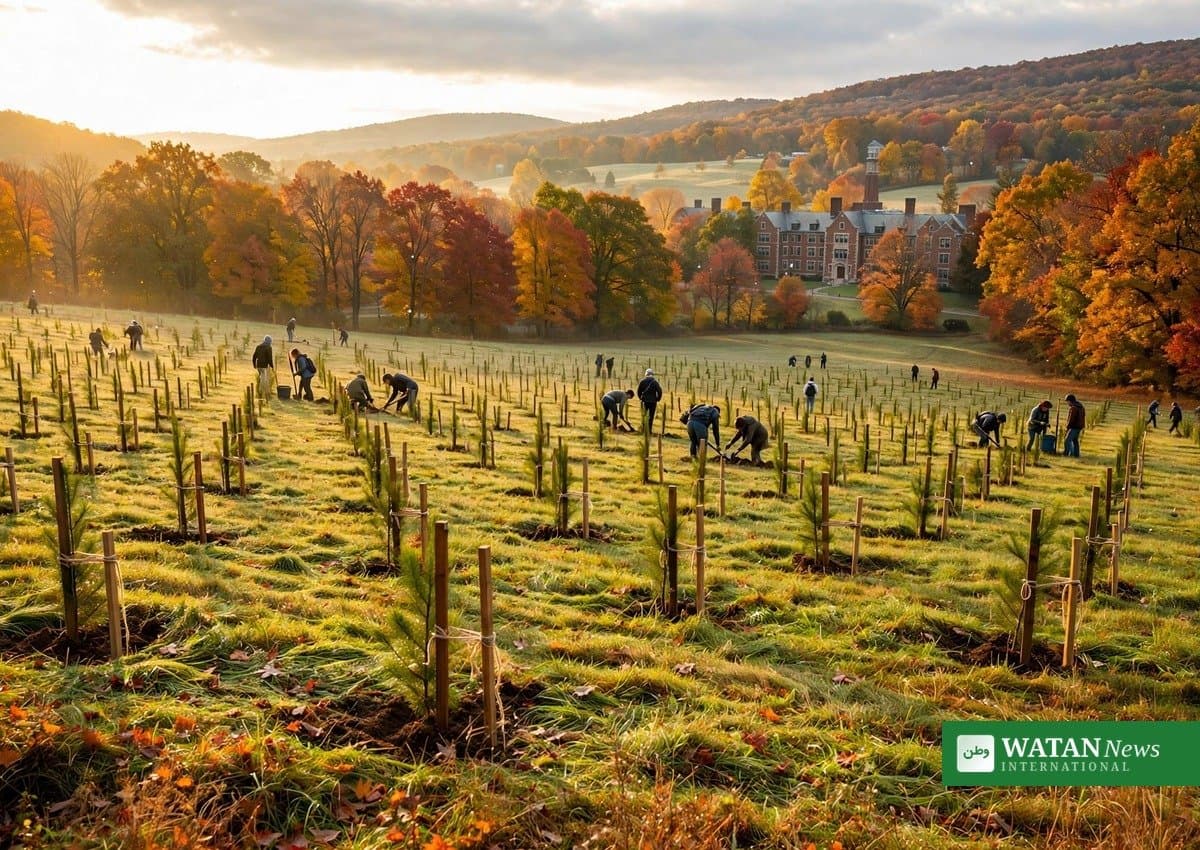
SUNY Oneonta reforestation began on Thursday, 15 October 2026, when students and employees of the State University of New York at Oneonta planted 1,300 trees on the university’s North Campus, launching an ambitious community reforestation programme that will put 9,600 native trees into the ground.
The morning of planting marked the launch of the university’s Community Reforestation (CoRe) Program, run with the nonprofit organisation Grow Big Trees and funded through a New York State grant. The project aims to restore forested natural areas on university land along West Street in Oneonta, increase biodiversity and capture carbon from the atmosphere.
What the SUNY Oneonta reforestation programme covers
The reforestation covers a 60-acre parcel known as the North 60, land that was once a dairy farm. The university’s grounds crew and Grow Big Trees spent the last two years removing invasive species to prepare the soil before the first trees went in.
The first planting put in rows of eight native tree species. Jared Woodcock, founder of Grow Big Trees, said the full project will eventually include 27 diverse species, chosen to break up monoculture and strengthen the ecosystem. “Our forests around here are not very diverse,” he said, “because of land management and all sorts of other things. We’re intentionally putting in species that aren’t common here, but are native to the area and should be here.”
The state grant behind the project was $484,910, awarded under New York’s Community Reforestation programme. Local reporting describes the award as about $500,000 intended to fund the planting and five years of maintenance for the young forest.
Key facts
- 1,300 trees were planted on 15 October 2026 on SUNY Oneonta’s North Campus.
- The full Community Reforestation (CoRe) Program will plant 9,600 native trees on 20 to 25 acres.
- The site is a 60-acre parcel, the North 60, once used as a dairy farm.
- The project is funded by a $484,910 New York State grant and run with nonprofit Grow Big Trees.
- The first planting used eight native species; 27 diverse species are planned in total.
- The university estimates the 9,600 trees will store about 100 tons of carbon and produce roughly 270 tons of oxygen.
- The project contributes to New York State’s “25 Million Trees by 2033” goal.
Why diverse native trees matter
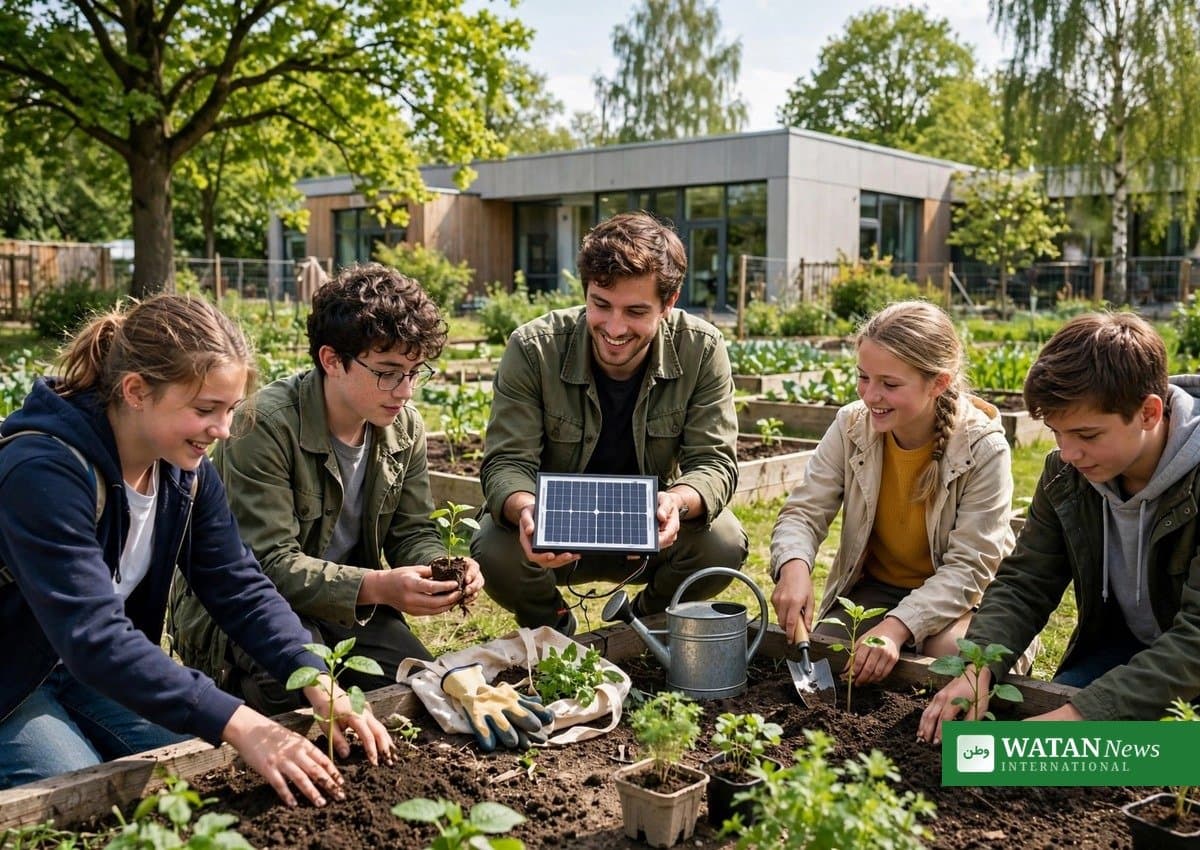
Planting many species, rather than a single fast-growing one, is the core of the project’s design. A diverse forest supports more wildlife, resists pests and disease better, and keeps providing benefits as conditions change. The university says the developing forest will also serve as a living laboratory, giving students hands-on work maintaining the landscape, monitoring biodiversity and tracking ecological change as the trees grow.
That learning role was visible on planting day itself. Two Empire State Service Corps members working with the university’s Office of Sustainability, Evangeline Reinoso Moya and Alex Pizzaia, helped organise the planting event, showing how the project builds environmental stewardship into student life.
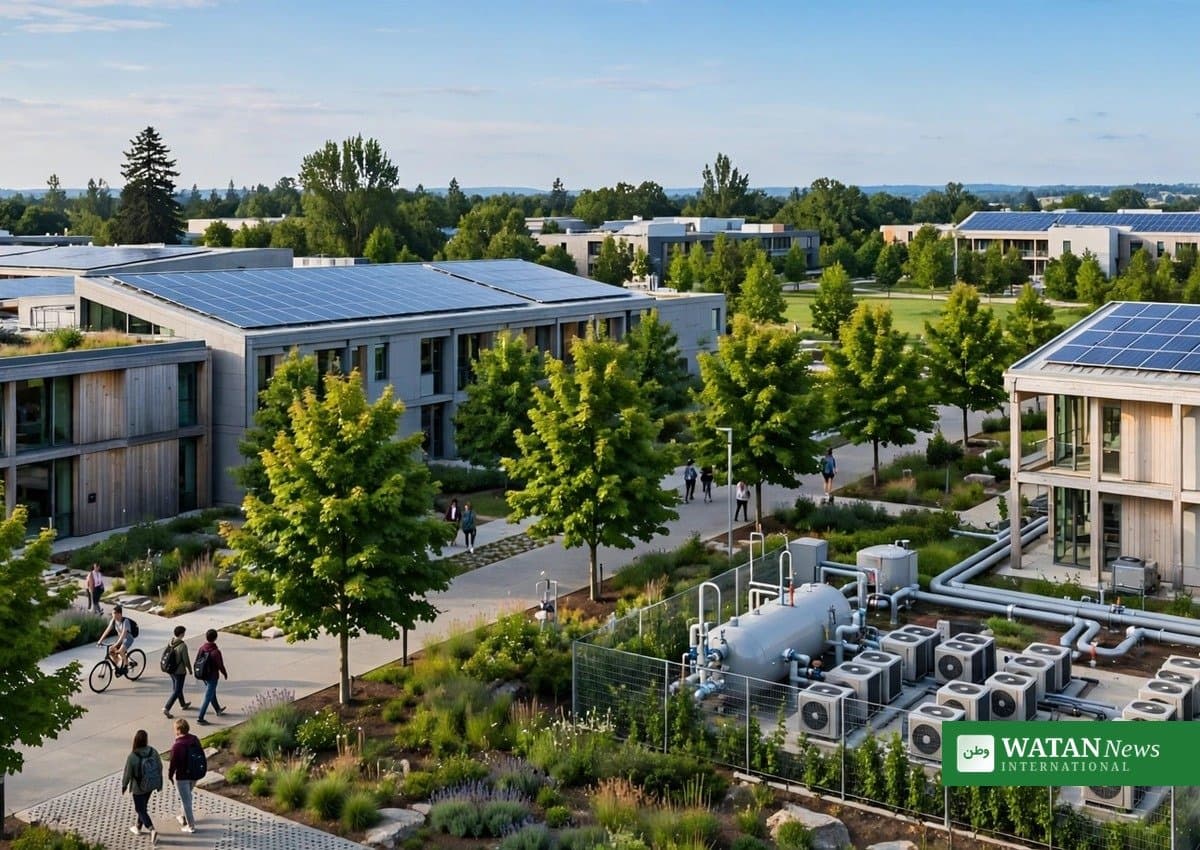
The wider site plan goes beyond trees. The university hopes to develop the 60-acre North Campus property for sustainability, recreation, education and community engagement, with a community solar project, a recreational field and a natural amphitheatre for outdoor concerts, along with nature trails and bird and wildlife observation points.
A small piece of a statewide goal
The Oneonta project contributes to New York State’s “25 Million Trees by 2033” initiative, launched to recognise the importance of trees and forests for climate resilience and community health. In announcing $15 million in reforestation grants in April 2025, Governor Kathy Hochul noted that studies show forested natural areas can be as much as 10 degrees Fahrenheit cooler than the shade of a single street tree a few hundred feet away.
That cooling effect, together with carbon storage, stormwater absorption and habitat, is why cities and campuses across the state are turning former farmland and vacant land back into forest. Readers can explore more of Watan News’ climate coverage in the climate section.
What happens next
The 1,300 trees planted on 15 October are only the first stage. Planting will continue across the 20 to 25 acres set aside for the forest until all 9,600 trees are in the ground, with maintenance funded for five years. As the forest becomes established, the university expects it to keep providing opportunities for experiential learning while creating a lasting environmental resource for the campus and the surrounding community.