LIVE
BREAKING
ETH Zurich Breakthrough: Acrylic Glass Recycling Recovers 98% at Half the HeatThousands Form Human ‘Makkah Accord’ Display in Jhang in Show of Pakistan-Saudi-Türkiye UnityTürkiye Presents COP31 as an Implementation Conference in Jakarta: Concrete Projects and Adequate FundingUS Pending Home Sales Plunge to Record Low as Mortgage Rates BiteGEMS Modern Academy Coimbatore Launches Dual-Curriculum Campus for 2027–28Tesla–SpaceX Merger Plan Explored in $3.5 Trillion CombinationUS–Mexico Trade Deal: Close Claim Meets Stalled Talks Over Cars and MetalsOil Above $110 Rattles Markets as French Bond Stress DeepensUkraine Trilateral Security Talks Agreed in Principle for After 10 NovemberPHP2Shell Critical Flaw Forces Government Websites Offline as Emergency Patches Roll OutMegalizzi-Niedzielski Prize 2026: Climate Adaptation Reporting Wins EU Journalism HonourWaste Reduction Week 2026: How Small Daily Habits Can Cut the World’s Growing WasteHouthi Missile Hits Aden Military Camp as Yemen Fighting EscalatesTanker Struck by Projectile Off Oman Near Strait of Hormuz, Crew SafeLeBron James Makes Winning 76ers Debut as Philadelphia Spoil Knicks’ Banner NightMexico Advances 66 Solar and Wind Projects Totalling 8,241 MW in Renewable PushPrabowo Accuses MSCI of Trying to Intimidate Indonesia After Market RoutIraq Closes Sheeb Border Crossing With Iran Amid Security ReviewUNEP Emissions Gap Report 2026: World Will Overshoot 1.5°C, but Deep Cuts Can Bring It BackItaly Birth Rate Record Low Expected in 2026ETH Zurich Breakthrough: Acrylic Glass Recycling Recovers 98% at Half the HeatThousands Form Human ‘Makkah Accord’ Display in Jhang in Show of Pakistan-Saudi-Türkiye UnityTürkiye Presents COP31 as an Implementation Conference in Jakarta: Concrete Projects and Adequate FundingUS Pending Home Sales Plunge to Record Low as Mortgage Rates BiteGEMS Modern Academy Coimbatore Launches Dual-Curriculum Campus for 2027–28Tesla–SpaceX Merger Plan Explored in $3.5 Trillion CombinationUS–Mexico Trade Deal: Close Claim Meets Stalled Talks Over Cars and MetalsOil Above $110 Rattles Markets as French Bond Stress DeepensUkraine Trilateral Security Talks Agreed in Principle for After 10 NovemberPHP2Shell Critical Flaw Forces Government Websites Offline as Emergency Patches Roll OutMegalizzi-Niedzielski Prize 2026: Climate Adaptation Reporting Wins EU Journalism HonourWaste Reduction Week 2026: How Small Daily Habits Can Cut the World’s Growing WasteHouthi Missile Hits Aden Military Camp as Yemen Fighting EscalatesTanker Struck by Projectile Off Oman Near Strait of Hormuz, Crew SafeLeBron James Makes Winning 76ers Debut as Philadelphia Spoil Knicks’ Banner NightMexico Advances 66 Solar and Wind Projects Totalling 8,241 MW in Renewable PushPrabowo Accuses MSCI of Trying to Intimidate Indonesia After Market RoutIraq Closes Sheeb Border Crossing With Iran Amid Security ReviewUNEP Emissions Gap Report 2026: World Will Overshoot 1.5°C, but Deep Cuts Can Bring It BackItaly Birth Rate Record Low Expected in 2026
Climate

Waste Reduction Week 2026: How Small Daily Habits Can Cut the World’s Growing Waste

News Desk 6Published October 21, 2026
Waste Reduction Week 2026: How Small Daily Habits Can Cut the World’s Growing Waste
Share this story

Canada is marking the 25th anniversary of Waste Reduction Week from 19 to 25 October 2026, turning a national campaign into a practical guide for sustainable living. The week, part of the wider Circular Economy Month in October, asks households to rethink what they buy, use and throw away — one themed day at a time.

Organised by the Circular Innovation Council, a national not-for-profit organisation, the campaign has run since 2001 and now anchors a month-long push for a circular economy — an economy where products are designed with as little waste as possible and used for as long as possible, instead of the old take-make-waste pattern.

A week of small, practical steps

Each day of Waste Reduction Week 2026 carries its own theme, giving families a single, manageable focus:

  • Repair Monday — fix what is broken before replacing it.
  • Textiles Tuesday — donate, swap or recycle clothing instead of binning it.
  • E-waste Wednesday — return old electronics for safe reuse or recycling.
  • Plastics Thursday — cut single-use plastics from daily routines.
  • Food Waste Friday — plan meals, store food well and use leftovers.
  • Sharing Saturday and Swap Sunday — share, lend and swap items within the community.

Cities across Canada are joining in. The City of Markham, for example, is celebrating the week with its own programme of waste-diversion activities. Markham became the first municipality in North America to ban textiles from curbside waste collection in April 2017, and its textile recycling programme has since diverted more than 17,236,510 kilograms of donated clothing and textiles from landfill, through more than 160 public drop-off locations.

Why waste matters for the climate

The campaign lands against a stark global backdrop. According to the United Nations Environment Programme (UNEP) and the International Solid Waste Association, municipal solid waste generation is predicted to grow from 2.1 billion tonnes in 2023 to 3.8 billion tonnes by 2050 if current trends continue. Without action, the annual global cost of waste management could reach 640.3 billion US dollars by 2050, up from 361 billion dollars in 2020 including hidden costs. Only 62 per cent of municipal solid waste worldwide is managed in controlled facilities.

Food waste is the most personal part of the problem. UNEP’s Food Waste Index Report 2024 found that about 1.05 billion tonnes of food were wasted in 2022 — roughly 19 per cent of all food available to consumers. Households were responsible for 60 per cent of it, about 631 million tonnes, or around 79 kilograms per person per year. More than one billion meals are wasted in households every day, while food loss and waste together generate an estimated 8 to 10 per cent of global greenhouse gas emissions.

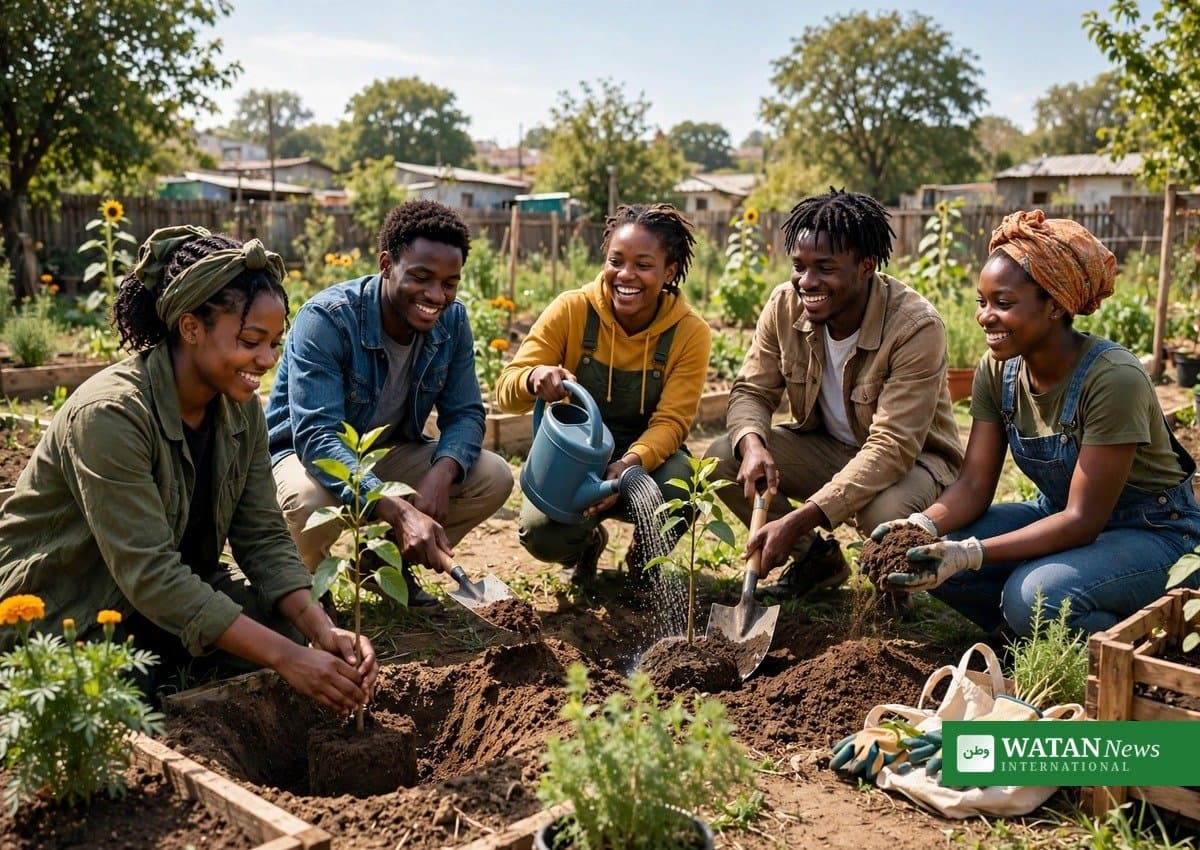
Waste reduction week community repair event volunteers fixing clothes and electronics
Community repair and sharing events turn old clothes and electronics back into useful items instead of waste.

What households can do this week

The campaign’s message is deliberately practical. Repairing a torn jacket, donating a working phone, choosing a reusable bottle, planning the week’s meals or swapping toys with a neighbour are all presented as climate actions — because every item kept in use avoids the resources, energy and emissions of making a new one.

Markham’s advice to residents captures the spirit: before throwing something away, pause and ask whether it can be repaired, reused, donated or recycled. The city points residents to charity shops such as ReStore and Furniture Bank for reclaimed home furnishings, and to its “What Goes Where” tool for items that cannot go in curbside collection.

For readers looking for more ideas on greener homes, Watan News has also covered Canada’s investment in energy-efficient homes and community retrofit programmes, another way households can cut their environmental footprint.

Key Facts

  • Waste Reduction Week 2026 runs from 19 to 25 October in Canada, marking its 25th anniversary.
  • It is part of Circular Economy Month, organised by the Circular Innovation Council.
  • Global municipal solid waste is predicted to rise from 2.1 billion tonnes in 2023 to 3.8 billion tonnes by 2050, according to UNEP.
  • About 1.05 billion tonnes of food were wasted worldwide in 2022, with households responsible for 60 per cent.
  • Markham’s textile recycling programme has diverted more than 17,236,510 kilograms of textiles from landfill.

Conclusion

Waste Reduction Week 2026 is not about perfection. It is about one week of attention to the things every household touches daily — clothes, food, electronics and packaging — and the habits that keep them in use longer. If those habits last beyond the week, the campaign will have done its real work.
Frequently Asked Questions

Related Stories

Planet & environment

Climate & Sustainability

News, stories and solutions driving change towards a greener and more sustainable planet for future generations.

ETH Zurich Breakthrough: Acrylic Glass Recycling Recovers 98% at Half the Heat
Featured story

ETH Zurich Breakthrough: Acrylic Glass Recycling Recovers 98% at Half the Heat

Researchers at ETH Zurich have developed a simpler, low-energy method for acrylic glass recycling that recovers up to 98% of the material as pure monomers.

Read full story

GREEN JOURNALISM

EITB’s ‘Bizi Natura’ Wins Basque Environmental Communication Award 2026
Green Journalism

EITB’s ‘Bizi Natura’ Wins Basque Environmental Communication Award 2026

The Basque Association of Journalists and the Basque College of Journalists have announced that EITB’s wildlife programme “Bizi Natura” is the winner of the Basque environmental communication award 2026, the environmental section of the 15th Basque Journalism Awards. The announcement was made on 16 October 2026, honouring a programme that brought the Urdaibai Biosphere Reserve

Read full story
Forest Governance Media Workshop: EJN to Train 30 Journalists on Forest Reporting
Green Journalism

Forest Governance Media Workshop: EJN to Train 30 Journalists on Forest Reporting

The Earth Journalism Network (EJN) is bringing around 30 journalists together for a two-day forest governance media workshop on 21–22 October 2026, held virtually under its Forest Governance Media Initiative (FGMI) and with funding from UK International Development. The training aims to strengthen reporting on deforestation, community rights and sustainable forest management across Africa and

Read full story

Every Action Counts

Small steps today, big impact tomorrow.

Explore more stories